Clinical Knowledge › Internal medicine › Haematology and oncology › Oncological emergencies
Malignant bowel obstruction
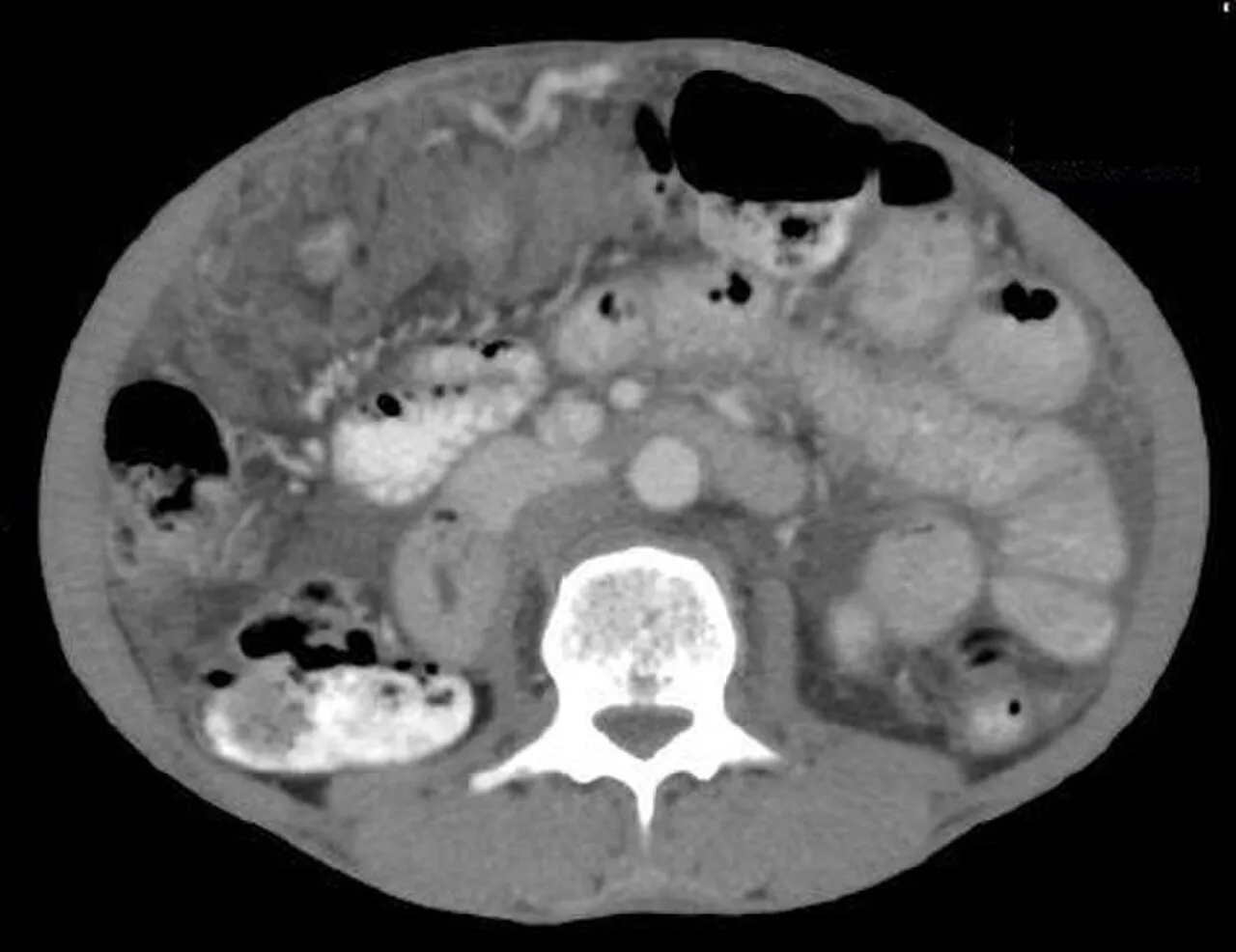
Malignant bowel obstruction (MBO) is mechanical or functional obstruction of the small or large bowel caused by cancer, usually in a person with advanced, incurable disease. It is commonest in ovarian and colorectal cancer, and peritoneal carcinomatosis often blocks the bowel at several levels at once. Distension stimulates secretion and reduces absorption, so fluid builds up in the gut and drives a cycle of pain, colic, nausea and vomiting. Typical features are colicky and constant abdominal pain, distension, vomiting (early in proximal obstruction, faeculent in distal) and absent stool or flatus. Contrast CT confirms the diagnosis, the level and number of sites, and whether surgery or stenting is possible. Many patients are unfit for surgery, so care focuses on symptom control: parenteral opioids, antiemetics, antisecretory drugs (hyoscine butylbromide, octreotide), a short trial of dexamethasone, nasogastric or venting gastrostomy drainage, and careful decisions about fluids and nutrition. Prognosis is often weeks to months, so early goals-of-care conversations are essential.
Patient case, mechanism, investigations, management, flashcards and exam-style questions.Open the lesson →
Key facts
- MBO occurs in about 5–50% of ovarian cancers and 10–30% of colorectal cancers; small bowel is involved more often than large bowel
- Peritoneal carcinomatosis causes multilevel obstruction and often a mixed mechanical and functional picture
- Exclude constipation, opioid-induced dysmotility, adhesions, hypokalaemia and hypercalcaemia before calling it malignant
- CT abdomen and pelvis with contrast is the key test: level, number of sites, carcinomatosis, ascites
- Ascites, carcinomatosis, multiple levels, poor performance status and malnutrition predict poor surgical outcome
- Avoid prokinetics (metoclopramide) in complete obstruction with colic; use haloperidol or cyclizine
- Hyoscine butylbromide and octreotide reduce gut secretions; dexamethasone may help oedema around the obstruction
- Self-expanding metal stents palliate left-sided colonic and gastroduodenal obstruction; venting gastrostomy relieves refractory vomiting
Differential diagnosis
| Condition | Clues | Key test |
|---|---|---|
| Faecal impaction or opioid-induced constipation | Hard stool on rectal examination, opioid dose increase | Rectal examination; CT showing faecal loading |
| Adhesive (benign) small bowel obstruction | Previous surgery or radiotherapy, single transition point | CT with single transition point and no carcinomatosis |
| Colonic pseudo-obstruction (Ogilvie syndrome) | Massive caecal dilatation without mechanical cause | CT: no transition point |
| Paralytic ileus (hypokalaemia, hypercalcaemia, sepsis) | Silent abdomen, electrolyte disturbance | Potassium, calcium, magnesium; CT without transition |
| Gastric outlet obstruction | Large-volume undigested vomit, succussion splash | CT or endoscopy at the pylorus or duodenum |
| Malignant ascites | Distension with shifting dullness, no colic | Ultrasound; diagnostic paracentesis |
| Chemotherapy-related enterocolitis or neutropenic enterocolitis | Fever, neutropenia, right iliac fossa pain | FBC; CT showing caecal wall thickening |
Exam pearls
Guideline
MASCC multidisciplinary evidence-based recommendations for the management of malignant bowel obstruction in advanced cancer (2022), ESGE colonic stenting guideline (2020), ESPEN guideline on clinical nutrition in cancer (2021) and NICE NG31 Care of dying adults (2015)
References
- Madariaga A, Lau J, Ghoshal A, et al.. MASCC multidisciplinary evidence-based recommendations for the management of malignant bowel obstruction in advanced cancer. Support Care Cancer 2022.
- van Hooft JE, Veld JV, Arnold D, et al.. Self-expandable metal stents for obstructing colonic and extracolonic cancer: European Society of Gastrointestinal Endoscopy (ESGE) Guideline – Update 2020. Endoscopy 2020.
- Muscaritoli M, Arends J, Bachmann P, et al.. ESPEN practical guideline: clinical nutrition in cancer. Clin Nutr 2021.
- Currow DC, Quinn S, Agar M, et al.. Double-blind, placebo-controlled, randomized trial of octreotide in malignant bowel obstruction. J Pain Symptom Manage 2015.
- National Institute for Health and Care Excellence. Care of dying adults in the last days of life (NG31). NICE 2015.
- Cherny NI, Fallon MT, Kaasa S, Portenoy RK, Currow DC, eds.. Oxford Textbook of Palliative Medicine. 2021.
Related topics
By Dr Khalid Seidi (B.Sc., M.D.) · MedEd World Clinical Knowledge library. Original teaching content checked against current guidelines (November 2026); confirm the latest local guidance before clinical use. Not a substitute for clinical judgement.