Clinical Knowledge › Internal medicine › Haematology and oncology › Oncological emergencies
Raised intracranial pressure from brain metastases
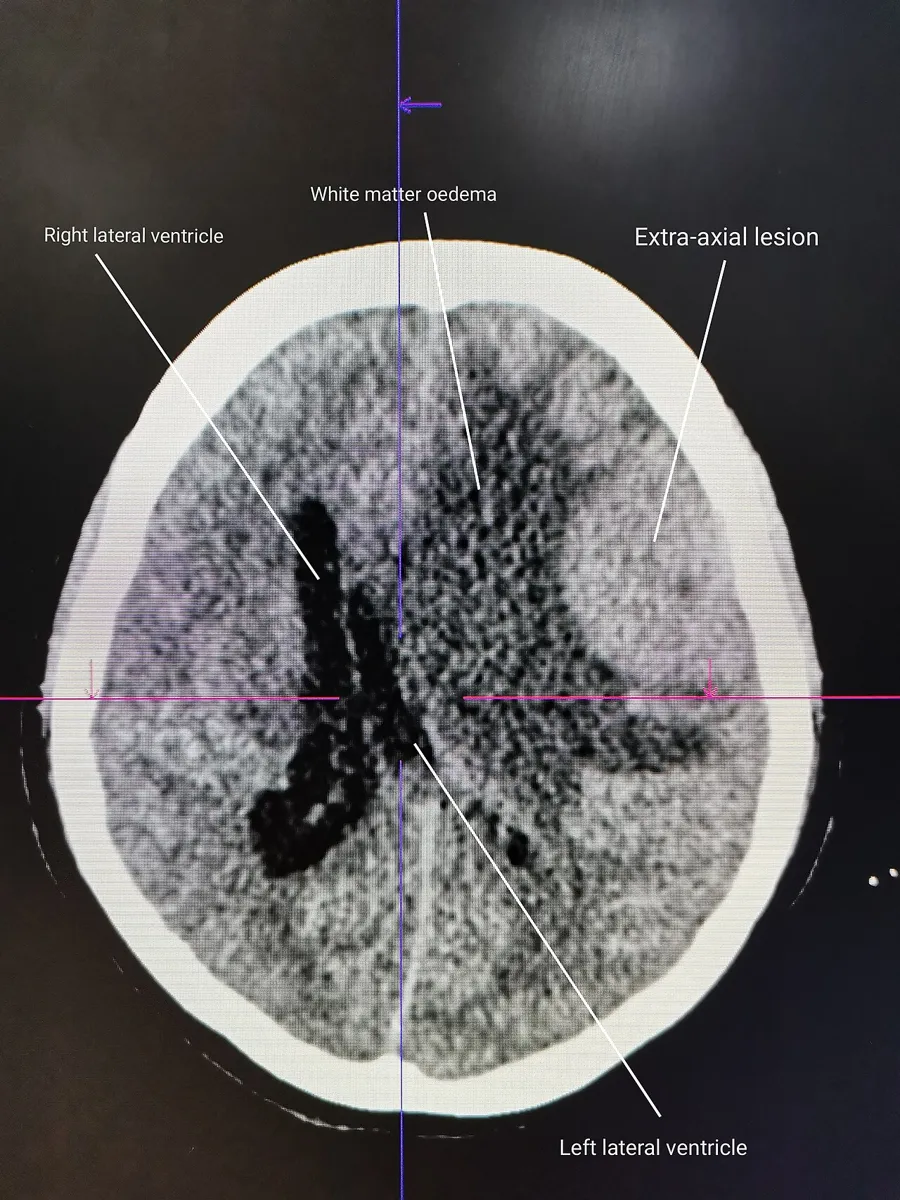
Brain metastases are the commonest intracranial tumours in adults and develop in up to a fifth or more of people with solid cancers, most often from lung cancer, breast cancer and melanoma. Raised intracranial pressure (ICP) results from the tumour mass, the vasogenic oedema around it, haemorrhage into the lesion or obstruction of cerebrospinal fluid flow, usually by a posterior fossa deposit. Typical features are headache that is worse on lying down, coughing or waking, vomiting, papilloedema, new focal deficits, seizures and confusion; a falling conscious level, a unilateral fixed dilated pupil or Cushing's response signals herniation. Urgent CT excludes haemorrhage and hydrocephalus, and contrast-enhanced MRI is the most accurate test. Dexamethasone is given for symptomatic oedema at the lowest effective dose, with osmotherapy and neurosurgery (resection, external ventricular drain) for impending herniation. Definitive control comes from surgery, radiosurgery, whole-brain radiotherapy or CNS-active systemic therapy, chosen by a multidisciplinary team.
Patient case, mechanism, investigations, management, flashcards and exam-style questions.Open the lesson →
Key facts
- Brain metastases outnumber primary brain tumours in adults; lung cancer, breast cancer and melanoma are the commonest sources
- Melanoma, renal cell carcinoma, choriocarcinoma and thyroid cancer metastases are prone to bleed
- Raised ICP follows the Monro–Kellie doctrine: tumour plus vasogenic oedema plus blood or CSF in a fixed skull
- Headache worse on lying, coughing or in the morning, with vomiting and papilloedema, is the classic triad
- Cushing's response (hypertension with widened pulse pressure, bradycardia, irregular breathing) is a late sign of herniation
- Contrast-enhanced MRI is the most accurate test; non-contrast CT is the first test when the patient is unstable
- Dexamethasone treats symptomatic vasogenic oedema (e.g. 4–8 mg/day, up to 16 mg/day if severe); no steroids for asymptomatic lesions
- Stereotactic radiosurgery is preferred for 1–4 lesions; give memantine and hippocampal avoidance if whole-brain radiotherapy is used
Differential diagnosis
| Condition | Clues | Key test |
|---|---|---|
| Primary brain tumour (glioblastoma) | Solitary infiltrative mass, no known primary cancer | MRI (irregular ring enhancement crossing corpus callosum); biopsy |
| Brain abscess | Fever, infective source, immunosuppression | MRI diffusion restriction in the cavity; cultures |
| Primary CNS lymphoma | Periventricular homogeneous enhancement, immunosuppression | Biopsy before steroids; CSF cytology |
| Intracerebral haemorrhage or subdural haematoma | Sudden onset, anticoagulant, thrombocytopenia, fall | Non-contrast CT |
| Leptomeningeal metastases | Multiple cranial nerve palsies, communicating hydrocephalus | Contrast MRI brain and spine; CSF cytology |
| Radiation necrosis | Months to years after radiosurgery, enlarging lesion | Perfusion MRI or amino-acid PET; sometimes biopsy |
| Metabolic encephalopathy (hyponatraemia, hypercalcaemia) | Confusion without focal signs or papilloedema | Sodium, calcium, glucose |
| Opioid toxicity or infection-related delirium | Drowsiness, pinpoint pupils or fever | Drug review, naloxone trial, infection screen |
Exam pearls
Guideline
EANO–ESMO Clinical Practice Guidelines for brain metastasis from solid tumours (2021), ASCO–SNO–ASTRO Treatment for brain metastases guideline (2022), ASTRO radiation therapy for brain metastases guideline (2022) and NICE NG99 Brain tumours (primary) and brain metastases in over 16s (2018, updated 2021)
References
- Le Rhun E, Guckenberger M, Smits M, et al.. EANO-ESMO Clinical Practice Guidelines for diagnosis, treatment and follow-up of patients with brain metastasis from solid tumours. Ann Oncol 2021.
- Vogelbaum MA, Brown PD, Messersmith H, et al.. Treatment for brain metastases: ASCO-SNO-ASTRO guideline. J Clin Oncol 2022.
- Gondi V, Bauman G, Bradfield L, et al.. Radiation therapy for brain metastases: an ASTRO clinical practice guideline. Pract Radiat Oncol 2022.
- National Institute for Health and Care Excellence. Brain tumours (primary) and brain metastases in over 16s (NG99). NICE 2018.
- Mulvenna P, Nankivell M, Barton R, et al.. Dexamethasone and supportive care with or without whole brain radiotherapy in treating patients with non-small cell lung cancer with brain metastases unsuitable for resection or stereotactic radiotherapy (QUARTZ). Lancet 2016.
- Brown PD, Jaeckle K, Ballman KV, et al.. Effect of radiosurgery alone vs radiosurgery with whole brain radiation therapy on cognitive function in patients with 1 to 3 brain metastases: a randomized clinical trial. JAMA 2016.
Related topics
By Dr Khalid Seidi (B.Sc., M.D.) · MedEd World Clinical Knowledge library. Original teaching content checked against current guidelines (November 2026); confirm the latest local guidance before clinical use. Not a substitute for clinical judgement.