Clinical Knowledge › Paediatrics › Paediatric haematology and oncology
Immune thrombocytopenia in children
Immune thrombocytopenia (ITP) is an acquired autoimmune disorder in which antibody-coated platelets are destroyed and platelet production is impaired, giving isolated thrombocytopenia below 100 x 10^9/L. In children it usually follows a viral infection or, rarely, MMR vaccination, peaks at 2–5 years and presents suddenly with petechiae, purpura and bruising in an otherwise well child, often with platelets below 20 x 10^9/L. Unlike adult ITP, most children recover within 6–12 months whatever the treatment, and serious bleeding is rare (intracranial haemorrhage about 0.5%). Diagnosis is by exclusion: a full blood count and an expert blood film must show only thrombocytopenia, with no hepatosplenomegaly, lymphadenopathy, bone pain or systemic features suggesting leukaemia. ASH 2019 and international consensus advise observation for children with no or skin-only bleeding regardless of count; short-course corticosteroids or IVIG are reserved for mucosal or significant bleeding. Thrombopoietin receptor agonists are preferred second line for persistent or chronic ITP.
Patient case, mechanism, investigations, management, flashcards and exam-style questions.Open the lesson →
Key facts
- Incidence about 2–5 per 100,000 children per year; peak 2–5 years; equal sex ratio in young children, female predominance in adolescents
- Typical trigger: viral infection 1–4 weeks before; MMR vaccine about 1 in 25,000–40,000 doses (milder and self-limiting)
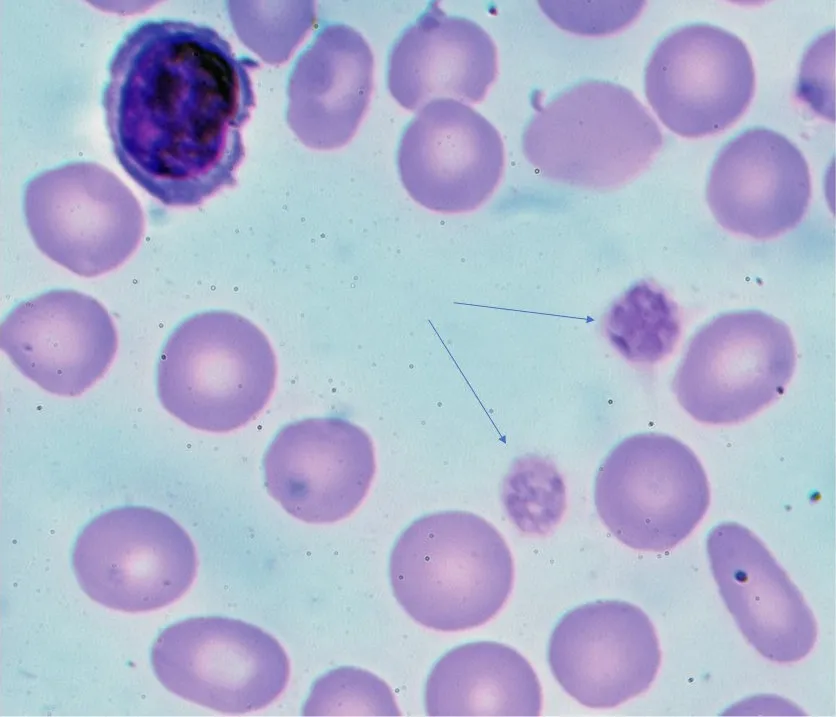
- Isolated thrombocytopenia below 100 x 10^9/L with otherwise normal FBC and film (large platelets); no splenomegaly or lymphadenopathy
- Phases: newly diagnosed (under 3 months), persistent (3–12 months), chronic (over 12 months)
- About 70–80% of children remit within 6–12 months; adolescents more often develop chronic ITP
- Intracranial haemorrhage is rare (about 0.5%) but the main cause of death
- No or skin-only bleeding: observation at home regardless of platelet count (ASH 2019)
- Treatment options for significant bleeding: prednisolone 2–4 mg/kg/day (max 120 mg) for 5–7 days, or IVIG 0.8–1 g/kg once; TPO receptor agonists for persistent or chronic ITP
Differential diagnosis
| Condition | Clues | Key test |
|---|---|---|
| Acute lymphoblastic leukaemia | Bone pain, fever, pallor, hepatosplenomegaly, lymphadenopathy, other cytopenias or blasts | Blood film; bone marrow |
| Non-accidental injury | Bruises on ears, neck, torso, buttocks; patterned bruises; non-mobile infant; normal platelets | Normal FBC and coagulation; child protection assessment |
| Inherited thrombocytopenia (Wiskott–Aldrich, Bernard–Soulier, MYH9-related) | Lifelong low platelets, family history; small platelets with eczema and infections (WAS) or giant platelets | Film platelet size; flow cytometry; genetics |
| Haemolytic uraemic syndrome | Bloody diarrhoea, anaemia with fragments, acute kidney injury | Film schistocytes; creatinine |
| Meningococcal sepsis | Fever, unwell child, spreading purpura | Blood culture; immediate antibiotics |
| IgA vasculitis (Henoch–Schönlein purpura) | Palpable purpura on buttocks and legs, arthritis, abdominal pain, NORMAL platelets | FBC normal; urinalysis |
| Aplastic anaemia or Fanconi anaemia | Pancytopenia; congenital anomalies in Fanconi | Bone marrow; chromosome breakage test |
| Evans syndrome / SLE (adolescents) | ITP with autoimmune haemolysis or systemic features | DAT, ANA |
Exam pearls
Guideline
ASH 2019 guidelines for immune thrombocytopenia and the updated international consensus report on primary ITP (2019)
References
- Neunert C, Terrell DR, Arnold DM, et al.. American Society of Hematology 2019 guidelines for immune thrombocytopenia. Blood Adv 2019.
- Provan D, Arnold DM, Bussel JB, et al.. Updated international consensus report on the investigation and management of primary immune thrombocytopenia. Blood Adv 2019.
- Tarantino MD, Bussel JB, Blanchette VS, et al.. Romiplostim in children with immune thrombocytopenia: a phase 3, randomised, double-blind, placebo-controlled study. Lancet 2016.
- Grainger JD, Locatelli F, Chotsampancharoen T, et al.. Eltrombopag for children with chronic immune thrombocytopenia (PETIT2): a randomised, multicentre, placebo-controlled trial. Lancet 2015.
- Royal College of Paediatrics and Child Health. Child protection evidence: bruising (systematic review). RCPCH 2020.
- Cooper N, Ghanima W.. Immune thrombocytopenia. N Engl J Med 2019.
Related topics
By Dr Khalid Seidi (B.Sc., M.D.) · MedEd World Clinical Knowledge library. Original teaching content checked against current guidelines (November 2026); confirm the latest local guidance before clinical use. Not a substitute for clinical judgement.