Clinical Knowledge › Paediatrics › Paediatric haematology and oncology
Iron deficiency anaemia in children
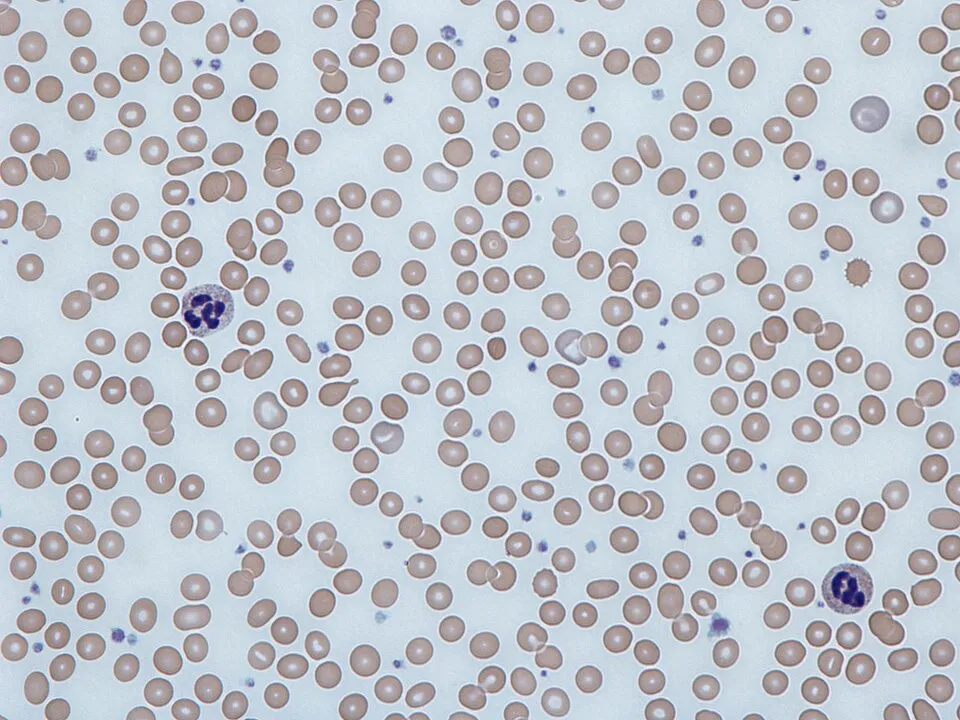
Iron deficiency is the commonest nutritional deficiency and the leading cause of anaemia in children worldwide. Risk peaks at 6–24 months, when birth iron stores are exhausted and growth is rapid, and again in adolescence with growth spurts and menstruation. Classic causes are prematurity, low birth weight, prolonged exclusive milk feeding without iron-rich weaning foods, and excess cow's milk in toddlers; in older children consider coeliac disease, inflammatory bowel disease, heavy periods and, in low-income settings, hookworm and malaria. Iron deficiency in infancy is linked to delayed cognitive and motor development that may not fully recover. Diagnosis rests on a microcytic hypochromic anaemia below age-specific haemoglobin cut-offs (WHO 2024) with low ferritin. Treatment is oral elemental iron about 3 mg/kg once daily, dietary change and limiting cow's milk to about 500 mL a day, continued for 3 months after haemoglobin normalises. Delayed cord clamping and iron-rich complementary feeding prevent it.
Patient case, mechanism, investigations, management, flashcards and exam-style questions.Open the lesson →
Key facts
- Peak ages: 6–24 months and adolescence (especially menstruating girls and athletes)
- WHO 2024 haemoglobin cut-offs: 6–23 months below 105 g/L; 24–59 months below 110 g/L; 5–11 years below 115 g/L; 12–14 years below 120 g/L
- Ferritin below 12 µg/L (under 5 years) or below 15 µg/L (5 years and older) confirms deficiency; thresholds rise to 30 and 70 µg/L with inflammation (WHO 2020)
- Cow's milk over about 500–600 mL/day in toddlers displaces iron-rich food and can cause occult intestinal blood loss; avoid cow's milk as the main drink before 12 months
- Treat with oral elemental iron about 3 mg/kg once daily (teaching dose; check local formulary); reticulocytes rise in 5–10 days and haemoglobin by at least 10 g/L in 4 weeks
- Continue iron for about 3 months after haemoglobin normalises to replenish stores
- Failure to respond: poor adherence, ongoing loss, malabsorption (coeliac disease), wrong diagnosis (thalassaemia trait)
- Accidental iron overdose has historically been a leading cause of fatal poisoning in young children: use child-resistant containers and store out of reach
Differential diagnosis
| Condition | Clues | Key test |
|---|---|---|
| Beta-thalassaemia trait | Very low MCV with near-normal haemoglobin and high red cell count; family origin from Mediterranean, Asia, Middle East | Ferritin normal; HbA2 raised on HPLC |
| Alpha-thalassaemia trait | Microcytosis with normal ferritin and HbA2; South-East Asian or African origin | DNA analysis |
| Anaemia of inflammation | Chronic illness (JIA, IBD, CKD), raised CRP | Ferritin normal or high; low transferrin saturation |
| Lead poisoning | Pica, old housing, abdominal pain, developmental regression | Blood lead; basophilic stippling |
| Coeliac disease | Iron deficiency refractory to oral iron, faltering growth, bloating | Tissue transglutaminase IgA with total IgA |
| Sideroblastic anaemia (rare) | Microcytosis not responding to iron | Bone marrow ring sideroblasts |
| Chronic blood loss | Menorrhagia, Meckel diverticulum, inflammatory bowel disease, hookworm | Stool microscopy, faecal calprotectin, Meckel scan as indicated |
Exam pearls
Guideline
WHO guideline on haemoglobin cut-offs (2024), WHO ferritin guideline (2020), WHO daily iron supplementation in infants and children (2016) and AAP clinical report on iron deficiency in infants and young children (2010)
References
- Baker RD, Greer FR; Committee on Nutrition, American Academy of Pediatrics. Diagnosis and prevention of iron deficiency and iron-deficiency anemia in infants and young children (0-3 years of age). Pediatrics 2010.
- World Health Organization. Guideline on haemoglobin cutoffs to define anaemia in individuals and populations. WHO 2024.
- World Health Organization. WHO guideline on use of ferritin concentrations to assess iron status in individuals and populations. WHO 2020.
- Braat S, Fielding KL, Han J, et al.. Haemoglobin thresholds to define anaemia from age 6 months to 65 years: estimates from international data sources. Lancet Haematol 2024.
- Domellöf M, Braegger C, Campoy C, et al.; ESPGHAN Committee on Nutrition. Iron requirements of infants and toddlers. J Pediatr Gastroenterol Nutr 2014.
- Powers JM, Buchanan GR, Adix L, Zhang S, Gao A, McCavit TL.. Effect of low-dose ferrous sulfate vs iron polysaccharide complex on hemoglobin concentration in young children with nutritional iron-deficiency anemia: a randomized clinical trial. JAMA 2017.
Related topics
By Dr Khalid Seidi (B.Sc., M.D.) · MedEd World Clinical Knowledge library. Original teaching content checked against current guidelines (November 2026); confirm the latest local guidance before clinical use. Not a substitute for clinical judgement.