Clinical Knowledge › Internal medicine › Pulmonology › Lung neoplasms
Lung cancer: overview and screening
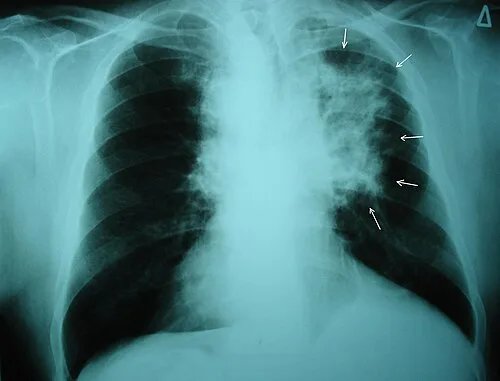
Lung cancer is the most commonly diagnosed cancer and the leading cause of cancer death worldwide, with about 2.5 million new cases and 1.8 million deaths in 2022. Tobacco smoking causes most cases, but radon, occupational carcinogens such as asbestos, air pollution and genetic factors also contribute, and a growing share occurs in people who have never smoked, particularly women in East Asia. Non-small cell lung cancer (adenocarcinoma, squamous cell and large cell carcinoma) makes up about 85% and small cell lung cancer about 15%. Most patients present late with cough, haemoptysis, breathlessness, weight loss or features of spread, so survival overall remains poor. The diagnostic pathway combines contrast CT, PET-CT, tissue sampling chosen to give both diagnosis and the highest stage, molecular profiling and TNM staging (ninth edition). Annual low-dose CT screening of high-risk current and former smokers reduces lung cancer mortality by about 20–24% in large trials and is now recommended in the USA, the UK and elsewhere.
Patient case, mechanism, investigations, management, flashcards and exam-style questions.Open the lesson →
Key facts
- Lung cancer is the leading cause of cancer death worldwide (GLOBOCAN 2022: about 1.8 million deaths)
- Smoking is the dominant cause; radon is the second commonest cause and the leading cause in never-smokers in many countries
- Histology: NSCLC about 85% (adenocarcinoma commonest), SCLC about 15%
- NICE NG12: urgent chest radiograph within 2 weeks for people aged 40+ with two unexplained symptoms, or one if they have ever smoked; refer on a suspected cancer pathway for unexplained haemoptysis at 40+
- Choose the biopsy that gives both a diagnosis and the highest stage (for example EBUS-TBNA of a mediastinal node)
- Non-squamous NSCLC needs molecular testing (EGFR, ALK, ROS1, BRAF, KRAS, MET, RET, NTRK, HER2) plus PD-L1 before first-line treatment
- NLST: low-dose CT reduced lung cancer mortality by 20% versus chest radiography; NELSON: by about 24% in men at 10 years
- USPSTF 2021: annual LDCT for adults 50–80 with at least 20 pack-years who smoke or quit within 15 years
Differential diagnosis
| Condition | Clues | Key test |
|---|---|---|
| Pulmonary tuberculosis | Night sweats, fever, upper lobe cavitation, endemic exposure | Sputum smear, culture and nucleic acid amplification (GeneXpert) |
| Benign pulmonary nodule (hamartoma, granuloma) | Stable size over 2 years, popcorn or central calcification | CT features and volumetric follow-up per Fleischner or BTS guidance |
| Pneumonia with slow resolution | Fever and consolidation that clears on repeat imaging | Repeat chest radiograph at about 6 weeks; CT if it persists |
| Pulmonary metastases from another primary | Multiple round peripheral nodules; known cancer elsewhere | CT chest, abdomen and pelvis; biopsy with immunohistochemistry |
| Lymphoma | Bulky mediastinal nodes, B symptoms, younger patient | Excision or core biopsy of a node |
| Sarcoidosis | Symmetrical hilar nodes, erythema nodosum, raised ACE | EBUS-TBNA showing non-caseating granulomas |
| Organising pneumonia or vasculitis (GPA) | Migratory opacities, systemic features, cavitating nodules | ANCA, biopsy, response to treatment |
Exam pearls
Guideline
USPSTF lung cancer screening (2021), American Cancer Society screening update (2023), NICE NG122 lung cancer (2019, updated 2024) and NG12 suspected cancer, with the IASLC ninth edition TNM classification
References
- Bray F, Laversanne M, Sung H, et al.. Global cancer statistics 2022: GLOBOCAN estimates of incidence and mortality worldwide for 36 cancers in 185 countries. CA Cancer J Clin 2024.
- Krist AH, Davidson KW, Mangione CM, et al.. Screening for lung cancer: US Preventive Services Task Force recommendation statement. JAMA 2021.
- National Lung Screening Trial Research Team; Aberle DR, Adams AM, Berg CD, et al.. Reduced lung-cancer mortality with low-dose computed tomographic screening. N Engl J Med 2011.
- de Koning HJ, van der Aalst CM, de Jong PA, et al.. Reduced lung-cancer mortality with volume CT screening in a randomized trial. N Engl J Med 2020.
- Wolf AMD, Oeffinger KC, Shih TY, et al.. Screening for lung cancer: 2023 guideline update from the American Cancer Society. CA Cancer J Clin 2024.
- Rami-Porta R, Nishimura KK, Giroux DJ, et al.. The International Association for the Study of Lung Cancer Lung Cancer Staging Project: proposals for revision of the TNM stage groups in the forthcoming (ninth) edition of the TNM classification for lung cancer. J Thorac Oncol 2024.
Related topics
By Dr Khalid Seidi (B.Sc., M.D.) · MedEd World Clinical Knowledge library. Original teaching content checked against current guidelines (November 2026); confirm the latest local guidance before clinical use. Not a substitute for clinical judgement.