Clinical Knowledge › Paediatrics › Endocrine and metabolic disorders
Lysosomal storage disorders
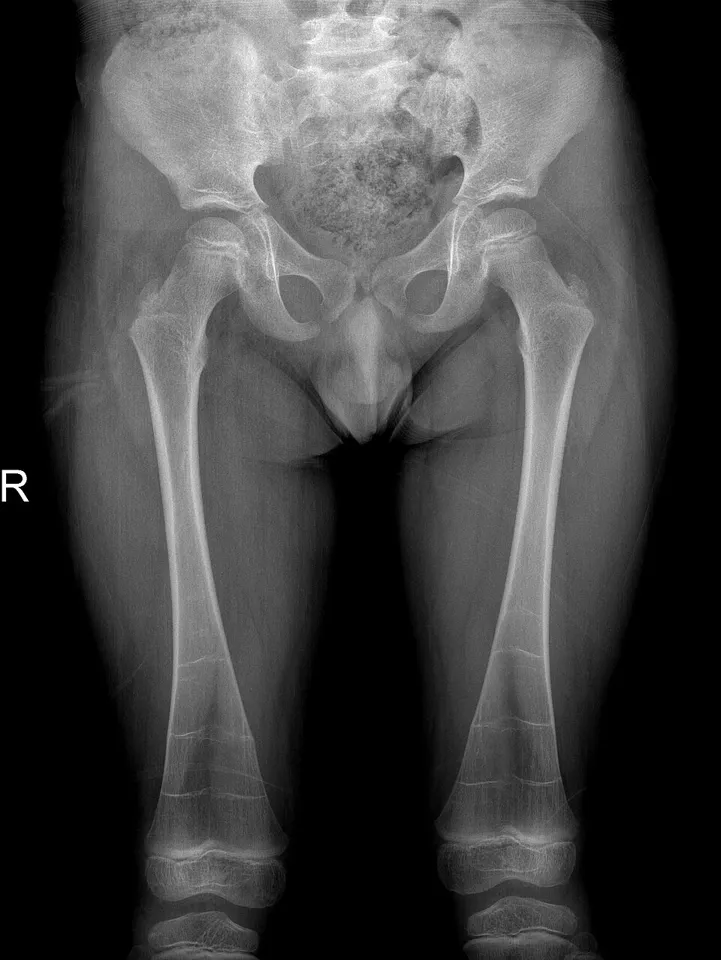
Lysosomal storage disorders (LSDs) are more than 70 inherited diseases in which a lysosomal enzyme, activator or membrane protein is missing, so undigested macromolecules accumulate inside cells. Together they affect about 1 in 5000–7000 births. Almost all are autosomal recessive; Fabry disease, Hunter syndrome (MPS II) and Danon disease are X-linked. They present after a normal period with slowly progressive, multisystem disease: coarse facial features, hepatosplenomegaly, skeletal dysplasia (dysostosis multiplex), corneal clouding, cardiomyopathy, hearing loss and, in many, developmental regression. Key exam patterns are Tay–Sachs (cherry-red macula, exaggerated startle, no organomegaly), Niemann–Pick A (cherry-red spot with hepatosplenomegaly), Gaucher disease (splenomegaly, cytopenias, bone crises, Erlenmeyer flask femur), Hurler syndrome (MPS I, corneal clouding, gibbus) and Hunter syndrome (no corneal clouding, boys). Diagnosis uses urinary glycosaminoglycans, enzyme assay on blood spots and genetic testing. Treatment includes enzyme replacement, substrate reduction, early haematopoietic stem cell transplantation, gene therapy and supportive multidisciplinary care.
Patient case, mechanism, investigations, management, flashcards and exam-style questions.Open the lesson →
Key facts
- More than 70 disorders; collectively about 1 in 5000–7000 births; most autosomal recessive, but Fabry, Hunter (MPS II) and Danon are X-linked
- Groups: sphingolipidoses (Gaucher, Niemann–Pick A/B, Tay–Sachs, Sandhoff, Krabbe, metachromatic leukodystrophy, Fabry), mucopolysaccharidoses (MPS I–VII), glycogen (Pompe), lipid transport (Niemann–Pick C) and others (I-cell disease, neuronal ceroid lipofuscinoses)
- Cherry-red macula: Tay–Sachs and Sandhoff (no or mild organomegaly) and Niemann–Pick A (with hepatosplenomegaly)
- Gaucher type 1 (GBA1, glucocerebrosidase): splenomegaly, anaemia, thrombocytopenia, bone pain and crises, Erlenmeyer flask deformity; no neurological involvement; treated with ERT or substrate reduction
- Hurler (MPS I, α-L-iduronidase): coarse face, corneal clouding, gibbus, hepatosplenomegaly, valve disease, developmental decline; HSCT before about 2–2.5 years preserves cognition
- Hunter (MPS II, iduronate-2-sulfatase): X-linked boys, no corneal clouding, pebbly skin over scapulae, airway disease
- Screening tests: urinary glycosaminoglycans (MPS), enzyme activity on dried blood spot or leucocytes, biomarkers (lyso-Gb1 for Gaucher, lyso-Gb3 for Fabry, oxysterols for Niemann–Pick C), then gene testing
- Newborn screening for Pompe, MPS I, MPS II and Krabbe disease is on the US RUSP; most countries, including the UK, do not yet screen for LSDs
Differential diagnosis
| Condition | Clues | Key test |
|---|---|---|
| Congenital hypothyroidism | Coarse features, macroglossia, hypotonia, prolonged jaundice; no organomegaly | TSH and free T4 (newborn screen) |
| Haematological malignancy (ALL) | Splenomegaly with cytopenias, but acute onset, blasts on film | Blood film, bone marrow |
| Chronic liver disease with portal hypertension | Splenomegaly and thrombocytopenia with stigmata of liver disease | Liver function, ultrasound with Doppler |
| Glycogen storage disease | Hepatomegaly with fasting hypoglycaemia (not seen in most LSDs) | Glucose, lactate, gene panel |
| Cerebral palsy | Non-progressive motor disorder; no regression | History of regression, MRI, metabolic tests |
| Rett syndrome | Girls with regression of hand use and stereotypies | MECP2 testing |
| Skeletal dysplasia (e.g. spondyloepiphyseal dysplasia) | Short stature and spinal changes without organomegaly or storage | Skeletal survey, gene panel, urinary GAGs normal |
| Mucolipidosis II (I-cell disease) | Hurler-like features from birth with gum hypertrophy; urinary GAGs normal | High plasma lysosomal enzyme activities; GNPTAB testing |
Exam pearls
Guideline
International MPS I management guidelines (2009), French national Gaucher disease protocol (PNDS, 2025), US Recommended Uniform Screening Panel (lysosomal additions to 2024) and NICE highly specialised technology guidance
References
- Platt FM, d'Azzo A, Davidson BL, Neufeld EF, Tifft CJ.. Lysosomal storage diseases. Nat Rev Dis Primers 2018.
- Muenzer J, Wraith JE, Clarke LA; International Consensus Panel on Management and Treatment of Mucopolysaccharidosis I.. Mucopolysaccharidosis I: management and treatment guidelines. Pediatrics 2009.
- Camou F, Serratrice C, Pettazzoni M, et al.. French national diagnosis and care protocol (PNDS): Gaucher disease. Orphanet J Rare Dis 2025.
- US Health Resources and Services Administration Advisory Committee on Heritable Disorders in Newborns and Children. Recommended Uniform Screening Panel (Pompe 2015, MPS I 2016, MPS II 2022, Krabbe 2024). HRSA 2024.
- Saudubray JM, Garcia-Cazorla À.. Inborn errors of metabolism overview: pathophysiology, manifestations, evaluation, and management. Pediatr Clin North Am 2018.
- Saudubray JM, Baumgartner MR, García-Cazorla Á, Walter J, eds.. Inborn Metabolic Diseases: Diagnosis and Treatment. 2022.
Related topics
By Dr Khalid Seidi (B.Sc., M.D.) · MedEd World Clinical Knowledge library. Original teaching content checked against current guidelines (November 2026); confirm the latest local guidance before clinical use. Not a substitute for clinical judgement.