Clinical Knowledge › Paediatrics › Endocrine and metabolic disorders
Phenylketonuria
Phenylketonuria (PKU) is an autosomal recessive deficiency of phenylalanine hydroxylase (PAH), the liver enzyme that converts phenylalanine (Phe) to tyrosine using the cofactor tetrahydrobiopterin (BH4). Untreated, Phe accumulates and damages the developing brain, causing severe intellectual disability, microcephaly, seizures, behavioural problems, eczema, a musty odour and fair hair and skin. It affects about 1 in 10,000 births in Europe. Newborn blood-spot screening detects raised Phe in the first days of life; about 1–2% of infants with hyperphenylalaninaemia have a BH4 synthesis or recycling defect that needs different treatment. A lifelong Phe-restricted diet with a Phe-free amino-acid protein substitute, started within the first 10 days, allows normal development. Targets are blood Phe 120–360 micromol/L in childhood. Sapropterin, sepiapterin and pegvaliase help selected patients. Women with PKU must control Phe before and during pregnancy, because high maternal Phe causes microcephaly, intellectual disability and congenital heart disease in the baby.
Patient case, mechanism, investigations, management, flashcards and exam-style questions.Open the lesson →
Key facts
- Autosomal recessive PAH deficiency (PAH gene, chromosome 12q23); carrier frequency about 1 in 50 in northern Europe; recurrence risk 25% for carrier parents
- Incidence about 1 in 10,000 in Europe (higher in Ireland and Turkey, lower in Finland, Japan and many African populations)
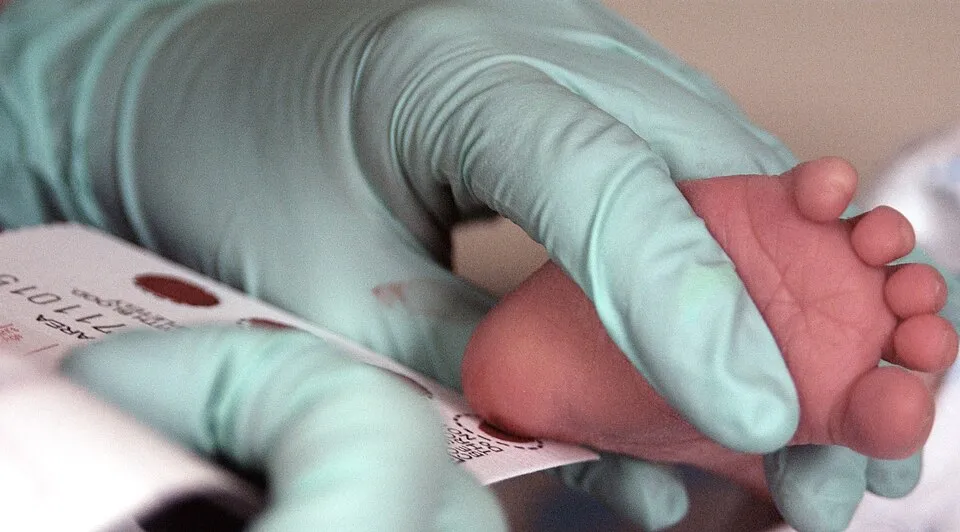
- Screening: blood-spot Phe (and Phe:Tyr ratio) by tandem mass spectrometry, on day 5 in the UK (24–72 hours in many programmes)
- Classify by untreated Phe: classic PKU above 1200 micromol/L, mild PKU 600–1200, mild hyperphenylalaninaemia below 600; start treatment if Phe is above 360 micromol/L
- Always screen hyperphenylalaninaemia for BH4 defects (urine or blood pterins, DHPR activity): these also need neurotransmitter precursors
- Treatment: lifelong low-Phe diet with Phe-free L-amino acid protein substitute; start ideally within the first 10 days of life
- Targets: 120–360 micromol/L up to age 12 (European) or lifelong (ACMG 2023); 120–600 micromol/L allowed after 12 in Europe; 120–360 before conception and throughout pregnancy
- Maternal PKU syndrome: microcephaly, intellectual disability, congenital heart disease and growth restriction in the fetus when maternal Phe is high
Differential diagnosis
| Condition | Clues | Key test |
|---|---|---|
| BH4 deficiency (GTPCH, PTPS, DHPR, PCD) | Hyperphenylalaninaemia with progressive neurological signs despite diet; low neurotransmitters | Urine or blood pterins, DHPR activity, CSF neurotransmitters |
| Transient hyperphenylalaninaemia | Raised Phe in preterm or sick neonate, often with high tyrosine (liver immaturity) | Repeat Phe and tyrosine |
| Tyrosinaemia type 1 | Raised tyrosine with liver failure, renal tubulopathy; succinylacetone positive | Blood-spot succinylacetone |
| Liver disease (for example galactosaemia, citrin deficiency) | Raised Phe with other amino acids and cholestasis | Liver function, galactosaemia screen, plasma amino acids |
| Maternal PKU affecting a newborn | Microcephaly, heart defect and dysmorphism in baby of mother with untreated PKU; baby's PAH usually normal | Maternal Phe history; infant Phe normal |
| Other causes of developmental delay with seizures | Late-diagnosed child with delay, eczema and seizures (unscreened) | Plasma Phe; metabolic and genetic testing |
Exam pearls
Guideline
ACMG evidence-based guideline on phenylalanine hydroxylase deficiency (2023, published December 2024) and European guidelines on diagnosis and treatment of PKU, first revision (2025)
References
- Smith WE, Berry SA, Bloom K, et al.. Phenylalanine hydroxylase deficiency diagnosis and management: a 2023 evidence-based clinical guideline of the American College of Medical Genetics and Genomics (ACMG). Genet Med 2025.
- van Wegberg AMJ, MacDonald A, Ahring K, et al.. European guidelines on diagnosis and treatment of phenylketonuria: first revision. Mol Genet Metab 2025.
- Klaassen K, Kecman B, Stankovic S, et al.. Genomic profiling, implications for genotype-based treatment of 131 patients with phenylketonuria and characterization of novel p.Pro416Leu PAH variant. Sci Rep 2025.
- Anton-Păduraru DT, Trofin F, Chis A, et al.. Current insights into nutritional management of phenylketonuria: an update for children and adolescents. Children (Basel) 2025.
- Saudubray JM, Baumgartner MR, García-Cazorla Á, Walter JH, eds.. Inborn Metabolic Diseases: Diagnosis and Treatment. 2022.
- Sperling MA, ed.. Sperling Pediatric Endocrinology. 2021.
Related topics
By Dr Khalid Seidi (B.Sc., M.D.) · MedEd World Clinical Knowledge library. Original teaching content checked against current guidelines (November 2026); confirm the latest local guidance before clinical use. Not a substitute for clinical judgement.