Clinical Knowledge › Internal medicine › Cardiology and angiology › Valvular heart disease and endocarditis
Mitral stenosis
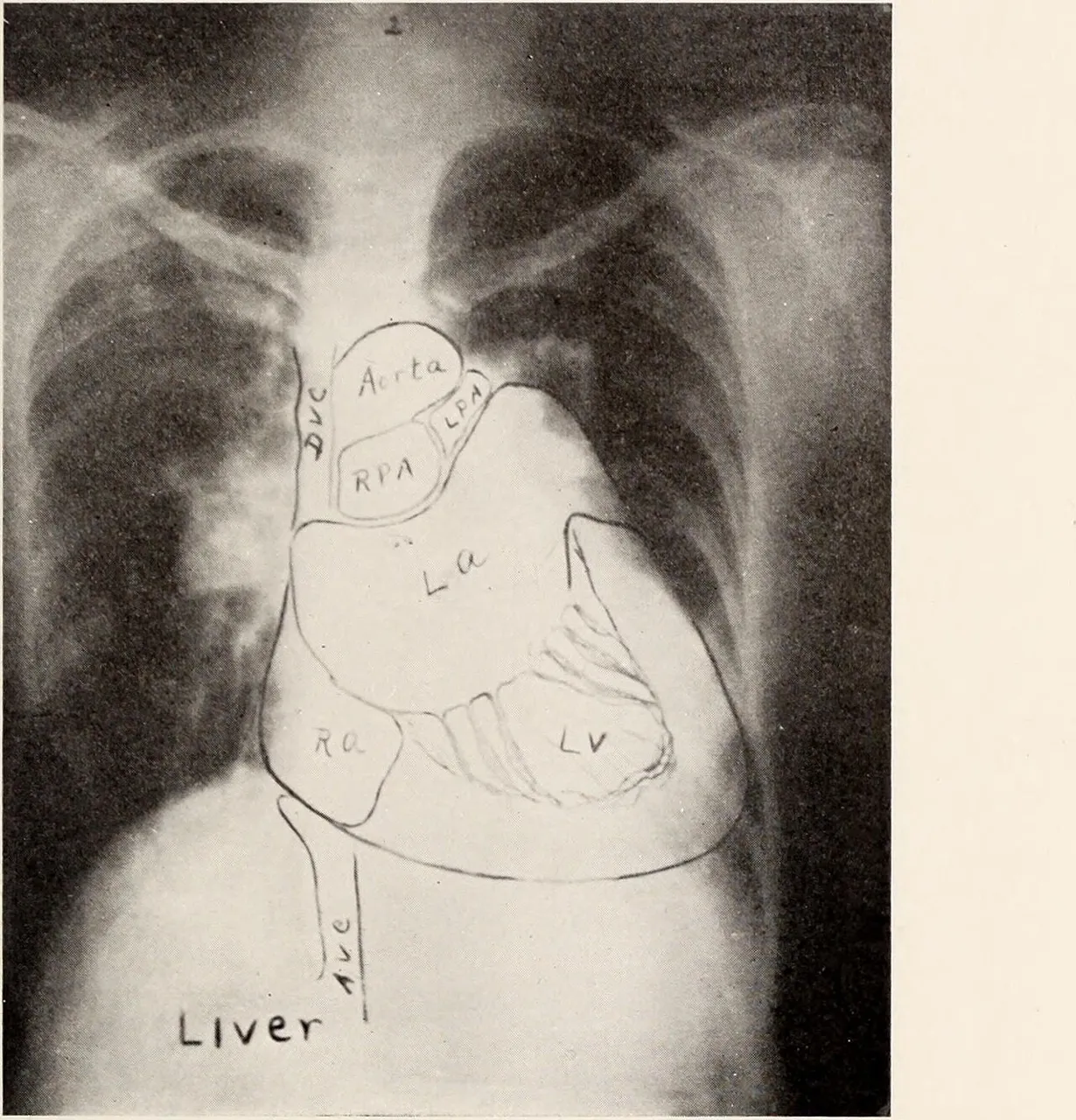
Mitral stenosis (MS) is narrowing of the mitral valve orifice that obstructs flow from the left atrium to the left ventricle in diastole. Worldwide it is almost always a late result of rheumatic fever; in older people in high-income countries, mitral annular calcification is an increasing cause. Raised left atrial pressure is transmitted to the pulmonary veins, causing breathlessness, orthopnoea, haemoptysis and eventually pulmonary hypertension and right heart failure. Because filling depends on diastolic time, tachycardia from exercise, pregnancy, fever or atrial fibrillation can provoke sudden pulmonary oedema. The enlarged atrium predisposes to atrial fibrillation and systemic embolism. Classic signs are a loud first heart sound, an opening snap and a low-pitched mid-diastolic rumble at the apex. Echocardiography measures valve area and anatomy. Treatment combines rate control, diuretics and vitamin K antagonists for AF; percutaneous mitral commissurotomy is preferred for symptomatic significant rheumatic MS with favourable anatomy, with surgery otherwise.
Patient case, mechanism, investigations, management, flashcards and exam-style questions.Open the lesson →
Key facts
- Rheumatic heart disease causes most mitral stenosis worldwide; mitral annular calcification is a growing cause in older adults
- Clinically significant MS: valve area 1.5 cm² or less (normal 4–6 cm²)
- Tachycardia shortens diastole and raises LA pressure: exercise, pregnancy and AF precipitate pulmonary oedema
- Signs: malar flush, tapping apex, loud S1, opening snap and low-pitched mid-diastolic rumble at the apex in left lateral position
- A shorter S2–opening snap interval means more severe stenosis
- Warfarin (vitamin K antagonist), not a DOAC, for AF with moderate or severe rheumatic MS (INVICTUS)
- Percutaneous mitral commissurotomy (PMC) for symptomatic significant MS with favourable anatomy; TOE first to exclude LA thrombus
- Secondary prophylaxis with benzathine penicillin continues in young patients with rheumatic MS
Differential diagnosis
| Condition | Clues | Key test |
|---|---|---|
| Austin Flint murmur | Apical diastolic rumble in severe aortic regurgitation; no opening snap or loud S1 | Echocardiography |
| Left atrial myxoma | Positional symptoms, tumour plop, constitutional features, embolism | Echocardiography |
| Tricuspid stenosis | Diastolic murmur louder on inspiration at left lower sternal edge, giant a waves | Echocardiography |
| Heart failure with preserved ejection fraction | Breathlessness and AF in older adult without diastolic murmur | Echocardiography, NT-proBNP |
| Pulmonary arterial hypertension | Loud P2, RV heave, no mitral obstruction | Echocardiography, right heart catheterisation |
| Cor triatriatum or congenital MS | Young patient, abnormal LA membrane or parachute valve | Echocardiography, cardiac MRI |
Exam pearls
Guideline
2025 ESC/EACTS Guidelines for the management of valvular heart disease, 2020 ACC/AHA valvular heart disease guideline and 2023 World Heart Federation echocardiographic criteria for rheumatic heart disease
References
- Praz F, Borger MA, Lanz J, et al.. 2025 ESC/EACTS Guidelines for the management of valvular heart disease. Eur Heart J 2025.
- Otto CM, Nishimura RA, Bonow RO, et al.. 2020 ACC/AHA Guideline for the Management of Patients With Valvular Heart Disease. Circulation 2021.
- Wilkins GT, Weyman AE, Abascal VM, et al.. Percutaneous balloon dilatation of the mitral valve: an analysis of echocardiographic variables related to outcome and the mechanism of dilatation. Br Heart J 1988.
- Connolly SJ, Karthikeyan G, Ntsekhe M, et al.. Rivaroxaban in Rheumatic Heart Disease-Associated Atrial Fibrillation. N Engl J Med 2022.
- Rwebembera J, Marangou J, Mwita JC, et al.. 2023 World Heart Federation guidelines for the echocardiographic diagnosis of rheumatic heart disease. Nat Rev Cardiol 2024.
- Zühlke L, Karthikeyan G, Engel ME, et al.. Clinical Outcomes in 3343 Children and Adults With Rheumatic Heart Disease From 14 Low- and Middle-Income Countries: Two-Year Follow-Up of the Global Rheumatic Heart Disease Registry (the REMEDY Study). Circulation 2016.
Related topics
By Dr Khalid Seidi (B.Sc., M.D.) · MedEd World Clinical Knowledge library. Original teaching content checked against current guidelines (November 2026); confirm the latest local guidance before clinical use. Not a substitute for clinical judgement.