Clinical Knowledge › Internal medicine › Cardiology and angiology › Valvular heart disease and endocarditis
Prosthetic heart valves
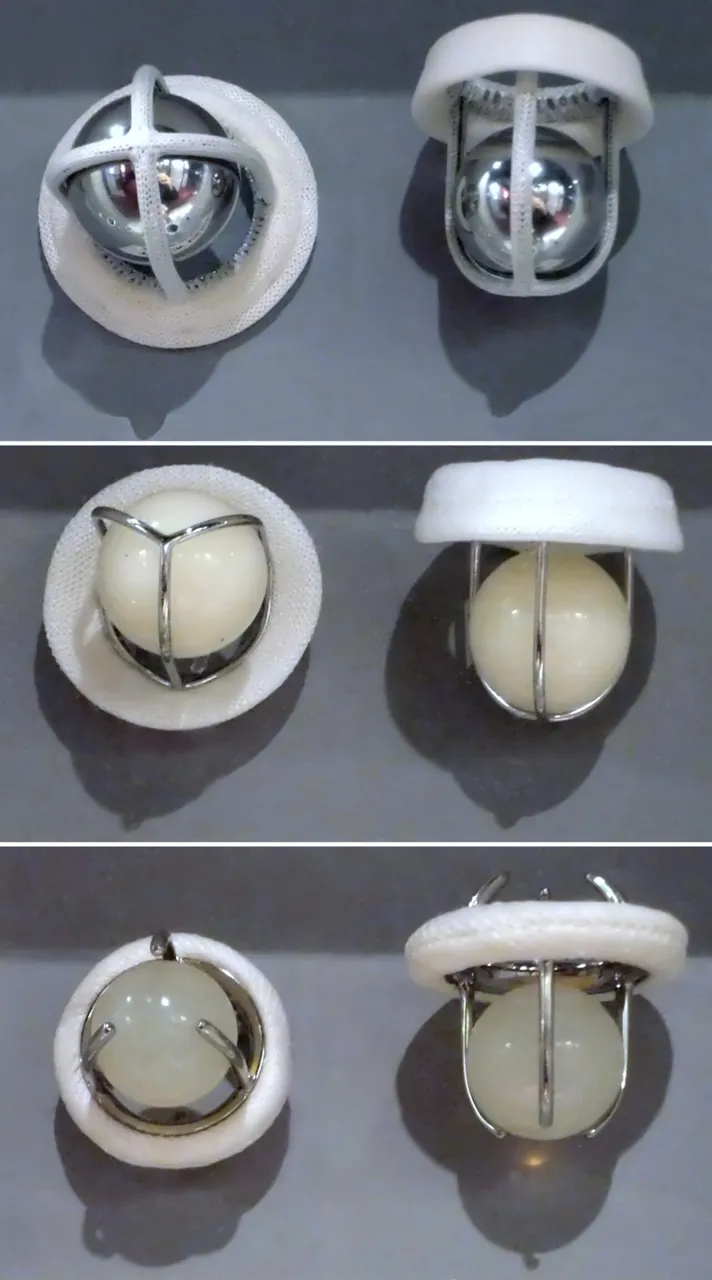
Prosthetic heart valves replace diseased native valves and are either mechanical or biological. Mechanical valves, now mostly bileaflet, last for life but need lifelong vitamin K antagonist anticoagulation with an INR target set by valve type, position and patient risk factors; direct oral anticoagulants are contraindicated after trials showed more thrombosis and bleeding. Biological valves (surgical bioprostheses, homografts and transcatheter valves) avoid long-term anticoagulation but degenerate over 10–20 years, faster in younger patients, and can then be treated with a valve-in-valve procedure. Valve choice balances age, bleeding risk, pregnancy plans and preference. Every doctor should recognise normal crisp mechanical clicks and the warning signs of complications: valve thrombosis (new breathlessness, muffled clicks, emboli), endocarditis (fever, new regurgitation), paravalvular leak with haemolysis, degeneration and bleeding. Patients need echocardiographic follow-up, careful INR control and bridging plans, and antibiotic prophylaxis before dental procedures.
Patient case, mechanism, investigations, management, flashcards and exam-style questions.Open the lesson →
Key facts
- Mechanical valves: durable, lifelong VKA; biological valves: no long-term anticoagulation but structural deterioration within about 10–20 years
- Shared decision: mechanical generally favoured in younger patients (ESC: under about 60 years aortic, 65 mitral; ACC/AHA: under 50), bioprosthesis in older patients
- VKA INR target depends on valve thrombogenicity and patient risk factors (mitral or tricuspid position, AF, previous embolism, LVEF below 35%); typical range 2.5–3.5
- DOACs are contraindicated with mechanical valves (RE-ALIGN with dabigatran, PROACT Xa with apixaban) and in moderate-to-severe rheumatic mitral stenosis
- After TAVI without another indication for anticoagulation: lifelong single antiplatelet therapy (aspirin); DOACs are acceptable for AF with a bioprosthesis
- Obstructive mechanical valve thrombosis: breathlessness, muffled clicks and high gradients; treat with urgent surgery or fibrinolysis according to risk and availability
- Prosthetic valve endocarditis has high mortality, often needs surgery and is diagnosed with echo, cardiac CT and PET-CT using Duke-ISCVID criteria
- Endocarditis prophylaxis is recommended before dental procedures that manipulate the gingiva for all patients with prosthetic valves, including transcatheter valves
Differential diagnosis
| Condition | Clues | Key test |
|---|---|---|
| Prosthetic valve thrombosis | Subtherapeutic INR, breathlessness, muffled clicks, emboli | TTE, TOE, cine-fluoroscopy or CT |
| Pannus formation | Gradual obstruction years after implant, therapeutic INR | TOE and CT (dense tissue under ring) |
| Prosthetic valve endocarditis | Fever, new regurgitation, embolic phenomena | Blood cultures, TOE, cardiac CT, PET-CT |
| Paravalvular leak | New regurgitant murmur, haemolytic anaemia | TOE with 3D colour Doppler, LDH, haptoglobin |
| Structural valve deterioration (bioprosthesis) | Gradual rise in gradient or new regurgitation after years | Serial echo, CT |
| Patient–prosthesis mismatch | High gradients from the outset with normal leaflet motion | Echo indexed effective orifice area |
| Heart failure from other causes | LV dysfunction, AF, ischaemia with normal prosthesis | Echo, ECG, BNP |
Exam pearls
Guideline
2025 ESC/EACTS guidelines for valvular heart disease, 2020 ACC/AHA valvular heart disease guideline, 2023 ESC endocarditis guideline with 2023 Duke-ISCVID criteria, and 2024 ASE prosthetic valve imaging guideline
References
- Praz F, Borger MA, Lanz J, et al.. 2025 ESC/EACTS Guidelines for the management of valvular heart disease. Eur Heart J 2025.
- Otto CM, Nishimura RA, Bonow RO, et al.. 2020 ACC/AHA Guideline for the Management of Patients With Valvular Heart Disease. Circulation 2021.
- Delgado V, Ajmone Marsan N, de Waha S, et al.. 2023 ESC Guidelines for the management of endocarditis. Eur Heart J 2023.
- Zoghbi WA, Jone PN, Chamsi-Pasha MA, et al.. Guidelines for the evaluation of prosthetic valve function with cardiovascular imaging: a report from the American Society of Echocardiography developed in collaboration with the Society for Cardiovascular Magnetic Resonance and the Society of Cardiovascular Computed Tomography. J Am Soc Echocardiogr 2024.
- Eikelboom JW, Connolly SJ, Brueckmann M, et al.. Dabigatran versus warfarin in patients with mechanical heart valves. N Engl J Med 2013.
- Eikelboom JW, Weitz JI.. Warfarin faring better: vitamin K antagonists beat rivaroxaban and apixaban in the INVICTUS and PROACT Xa trials. J Thromb Haemost 2023.
Related topics
By Dr Khalid Seidi (B.Sc., M.D.) · MedEd World Clinical Knowledge library. Original teaching content checked against current guidelines (November 2026); confirm the latest local guidance before clinical use. Not a substitute for clinical judgement.