Clinical Knowledge › Internal medicine › Basics of internal medicine › Palliative care
Nausea and vomiting in palliative care
Nausea and vomiting affect a large proportion (estimates range widely) of people with advanced cancer and many with organ failure, and are often multifactorial. The ward approach is mechanism-based: identify the most likely pathway from the history and examination, correct reversible causes, and choose an antiemetic that acts on that pathway, given regularly by a route that will be absorbed. Chemical causes acting on the chemoreceptor trigger zone (opioids, hypercalcaemia, uraemia) respond to dopamine antagonists such as haloperidol; gastric stasis responds to the prokinetic metoclopramide; raised intracranial pressure and vestibular causes respond to cyclizine (with dexamethasone for cerebral metastases); malignant bowel obstruction needs a specific plan with antisecretory drugs and sometimes surgery or stenting. MASCC 2021 recommends metoclopramide or haloperidol first-line, levomepromazine (methotrimeprazine) or olanzapine second-line. When vomiting prevents oral absorption use subcutaneous doses or a syringe driver. Review within 24 hours, avoid combining drugs with opposing actions (metoclopramide with cyclizine), and watch for extrapyramidal effects and QT prolongation.
Patient case, mechanism, investigations, management, flashcards and exam-style questions.Open the lesson →
Key facts
- Identify the likely mechanism: chemical (CTZ), gastric stasis, bowel obstruction, raised intracranial pressure, vestibular, cortical/anxiety, gastric irritation
- Chemical causes (opioids, hypercalcaemia, uraemia, drugs): haloperidol 0.5–1.5 mg at night or twice daily (teaching dose; check local formulary)
- Gastric stasis ('squashed stomach', early satiety, large vomits relieving nausea): metoclopramide 10 mg three times daily before meals
- Raised intracranial pressure: cyclizine plus dexamethasone; vestibular: cyclizine
- MASCC 2021: first line metoclopramide or haloperidol; second line levomepromazine (methotrimeprazine) or olanzapine
- Do not combine metoclopramide with cyclizine: antimuscarinic action blocks the prokinetic effect
- Avoid metoclopramide in complete bowel obstruction or colic; avoid dopamine antagonists in Parkinson disease (domperidone is an alternative)
- Use the subcutaneous route or a continuous subcutaneous infusion if vomiting or unable to swallow; reassess within 24 hours
Differential diagnosis
| Condition | Clues | Key test |
|---|---|---|
| Opioid-induced nausea | Started within days of opioid start or dose rise; often settles | Temporal relation; haloperidol |
| Hypercalcaemia of malignancy | Thirst, polyuria, confusion, constipation | Adjusted calcium |
| Constipation | Bloating, infrequent hard stool, nausea | History and rectal examination |
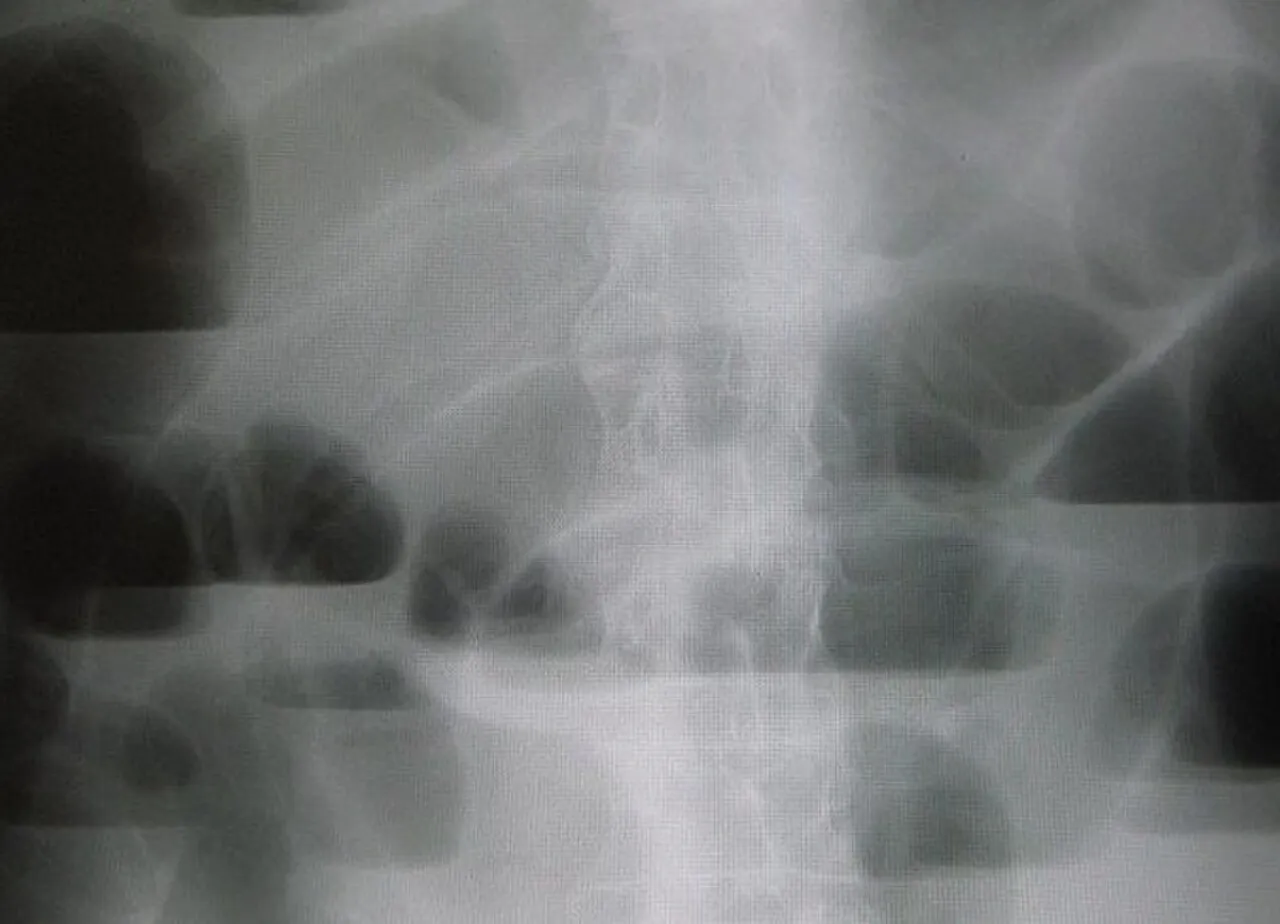
| Malignant bowel obstruction | Colic, distension, faeculent vomiting, absent flatus | CT abdomen if intervention considered |
| Raised intracranial pressure | Morning headache, vomiting, focal signs | CT or MRI brain |
| Gastric outlet obstruction or stasis | Large-volume vomits of undigested food, succussion splash | Clinical; CT or endoscopy if relevant |
| Uraemia or liver failure | Rising urea, jaundice | Renal and liver function |
| Oral or oesophageal candidiasis | Sore mouth, dysphagia, white plaques | Inspection; antifungal |
Exam pearls
Guideline
MASCC antiemetics in advanced cancer updated guideline (2021), with the MASCC 2021 malignant bowel obstruction update and NICE NG31 (2015)
References
- Davis M, Hui D, Davies A, et al.. MASCC antiemetics in advanced cancer updated guideline. Support Care Cancer 2021.
- Roila F, Molassiotis A, Herrstedt J, et al.. 2016 MASCC and ESMO guideline update for the prevention of chemotherapy- and radiotherapy-induced nausea and vomiting and of nausea and vomiting in advanced cancer patients. Ann Oncol 2016.
- Davis M, Hui D, Davies A, et al.. Medical management of malignant bowel obstruction in patients with advanced cancer: 2021 MASCC guideline update. Support Care Cancer 2021.
- Hardy JR, Skerman H, Philip J, et al.. Methotrimeprazine versus haloperidol in palliative care patients with cancer-related nausea: a randomised, double-blind controlled trial. BMJ Open 2019.
- National Institute for Health and Care Excellence (NICE). Care of dying adults in the last days of life (NG31). NICE, London 2015.
- Cherny NI, Fallon MT, Kaasa S, Portenoy RK, Currow DC, eds.. Oxford Textbook of Palliative Medicine (6th edition). Oxford University Press 2021.
Related topics
By Dr Khalid Seidi (B.Sc., M.D.) · MedEd World Clinical Knowledge library. Original teaching content checked against current guidelines (November 2026); confirm the latest local guidance before clinical use. Not a substitute for clinical judgement.