Clinical Knowledge › Anaesthesiology › Relevant pharmacology
Neuromuscular blocking agents
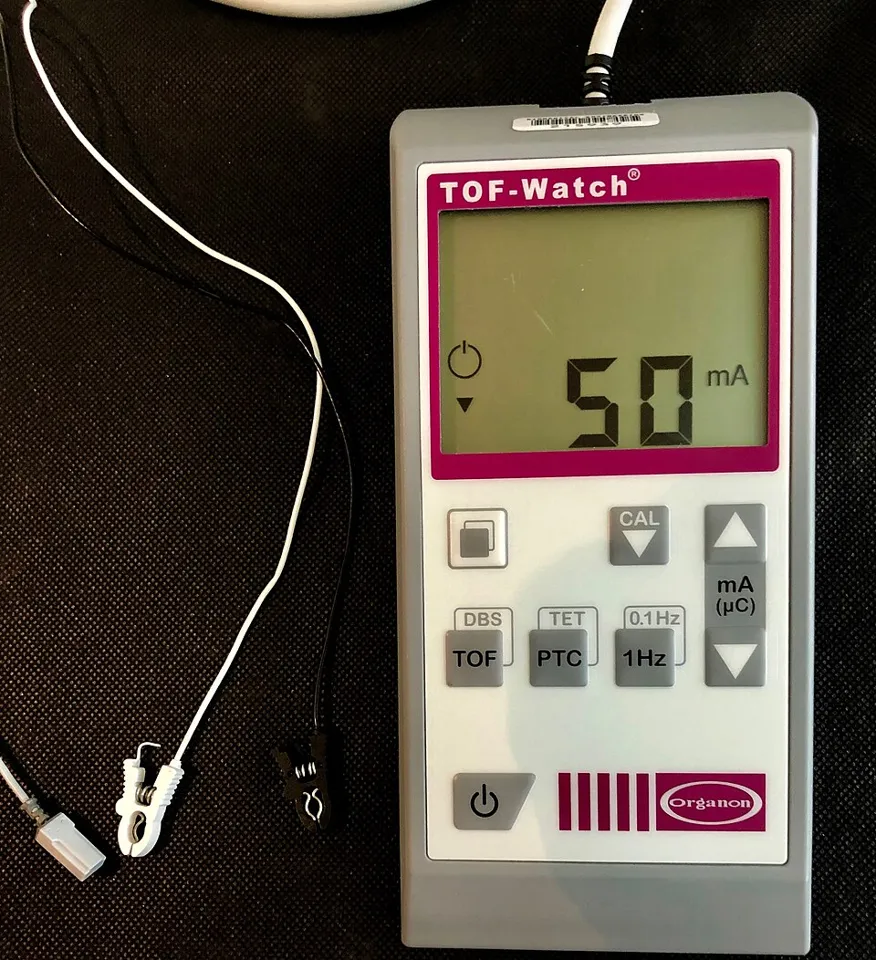
Neuromuscular blocking agents paralyse skeletal muscle by acting at the nicotinic acetylcholine receptor of the neuromuscular junction. They provide ideal conditions for tracheal intubation, surgical access and controlled ventilation, and are given only by a practitioner able to ventilate the lungs, with peripheral nerve stimulation and full monitoring in place. Suxamethonium is the only depolarising agent in use: it acts within a minute and wears off within ten, but carries hyperkalaemia, myalgia, bradycardia, malignant hyperthermia and prolonged block from butyrylcholinesterase deficiency. The non-depolarising agents are competitive antagonists divided into aminosteroids, principally rocuronium and vecuronium, and benzylisoquinoliniums such as atracurium and cisatracurium, which differ chiefly in onset, duration, route of elimination and histamine release. Safe use rests on quantitative train-of-four monitoring, deliberate reversal, and a rehearsed plan for the paralysed patient who cannot be intubated or oxygenated.
Patient case, mechanism, investigations, management, flashcards and exam-style questions.Open the lesson →
Key facts
- Suxamethonium is a depolarising agonist producing fasciculation then a non-excitable, depolarised endplate
- Suxamethonium teaching dose 1 to 1.5 mg/kg gives intubating conditions in 45 to 60 seconds and lasts 5 to 10 minutes
- Suxamethonium raises serum potassium by roughly 0.5 mmol/L and far more in burns, denervation and prolonged immobility
- Rocuronium 1.0 to 1.2 mg/kg gives intubating conditions comparable in speed to suxamethonium but lasts much longer
- Atracurium and cisatracurium undergo organ-independent Hofmann elimination, useful in hepatic and renal failure
- Vecuronium and pancuronium accumulate in renal impairment; pancuronium is vagolytic and causes tachycardia
- Volatile agents, aminoglycosides, magnesium, hypothermia, acidosis and hypokalaemia all potentiate non-depolarising block
- A train-of-four ratio of at least 0.9 measured quantitatively is required before extubation
Differential diagnosis
| Condition | Clues | Key test |
|---|---|---|
| Residual neuromuscular blockade | Weak grip, inability to lift the head, flow-volume mismatch after extubation | Quantitative train-of-four ratio below 0.9 |
| Suxamethonium apnoea | Prolonged paralysis after suxamethonium with normal depth of anaesthesia | Butyrylcholinesterase activity and phenotyping |
| Opioid-induced respiratory depression | Slow respiratory rate with small pupils and a normal train-of-four | Nerve stimulator; response to naloxone |
| Myasthenia gravis | Pre-existing fatigable weakness and marked sensitivity to non-depolarising agents | Acetylcholine receptor antibodies, specialist assessment |
| Central cause of delayed waking | No motor response with normal train-of-four and abnormal pupils or posture | Neurological examination, imaging, glucose and electrolytes |
| Severe hypermagnesaemia | Weakness with hyporeflexia, often obstetric | Serum magnesium; stop infusion and give calcium |
| Malignant hyperthermia | Masseter spasm with rising end-tidal carbon dioxide after suxamethonium | Arterial gas, potassium, creatine kinase; dantrolene |
Exam pearls
Guideline
American Society of Anesthesiologists Practice Guidelines for Monitoring and Antagonism of Neuromuscular Blockade (2023), Association of Anaesthetists monitoring standards (2021) and Difficult Airway Society guidelines for unanticipated difficult intubation (2015)
References
- Thilen SR, Weigel WA, Todd MM, et al.. 2023 American Society of Anesthesiologists Practice Guidelines for Monitoring and Antagonism of Neuromuscular Blockade. Anesthesiology 2023.
- Klein AA, Meek T, Allcock E, et al.. Recommendations for standards of monitoring during anaesthesia and recovery 2021. Anaesthesia 2021.
- Frerk C, Mitchell VS, McNarry AF, et al.. Difficult Airway Society 2015 guidelines for management of unanticipated difficult intubation in adults. Br J Anaesth 2015.
- Harper NJN, Cook TM, Garcez T, et al.. Anaesthesia, surgery, and life-threatening allergic reactions: epidemiology and clinical features of perioperative anaphylaxis in the 6th National Audit Project (NAP6). Br J Anaesth 2018.
- Royal College of Anaesthetists. Guidelines for the Provision of Anaesthesia Services (GPAS). RCoA 2025.
- Joint Formulary Committee. British National Formulary. 2026.
Related topics
By Dr Khalid Seidi (B.Sc., M.D.) · MedEd World Clinical Knowledge library. Original teaching content checked against current guidelines (November 2026); confirm the latest local guidance before clinical use. Not a substitute for clinical judgement.