Clinical Knowledge › Paediatrics › Basics of paediatrics
Nutrition in childhood
Children need more energy, protein and micronutrients per kilogram than adults because they are growing, and their needs change from toddlerhood to adolescence. A healthy diet after weaning uses varied family foods, whole cow's milk from 12 months, limited free sugars and no sugary drinks. The most common nutritional problems are iron deficiency (often from excess cow's milk in toddlers and from menstruation and diet in adolescent girls), vitamin D deficiency and rickets, iodine and vitamin A deficiency in some regions, undernutrition and, increasingly, overweight and obesity, often coexisting in the same communities (the double burden of malnutrition). Nutritional status is assessed with anthropometry plotted as centiles or z-scores (stunting, wasting, underweight, BMI), dietary history and targeted tests. WHO's 2023 guideline manages severe wasting in uncomplicated cases with ready-to-use therapeutic food in the community. The AAP 2023 guideline recommends early intensive family-based treatment of obesity, with medicines from 12 years and surgery for severe obesity from 13 years.
Patient case, mechanism, investigations, management, flashcards and exam-style questions.Open the lesson →
Key facts
- Holliday–Segar maintenance (also approximate energy needs in kcal): 100 mL/kg/day for the first 10 kg, 50 mL/kg/day for the next 10 kg, 20 mL/kg/day thereafter
- Toddlers: 3 meals and 2–3 snacks; whole cow's milk from 12 months (about 300–400 mL/day); semi-skimmed from 2 years if eating well; skimmed not before 5 years
- More than about 500–600 mL/day of cow's milk in a toddler displaces iron-rich food and causes iron deficiency anaemia (and occult intestinal blood loss in some)
- Vitamin D (UK): 10 micrograms daily for children aged 1–4 years and for older children in autumn and winter; Healthy Start vitamins (A, C, D) for eligible families
- WHO severe wasting (6–59 months): weight-for-height below −3 SD, MUAC under 115 mm, or bilateral pitting oedema; stunting is height-for-age below −2 SD
- BMI centiles define weight status: UK clinical 91st (overweight) and 98th (obesity); US 85th and 95th, severe obesity 120% or more of the 95th centile; WHO 5–19 years +1 SD and +2 SD
- Free sugars under 5% of energy (UK SACN), no sugar-sweetened drinks; milk and water as main drinks under 5 (fruit juice, if given, diluted and with meals; 150 mL a day maximum from 5 years); fluoride toothpaste twice daily
- Vegan diets can support growth only with planning and supplements (vitamin B12, vitamin D, iodine, often iron, calcium and omega-3) and dietitian support; rice drinks are unsuitable under 5 years
Differential diagnosis
| Condition | Clues | Key test |
|---|---|---|
| Iron deficiency anaemia from excess milk | Pale, fussy eater toddler drinking 1 litre of milk a day | FBC, ferritin |
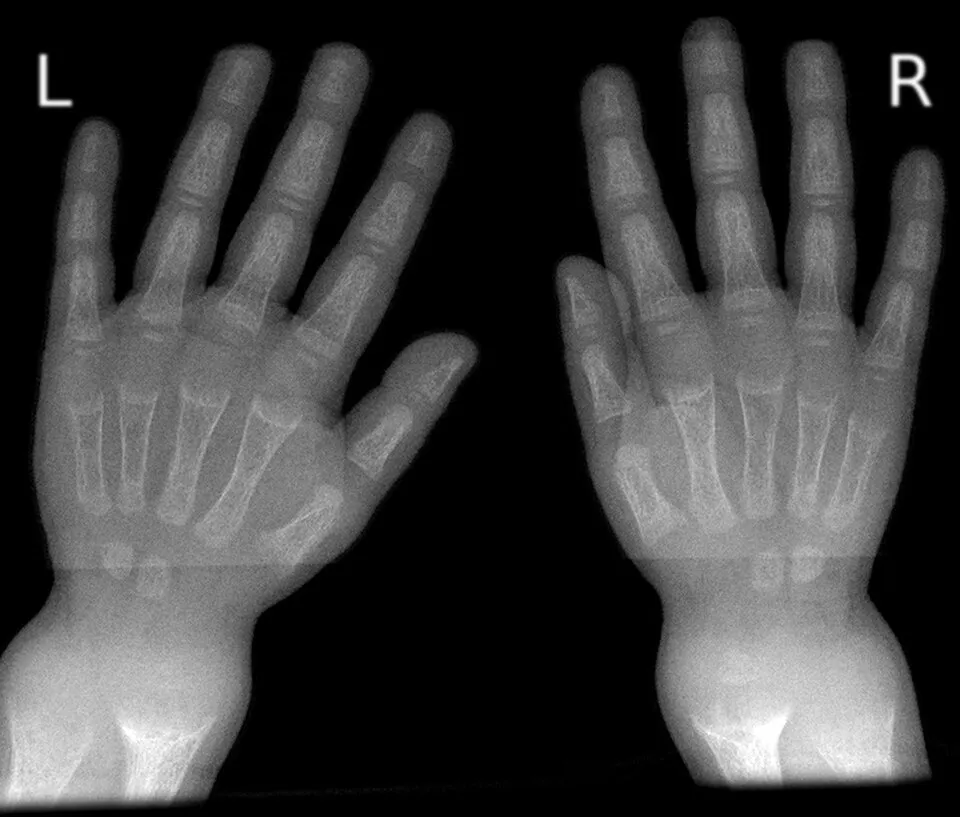
| Nutritional rickets | Bowed legs, wrist widening, delayed walking, darker skin or little sunlight | Calcium, phosphate, ALP, 25-OH vitamin D, PTH, wrist X-ray |
| Coeliac disease | Faltering growth, abdominal distension, iron deficiency | tTG-IgA with total IgA |
| Avoidant/restrictive food intake disorder (ARFID) | Very limited food range with growth or nutritional impact, no body image concern | Dietary history, growth, specialist assessment |
| Eating disorder (anorexia nervosa) | Adolescent weight loss, restriction, body image disturbance | BMI centile, observations, ECG, electrolytes |
| Neglect or food insecurity | Faltering growth with social concerns, catch-up when fed elsewhere | Social history, safeguarding assessment |
| Hypothyroidism or Cushing syndrome | Weight gain with slowing height velocity | TSH, free T4; cortisol tests |
| Monogenic or syndromic obesity | Severe early-onset obesity before 5 years, hyperphagia, developmental delay | Genetic testing (for example MC4R, leptin pathway, Prader–Willi) |
Exam pearls
Guideline
WHO guideline on the prevention and management of wasting and nutritional oedema in infants and children under 5 years (2023); WHO complementary feeding guideline 6–23 months (2023); NICE NG247 Maternal and child nutrition (2025); AAP Clinical Practice Guideline for obesity in children and adolescents (2023)
References
- World Health Organization. WHO guideline on the prevention and management of wasting and nutritional oedema (acute malnutrition) in infants and children under 5 years. WHO 2023.
- World Health Organization. WHO guideline for complementary feeding of infants and young children 6–23 months of age. WHO 2023.
- National Institute for Health and Care Excellence. Maternal and child nutrition: nutrition and weight management in pregnancy, and nutrition in children up to 5 years (NG247). NICE guideline 2025.
- Hampl SE, Hassink SG, Skinner AC, et al.. Executive summary: clinical practice guideline for the evaluation and treatment of children and adolescents with obesity. Pediatrics 2023.
- Scientific Advisory Committee on Nutrition. Vitamin D and health. Public Health England 2016.
- Holliday MA, Segar WE.. The maintenance need for water in parenteral fluid therapy. Pediatrics 1957.
Related topics
By Dr Khalid Seidi (B.Sc., M.D.) · MedEd World Clinical Knowledge library. Original teaching content checked against current guidelines (November 2026); confirm the latest local guidance before clinical use. Not a substitute for clinical judgement.