Clinical Knowledge › Internal medicine › Gastroenterology and hepatology › Relevant pharmacology
Pancreatic enzyme replacement therapy
Pancreatic enzyme replacement therapy (PERT) supplies the lipase, protease and amylase that a failing pancreas no longer delivers to the duodenum. Exocrine pancreatic insufficiency (EPI) follows chronic pancreatitis, cystic fibrosis, pancreatic cancer, pancreatic resection and severe necrotising pancreatitis, and causes steatorrhoea, weight loss, fat-soluble vitamin deficiency, sarcopenia and osteoporosis. Faecal elastase is the usual first test; a level below 100 µg/g gives good evidence of EPI. Most preparations are porcine pancrelipase in enteric-coated minimicrospheres that resist gastric acid and release enzymes at duodenal pH, mixing with food. Current European (2024) and AGA (2023) guidance advises starting adults on 40,000–50,000 lipase units with each main meal and half that with snacks, taken during the meal, then titrating to symptoms and nutrition, adding a proton pump inhibitor if response is poor. Patients need a normal-fat diet, vitamin and bone monitoring and diabetes screening. Very high doses in children with cystic fibrosis have caused fibrosing colonopathy, and the porcine origin must be discussed with patients.
Patient case, mechanism, investigations, management, flashcards and exam-style questions.Open the lesson →
Key facts
- Lipase is the critical enzyme: steatorrhoea appears when lipase output falls below about 10% of normal
- Faecal elastase below 100 µg/g gives good evidence of EPI; 100–200 µg/g is indeterminate; it can be measured while on PERT
- Adult starting dose: 40,000–50,000 lipase units with main meals and half with snacks (AGA: at least 40,000 USP units)
- Take enzymes with the first bites and during the meal; split the dose across a long meal
- Enteric-coated minimicrospheres are released at pH above about 5.5; do not crush or chew them
- If symptoms persist: check timing and adherence, increase the dose, then add a proton pump inhibitor, then look for other causes such as SIBO
- Cystic fibrosis: do not exceed 10,000 lipase units/kg/day (or 2,500 units/kg/meal) because of fibrosing colonopathy
- PERT is indicated after pancreatoduodenectomy and in most people with pancreatic cancer, where it improves nutrition and is linked to better survival
Differential diagnosis
| Condition | Clues | Key test |
|---|---|---|
| Chronic pancreatitis | Abdominal pain, alcohol or smoking, calcification on CT; EPI late | Faecal elastase, CT or MRI |
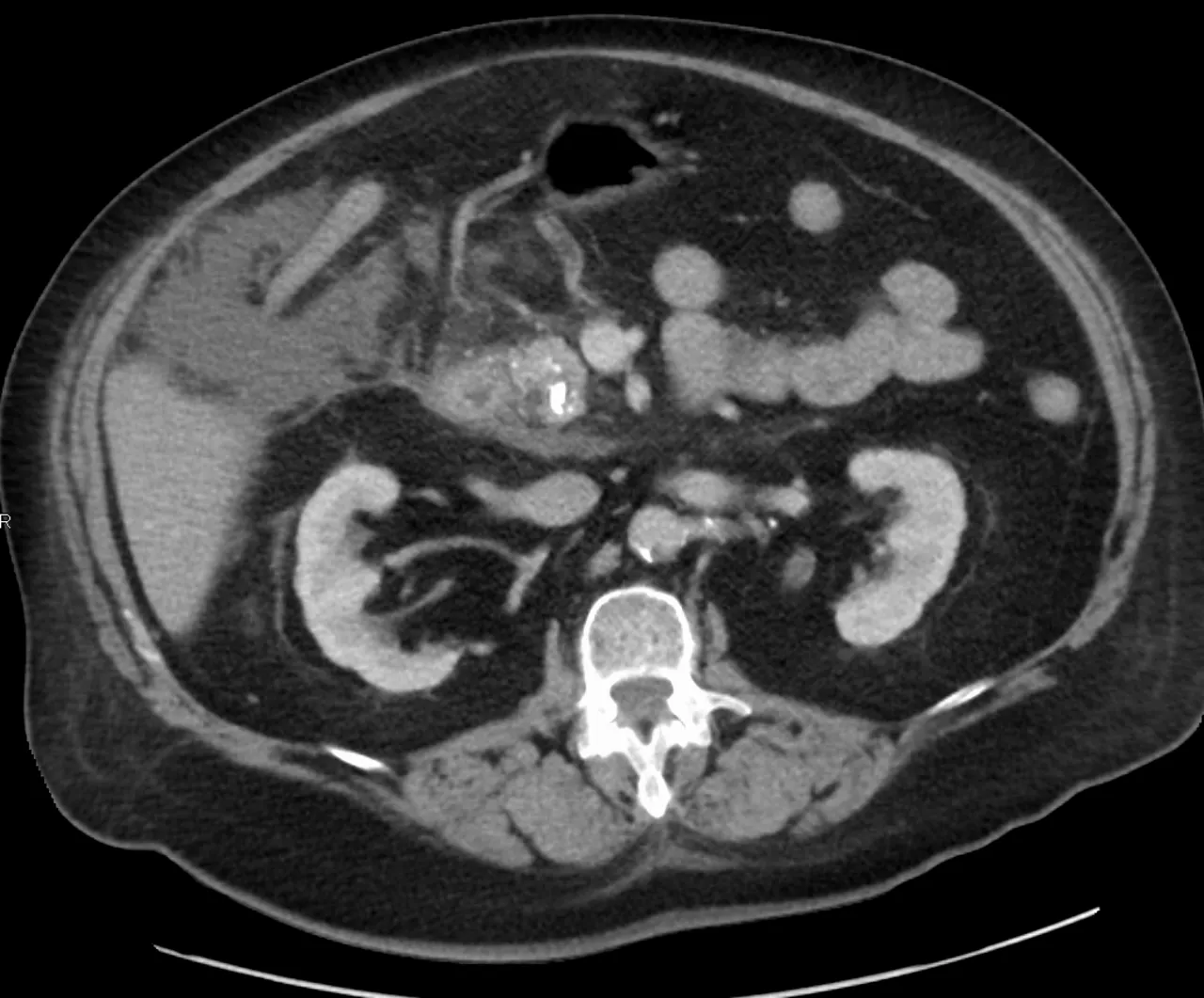
| Pancreatic adenocarcinoma | Weight loss, new diabetes, jaundice; EPI from duct obstruction | Contrast CT pancreas protocol |
| After pancreatoduodenectomy or total pancreatectomy | EPI in most patients after Whipple; total in all after total pancreatectomy | Treat empirically; faecal elastase not needed after total pancreatectomy |
| Cystic fibrosis | About 85% are pancreatic insufficient from birth | Faecal elastase; sweat test and CFTR genetics |
| Coeliac disease | Mucosal malabsorption, iron deficiency; may cause secondary EPI | Tissue transglutaminase IgA, duodenal biopsy |
| Small intestinal bacterial overgrowth | Bloating and diarrhoea; may persist despite PERT | Breath test or empirical antibiotic |
| Bile acid diarrhoea | Watery diarrhoea after ileal resection or cholecystectomy | SeHCAT or serum C4; trial of sequestrant |
Exam pearls
Guideline
European guidelines for the diagnosis and treatment of pancreatic exocrine insufficiency (UEG, EPC, EDS, ESPEN, ESPGHAN, ESDO and ESPCG; 2024, published 2025), AGA clinical practice update on EPI (2023), ESPEN-ESPGHAN-ECFS cystic fibrosis nutrition guideline (2024), UEG/HaPanEU chronic pancreatitis guideline (2017) and NICE NG85 pancreatic cancer (2018)
References
- Dominguez-Muñoz JE, Vujasinovic M, de la Iglesia D, et al.. European guidelines for the diagnosis and treatment of pancreatic exocrine insufficiency: UEG, EPC, EDS, ESPEN, ESPGHAN, ESDO, and ESPCG evidence-based recommendations. United European Gastroenterol J 2025.
- Whitcomb DC, Buchner AM, Forsmark CE.. AGA Clinical Practice Update on the Epidemiology, Evaluation, and Management of Exocrine Pancreatic Insufficiency: Expert Review. Gastroenterology 2023.
- Löhr JM, Dominguez-Munoz E, Rosendahl J, et al.. United European Gastroenterology evidence-based guidelines for the diagnosis and therapy of chronic pancreatitis (HaPanEU). United European Gastroenterol J 2017.
- Wilschanski M, Munck A, Carrion E, et al.. ESPEN-ESPGHAN-ECFS guideline on nutrition care for cystic fibrosis. Clin Nutr 2024.
- National Institute for Health and Care Excellence (NICE). Pancreatic cancer in adults: diagnosis and management (NICE guideline NG85). 2018.
- Gardner TB, Adler DG, Forsmark CE, et al.. ACG Clinical Guideline: Chronic Pancreatitis. Am J Gastroenterol 2020.
Related topics
By Dr Khalid Seidi (B.Sc., M.D.) · MedEd World Clinical Knowledge library. Original teaching content checked against current guidelines (November 2026); confirm the latest local guidance before clinical use. Not a substitute for clinical judgement.