Clinical Knowledge › Obstetrics and gynaecology › Normal pregnancy and antenatal care
Prenatal diagnosis (amniocentesis and chorionic villus sampling)
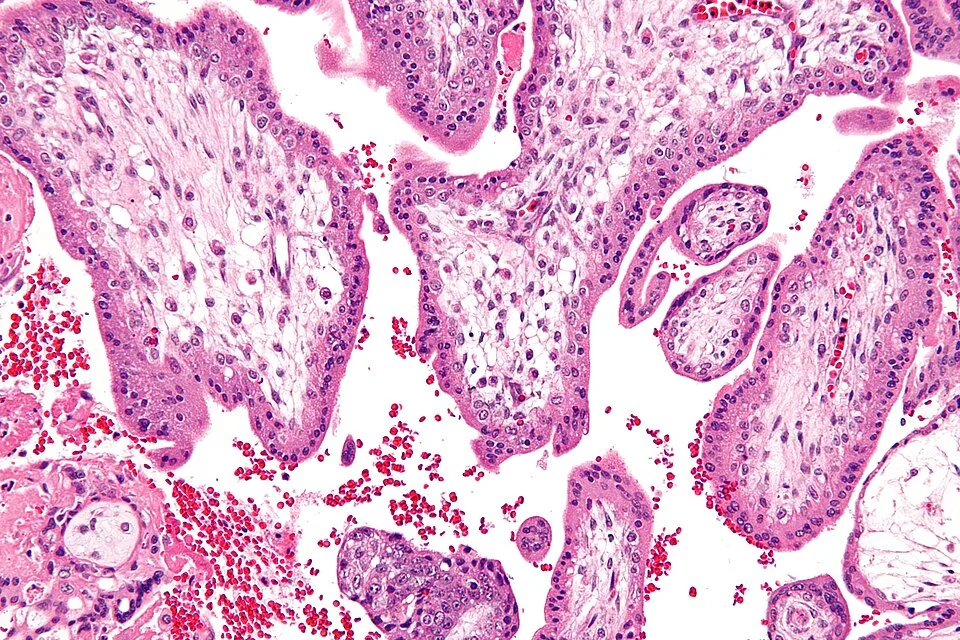
Prenatal diagnosis means obtaining fetal (or placental) cells to give a definitive genetic answer, in contrast to screening, which only estimates a chance. The two standard invasive tests are chorionic villus sampling (CVS), performed from 11+0 weeks (never before 10+0 weeks because very early CVS is linked to limb reduction defects), and amniocentesis, performed from 15+0 weeks (earlier amniocentesis increases pregnancy loss and talipes). Both are done under continuous ultrasound guidance. Indications include a higher-chance result on combined, quadruple or cell-free DNA screening, a fetal structural anomaly, a parental balanced translocation, a previous affected pregnancy, and carrier couples for single-gene disorders such as thalassaemia, sickle cell disease or cystic fibrosis. Samples undergo rapid QF-PCR for common aneuploidies, then chromosomal microarray, karyotype or targeted/exome sequencing as indicated. Current evidence (RCOG 2021) suggests the additional miscarriage risk is probably below 0.5% for either test. Counselling must be non-directive; RhD-negative women need anti-D, and blood-borne virus status should be known beforehand.
Patient case, mechanism, investigations, management, flashcards and exam-style questions.Open the lesson →
Key facts
- Screening estimates a chance; diagnostic testing (CVS, amniocentesis) gives a definitive fetal genetic result and is needed before any irreversible decision
- CVS from 11+0 weeks (transabdominal or transcervical); never before 10+0 weeks because of limb reduction defects
- Amniocentesis from 15+0 weeks with a 20–22 G needle, about 15–20 mL fluid; early amniocentesis (before 14 weeks) raises loss and talipes
- RCOG 2021: additional procedure-related miscarriage risk is probably below 0.5% for both tests; a 2019 meta-analysis estimated 0.3% (amniocentesis) and 0.2% (CVS)
- Confined placental mosaicism affects about 1–2% of CVS samples and is a main reason a CVS result may need follow-up amniocentesis
- QF-PCR gives trisomy 13, 18, 21 and sex chromosome results in 2–3 days; chromosomal microarray is preferred when a structural anomaly is seen
- Cell-free DNA comes from the placenta: a higher-chance NIPT result must be confirmed by invasive testing before termination is offered
- Give anti-D to non-sensitised RhD-negative women after CVS or amniocentesis (250 IU before 20 weeks; 500 IU plus Kleihauer from 20 weeks)
Differential diagnosis
| Condition | Clues | Key test |
|---|---|---|
| Non-invasive prenatal testing (cell-free DNA) | Blood test from 10 weeks; high sensitivity for trisomy 21 but a screening test | Confirm higher-chance results with CVS or amniocentesis |
| Combined first-trimester screening | 11+2 to 14+1 weeks: nuchal translucency, hCG, PAPP-A, age | Chance result; 1 in 150 or higher triggers offer of further testing (England) |
| Detailed fetal anomaly ultrasound | Detects structural anomalies but cannot exclude a genetic syndrome | Fetal medicine scan; microarray or exome if anomaly found |
| Fetal blood sampling (cordocentesis) | From about 18–20 weeks; used for fetal anaemia and transfusion rather than routine genetics | Fetal haemoglobin; loss risk about 1–2% |
| Preimplantation genetic testing | Embryo biopsy during IVF for known familial variants, avoids later termination decisions | Referral to assisted conception unit |
| Cell-free fetal DNA RHD genotyping | Determines fetal RhD type without invasive testing | Maternal blood test from 11–16 weeks |
Exam pearls
Guideline
RCOG Green-top Guideline No. 8: Amniocentesis and chorionic villus sampling (2021); ACOG Practice Bulletin No. 162 Prenatal diagnostic testing for genetic disorders (2016, reaffirmed) with No. 226 Screening for fetal chromosomal abnormalities (2020); NHS Fetal Anomaly Screening Programme
References
- Navaratnam K, Alfirevic Z; Royal College of Obstetricians and Gynaecologists.. Amniocentesis and chorionic villus sampling: Green-top Guideline No. 8. BJOG 2022.
- American College of Obstetricians and Gynecologists. Practice Bulletin No. 162: Prenatal diagnostic testing for genetic disorders. Obstet Gynecol 2016.
- Salomon LJ, Sotiriadis A, Wulff CB, Odibo A, Akolekar R.. Risk of miscarriage following amniocentesis or chorionic villus sampling: systematic review of literature and updated meta-analysis. Ultrasound Obstet Gynecol 2019.
- American College of Obstetricians and Gynecologists. Practice Bulletin No. 226: Screening for fetal chromosomal abnormalities. Obstet Gynecol 2020.
- NHS England / UK Health Security Agency. NHS Fetal Anomaly Screening Programme handbook. GOV.UK 2024.
- The Canadian Early and Mid-trimester Amniocentesis Trial (CEMAT) Group. Randomised trial to assess safety and fetal outcome of early and midtrimester amniocentesis. Lancet 1998.
Related topics
By Dr Khalid Seidi (B.Sc., M.D.) · MedEd World Clinical Knowledge library. Original teaching content checked against current guidelines (November 2026); confirm the latest local guidance before clinical use. Not a substitute for clinical judgement.