Clinical Knowledge › Obstetrics and gynaecology › Normal pregnancy and antenatal care
Rhesus disease and anti-D prophylaxis
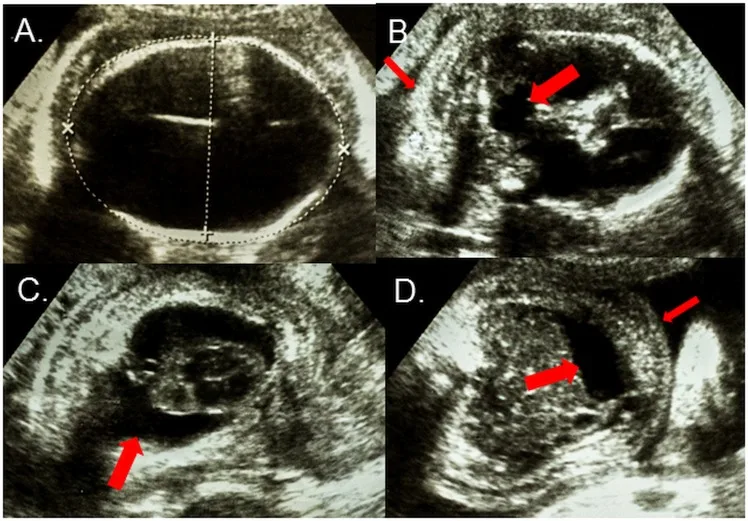
Rhesus (RhD) disease is haemolytic disease of the fetus and newborn (HDFN) caused when an RhD-negative woman, sensitised by fetal RhD-positive red cells, makes IgG anti-D that crosses the placenta in a later pregnancy and destroys fetal red cells. Fetal anaemia leads to extramedullary haematopoiesis, hepatosplenomegaly and, when severe, hydrops fetalis and death; after birth, haemolysis causes rapidly rising unconjugated bilirubin and risk of kernicterus. About 15% of White Europeans are RhD negative, fewer in African and Asian populations. Prophylaxis transformed outcomes: anti-D immunoglobulin after delivery reduced sensitisation from about 16% to 1.5%, and routine antenatal prophylaxis at 28 weeks reduced it further to about 0.2–0.3%. UK practice tests blood group and antibodies at booking and 28 weeks, offers cell-free fetal DNA RHD genotyping so anti-D is given only when the fetus is RhD positive, gives anti-D within 72 hours of sensitising events, and quantifies fetomaternal haemorrhage with a Kleihauer test from 20 weeks. Sensitised pregnancies need antibody monitoring, middle cerebral artery Doppler for fetal anaemia and, if needed, intrauterine transfusion.
Patient case, mechanism, investigations, management, flashcards and exam-style questions.Open the lesson →
Key facts
- HDFN: maternal IgG anti-D crosses the placenta, coats RhD-positive fetal red cells and causes splenic haemolysis; the first pregnancy is usually unaffected
- Without prophylaxis about 16% of RhD-negative women with an RhD-positive ABO-compatible baby are sensitised; postnatal anti-D lowers this to about 1.5% and RAADP to about 0.2–0.3%
- RAADP (NICE TA156): 1500 IU single dose at 28–30 weeks, or 500 IU at 28 and 34 weeks; it does not replace anti-D for sensitising events or after birth
- Sensitising events: below 20 weeks 250 IU within 72 hours; from 20 weeks at least 500 IU plus Kleihauer; give up to 10 days if 72 hours is missed
- NICE NG126 (2023): offer anti-D 250 IU only for surgical management of miscarriage or ectopic pregnancy; not for medical management, threatened, complete miscarriage or PUL
- Postnatal: cord blood group; if baby RhD positive give at least 500 IU within 72 hours and a Kleihauer test; extra 125 IU per mL fetal red cells (IM)
- Anti-D level (UK): below 4 IU/mL low risk; 4–15 IU/mL moderate risk – refer to fetal medicine; above 15 IU/mL high risk of severe HDFN
- MCA peak systolic velocity above 1.5 MoM predicts moderate–severe fetal anaemia; treat with intravascular intrauterine transfusion of O RhD-negative, irradiated, CMV-negative blood
Differential diagnosis
| Condition | Clues | Key test |
|---|---|---|
| ABO haemolytic disease | Mother group O, baby A or B; mild, can occur in first pregnancy; rarely causes hydrops | Neonatal DAT, blood groups |
| Anti-Kell alloimmunisation | Fetal anaemia from suppressed erythropoiesis with less bilirubin; severe at low titres | Antibody screen; refer at any level |
| Non-immune hydrops | Hydrops with negative maternal antibody screen | Parvovirus B19, cardiac, chromosomal, alpha-thalassaemia work-up |
| Parvovirus B19 fetal anaemia | Maternal rash/arthralgia exposure, raised MCA PSV, negative antibody screen | Maternal parvovirus IgM/IgG, PCR |
| Fetomaternal haemorrhage (acute) | Reduced fetal movements, sinusoidal CTG, fetal anaemia, no antibodies | Kleihauer or flow cytometry |
| Hereditary spherocytosis or G6PD deficiency (neonate) | Neonatal haemolysis with negative DAT | Blood film, G6PD assay, family history |
Exam pearls
Guideline
BSH guideline for the investigation and management of red cell antibodies in pregnancy (2025); BCSH anti-D immunoglobulin guideline (2014, reviewed 2023); NICE TA156 RAADP (2008) and DG25 cffDNA RHD genotyping (2016); NICE NG126 (2019, updated 2023); ACOG Practice Bulletin 181 (2017) with Clinical Practice Update (2024)
References
- Regan F, Veale K, Robinson F, et al.. Guideline for the investigation and management of red cell antibodies in pregnancy: a British Society for Haematology guideline. Transfus Med 2025.
- Qureshi H, Massey E, Kirwan D, et al.. BCSH guideline for the use of anti-D immunoglobulin for the prevention of haemolytic disease of the fetus and newborn. Transfus Med 2014.
- National Institute for Health and Care Excellence. Routine antenatal anti-D prophylaxis for women who are rhesus D negative (TA156). NICE technology appraisal TA156 2008.
- National Institute for Health and Care Excellence. High-throughput non-invasive prenatal testing for fetal RHD genotype (DG25). NICE diagnostics guidance DG25 2016.
- National Institute for Health and Care Excellence. Ectopic pregnancy and miscarriage: diagnosis and initial management (NG126). NICE guideline NG126 2019.
- American College of Obstetricians and Gynecologists. ACOG Clinical Practice Update: Rh D immune globulin administration after abortion or pregnancy loss at less than 12 weeks of gestation. Obstet Gynecol 2024.
Related topics
By Dr Khalid Seidi (B.Sc., M.D.) · MedEd World Clinical Knowledge library. Original teaching content checked against current guidelines (November 2026); confirm the latest local guidance before clinical use. Not a substitute for clinical judgement.