Clinical Knowledge › Internal medicine › Endocrinology › Calcium and bone disorders
Pseudohypoparathyroidism
Pseudohypoparathyroidism (PHP) is a group of rare disorders in which target tissues, mainly the proximal renal tubule, resist the action of parathyroid hormone (PTH). The result looks like hypoparathyroidism, with low calcium and high phosphate, but PTH is high. Most cases arise from loss of function of the stimulatory G-protein α-subunit (Gsα) encoded by the imprinted GNAS locus. Maternally inherited coding mutations cause PHP type 1A, with Albright hereditary osteodystrophy (short stature, round face, brachydactyly, early obesity, subcutaneous ossifications) and resistance to other Gsα-coupled hormones such as TSH, GHRH and gonadotrophins. The same mutation inherited from the father causes pseudopseudohypoparathyroidism: the body features without hormone resistance. PHP type 1B results from GNAS methylation defects and causes mainly renal PTH resistance. The newer iPPSD classification groups these by molecular cause. Treatment uses calcitriol or alfacalcidol with calcium to normalise calcium and lower PTH, plus replacement of other hormone deficiencies.
Patient case, mechanism, investigations, management, flashcards and exam-style questions.Open the lesson →
Key facts
- Biochemistry: low calcium, high phosphate, high PTH, normal eGFR, normal magnesium and 25-OH vitamin D
- Mechanism: impaired Gsα–cAMP signalling downstream of the PTH/PTHrP receptor; GNAS is imprinted, with mainly maternal expression in the proximal tubule, thyroid, pituitary and gonads
- PHP1A: maternal GNAS coding mutation, Albright hereditary osteodystrophy plus resistance to PTH, TSH, GHRH and gonadotrophins
- Pseudopseudohypoparathyroidism: paternal GNAS mutation, AHO features without hormone resistance; normal calcium
- PHP1B: GNAS methylation defect (familial STX16 deletion or sporadic), renal PTH resistance, often mild TSH resistance, usually no AHO
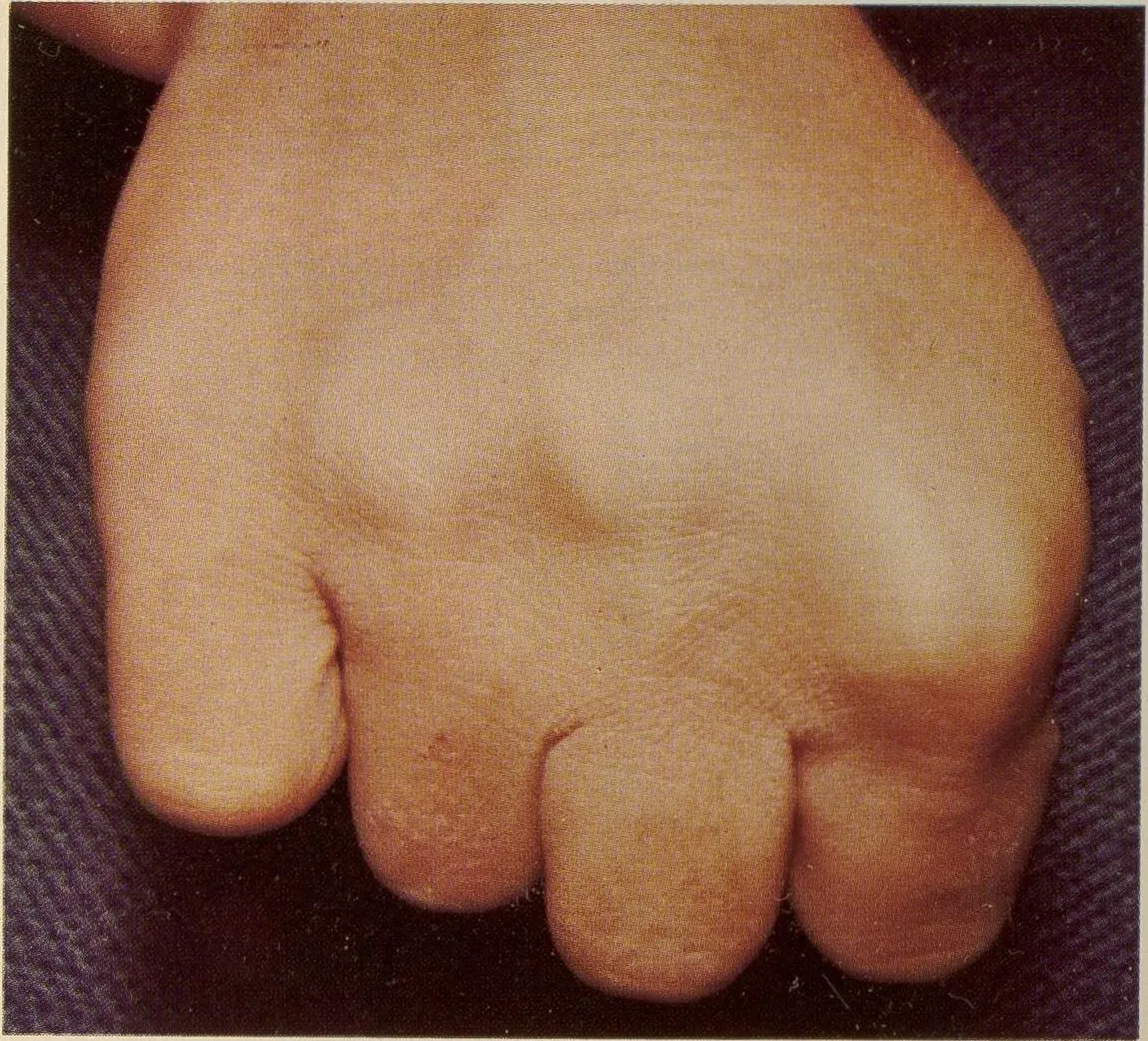
- AHO: short stature, round face, short fourth and fifth metacarpals (brachydactyly type E), early-onset obesity, subcutaneous ossifications, variable cognitive impairment
- Distal tubular PTH action is preserved, so urinary calcium is lower than in hypoparathyroidism and nephrocalcinosis is less common
- Treat with calcitriol or alfacalcidol plus calcium, aiming for normal calcium and PTH near the upper reference limit; replace thyroid hormone and other deficits
Differential diagnosis
| Condition | Clues | Key test |
|---|---|---|
| Hypoparathyroidism | Low calcium and high phosphate but low PTH | PTH level; history of neck surgery or autoimmunity |
| Vitamin D deficiency | Low calcium and high PTH but low phosphate and high ALP | 25-OH vitamin D, phosphate |
| Chronic kidney disease | High phosphate and PTH with low calcium | eGFR and creatinine |
| Hypomagnesaemia | Functional PTH resistance and impaired secretion | Serum magnesium |
| Acrodysostosis | Severe brachydactyly, nasal hypoplasia, PTH and TSH resistance | PRKAR1A or PDE4D testing |
| Brachydactyly–mental retardation syndrome (2q37 deletion) | AHO-like features without hormone resistance | Chromosomal microarray |
| Turner syndrome | Short fourth metacarpals and short stature in a girl | Karyotype; normal calcium and PTH |
Exam pearls
Guideline
First international Consensus Statement on pseudohypoparathyroidism and related disorders (2018; no newer full consensus identified by November 2026), with the iPPSD classification (EuroPHP 2016) and Second International Workshop on Hypoparathyroidism (2022)
References
- Mantovani G, Bastepe M, Monk D, et al.. Diagnosis and management of pseudohypoparathyroidism and related disorders: first international Consensus Statement. Nat Rev Endocrinol 2018.
- Thiele S, Mantovani G, Barlier A, et al.. From pseudohypoparathyroidism to inactivating PTH/PTHrP signalling disorder (iPPSD), a novel classification proposed by the EuroPHP network. Eur J Endocrinol 2016.
- Linglart A, Levine MA, Jüppner H. Pseudohypoparathyroidism. Endocrinol Metab Clin North Am 2018.
- Khan AA, Bilezikian JP, Brandi ML, et al.. Evaluation and management of hypoparathyroidism summary statement and guidelines from the Second International Workshop. J Bone Miner Res 2022.
- Albright F, Burnett CH, Smith PH, Parson W. Pseudo-hypoparathyroidism: an example of 'Seabright-Bantam syndrome'. Endocrinology 1942.
- Khan AA, Ali DS, Bilezikian JP, et al.. Best practice recommendations for the diagnosis and management of hypoparathyroidism. Metabolism 2025.
Related topics
By Dr Khalid Seidi (B.Sc., M.D.) · MedEd World Clinical Knowledge library. Original teaching content checked against current guidelines (November 2026); confirm the latest local guidance before clinical use. Not a substitute for clinical judgement.