Clinical Knowledge › Ear, nose and throat › Inner ear, hearing and balance
Sensorineural hearing loss
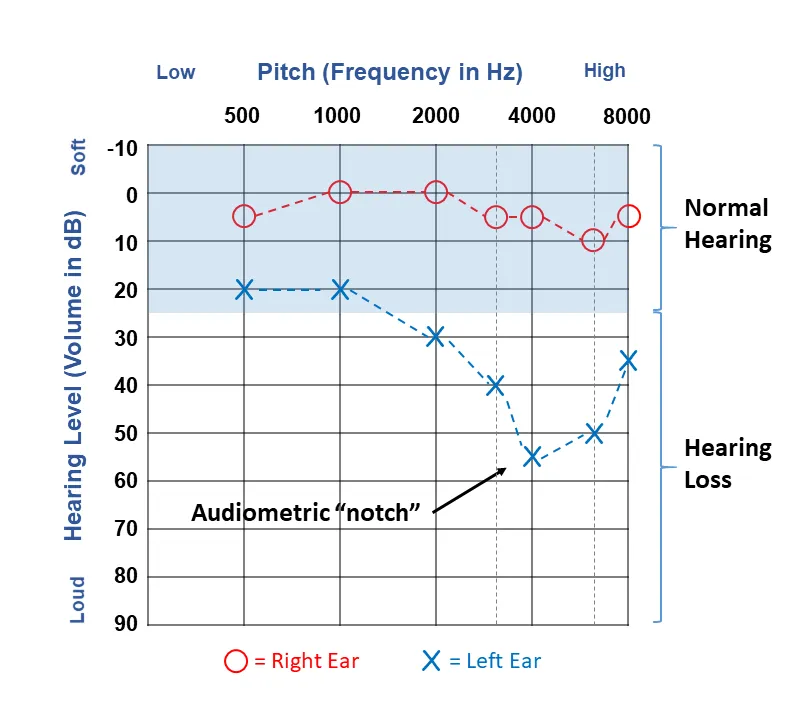
Sensorineural hearing loss (SNHL) arises in the cochlea (sensory, usually hair cell loss) or the auditory nerve and central pathway (neural). Air and bone conduction are reduced equally, so there is no air–bone gap. It is the commonest type of hearing loss: the WHO estimates over 1.5 billion people live with some hearing loss, about 430 million of them with disabling loss. Causes include age, noise, ototoxic drugs, genetic and congenital causes (GJB2, CMV), infection, Ménière disease, trauma, sudden idiopathic loss and vestibular schwannoma. At the bedside Rinne is positive in both ears and Weber lateralises to the better ear. Pure tone audiometry confirms and grades it. Red flags are sudden loss (same-day assessment and steroids within days), asymmetric or unilateral loss and unilateral tinnitus (MRI of the internal acoustic meatus). Treat the cause where possible; most patients benefit from hearing aids, communication strategies and, for severe to profound loss, cochlear implants. Hearing loss is, with high LDL cholesterol, the largest modifiable risk factor for dementia.
Patient case, mechanism, investigations, management, flashcards and exam-style questions.Open the lesson →
Key facts
- SNHL = cochlear or retrocochlear loss; air and bone conduction equally reduced (no air–bone gap)
- Bedside: Rinne positive both ears; Weber lateralises to the better (unaffected) ear
- Commonest causes in adults: presbycusis and noise; in children: genetic (GJB2) and congenital CMV
- WHO 2021 grades (better ear, 0.5–4 kHz average): mild 20–<35, moderate 35–<50, moderately severe 50–<65, severe 65–<80, profound 80–<95 dB HL
- Sudden SNHL (≥30 dB over 3 consecutive frequencies within 72 hours) needs same-day assessment and early corticosteroids
- Asymmetric SNHL or unilateral tinnitus: MRI internal acoustic meatus to exclude vestibular schwannoma
- Hearing aids for anyone whose hearing loss affects communication; cochlear implants for severe to profound loss with poor aided speech
- Midlife hearing loss and high LDL cholesterol are the joint-largest modifiable dementia risk factors (about 7% each; Lancet Commission 2024)
Differential diagnosis
| Condition | Clues | Key test |
|---|---|---|
| Conductive hearing loss | Rinne negative, Weber to the affected ear; air–bone gap | Otoscopy, audiometry, tympanometry |
| Mixed hearing loss | Air–bone gap plus raised bone thresholds (e.g. chronic otitis media, cochlear otosclerosis) | Audiometry |
| Auditory neuropathy spectrum disorder | Poor speech understanding out of proportion; OAEs present, ABR absent | OAE and ABR |
| Central auditory processing disorder | Normal audiogram, difficulty in noise | Specialist auditory processing tests |
| Functional (non-organic) hearing loss | Inconsistent results; stapedial reflexes present at thresholds below claimed loss | Repeat testing, OAE, ABR |
| Wax impaction | Blocked canal; conductive loss | Otoscopy |
Exam pearls
Guideline
NICE NG98 Hearing loss in adults (2018), AAO-HNS Sudden Hearing Loss CPG update (2019) and Age-Related Hearing Loss CPG (2024), WHO World report on hearing (2021)
References
- National Institute for Health and Care Excellence. Hearing loss in adults: assessment and management (NG98). NICE, London 2018.
- Chandrasekhar SS, Tsai Do BS, Schwartz SR, et al.. Clinical practice guideline: sudden hearing loss (update). Otolaryngol Head Neck Surg 2019.
- Tsai Do BS, Bush ML, Weinreich HM, et al.. Clinical practice guideline: age-related hearing loss. Otolaryngol Head Neck Surg 2024.
- World Health Organization. World report on hearing. WHO, Geneva 2021.
- Lin FR, Pike JR, Albert MS, et al.. Hearing intervention versus health education control to reduce cognitive decline in older adults with hearing loss in the USA (ACHIEVE): a multicentre, randomised controlled trial. Lancet 2023.
- Livingston G, Huntley J, Liu KY, et al.. Dementia prevention, intervention, and care: 2024 report of the Lancet standing Commission. Lancet 2024.
Related topics
By Dr Khalid Seidi (B.Sc., M.D.) · MedEd World Clinical Knowledge library. Original teaching content checked against current guidelines (November 2026); confirm the latest local guidance before clinical use. Not a substitute for clinical judgement.