Clinical Knowledge › Internal medicine › Pulmonology › Respiratory infections
Acute bronchitis
Acute bronchitis is a self-limiting inflammation of the large airways that presents with cough, with or without sputum, lasting up to about 3 weeks, in a person without pneumonia or chronic lung disease. More than 90% of cases are viral (rhinovirus, coronaviruses, influenza, RSV, parainfluenza, adenovirus, human metapneumovirus); Bordetella pertussis, Mycoplasma pneumoniae and Chlamydia pneumoniae cause a minority. It is one of the commonest reasons for consultation and for inappropriate antibiotic prescribing worldwide. The key clinical task is to exclude pneumonia, which is suggested by fever above 38 °C, tachycardia above 100/min, tachypnoea above 24/min, focal chest signs or confusion, and to identify high-risk patients and pertussis. Coloured sputum does not indicate bacterial infection. Investigations are usually unnecessary; a chest X-ray is needed only when pneumonia is suspected, and point-of-care CRP can support decisions. Management is explanation that cough often lasts 3 weeks, fluids, paracetamol or ibuprofen, honey and safety-netting. Antibiotics shorten cough by only about half a day and cause harm, so they are reserved for pertussis, systemically unwell or high-risk patients.
Patient case, mechanism, investigations, management, flashcards and exam-style questions.Open the lesson →
Key facts
- Acute bronchitis = acute cough (up to about 3 weeks) from large-airway inflammation, without pneumonia or chronic lung disease
- Over 90% are viral; consider pertussis, Mycoplasma and Chlamydia pneumoniae when cough is prolonged or paroxysmal
- Cough typically lasts 2–3 weeks; tell patients this to set expectations
- Purulent or green sputum reflects neutrophil myeloperoxidase, not bacteria, and is not an indication for antibiotics
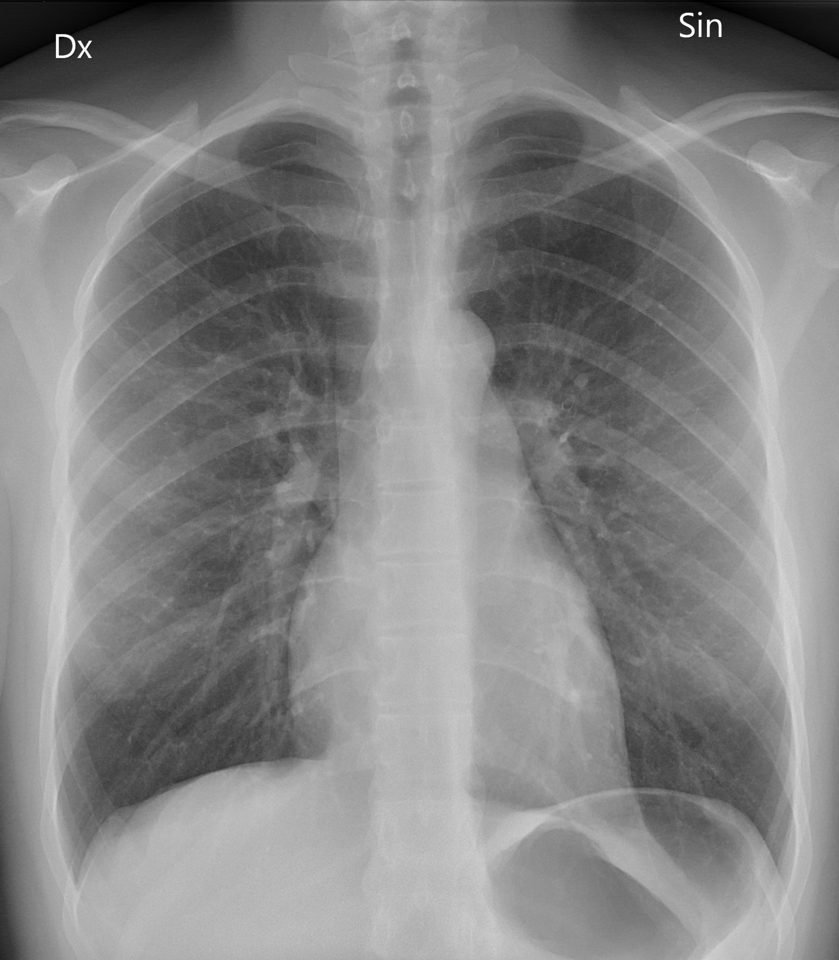
- Suspect pneumonia if HR above 100, RR above 24, temperature above 38 °C or focal chest signs; then request a chest X-ray
- Antibiotics reduce cough duration by about half a day at the cost of more side effects (Cochrane 2017; NNT for harm about 24)
- NICE NG120 and ACP/CDC: no routine antibiotic; consider one (e.g. doxycycline) only if systemically very unwell or at high risk of complications
- Pertussis: paroxysms, whoop or post-tussive vomiting; treat with a macrolide within 3 weeks of onset (azithromycin) and notify public health
Differential diagnosis
| Condition | Clues | Key test |
|---|---|---|
| Community-acquired pneumonia | Fever, tachypnoea, tachycardia, focal crackles or bronchial breathing | Chest X-ray, CRP |
| Pertussis | Paroxysmal cough, inspiratory whoop, post-tussive vomiting, unvaccinated contacts | Nasopharyngeal PCR (first 3 weeks) or serology |
| Asthma | Recurrent wheeze, nocturnal cough, atopy, variable airflow | Spirometry with reversibility, PEF diary, FeNO |
| Acute exacerbation of COPD | Smoker over 40 with known airflow obstruction, increased sputum and breathlessness | History, spirometry when stable |
| Upper respiratory tract infection or post-nasal drip | Rhinorrhoea, sore throat, throat clearing | Clinical |
| Influenza or COVID-19 | Abrupt fever, myalgia; local outbreak | Rapid antigen or PCR testing |
| Heart failure or pulmonary embolism | Breathlessness out of proportion, oedema, risk factors | ECG, BNP, D-dimer or CTPA as appropriate |
Exam pearls
Guideline
NICE NG120 Cough (acute): antimicrobial prescribing (2019), CHEST expert panel report on acute bronchitis (2020), ACP/CDC high-value care advice on acute respiratory infection (2016) and NICE NG250 Pneumonia (2025)
References
- National Institute for Health and Care Excellence (NICE). Cough (acute): antimicrobial prescribing (NICE guideline NG120). 2019.
- Smith MP, Lown M, Singh S, et al.. Acute Cough Due to Acute Bronchitis in Immunocompetent Adult Outpatients: CHEST Expert Panel Report. Chest 2020.
- Harris AM, Hicks LA, Qaseem A.. Appropriate Antibiotic Use for Acute Respiratory Tract Infection in Adults: Advice for High-Value Care From the American College of Physicians and the Centers for Disease Control and Prevention. Ann Intern Med 2016.
- National Institute for Health and Care Excellence (NICE). Pneumonia: diagnosis and management (NICE guideline NG250). 2025.
- Smith SM, Fahey T, Smucny J, Becker LA.. Antibiotics for acute bronchitis. Cochrane Database Syst Rev 2017.
- Little P, Stuart B, Moore M, et al.. Amoxicillin for acute lower-respiratory-tract infection in primary care when pneumonia is not suspected: a 12-country, randomised, placebo-controlled trial. Lancet Infect Dis 2013.
Related topics
By Dr Khalid Seidi (B.Sc., M.D.) · MedEd World Clinical Knowledge library. Original teaching content checked against current guidelines (November 2026); confirm the latest local guidance before clinical use. Not a substitute for clinical judgement.