Clinical Knowledge › Internal medicine › Pulmonology › Respiratory infections
Pneumocystis pneumonia
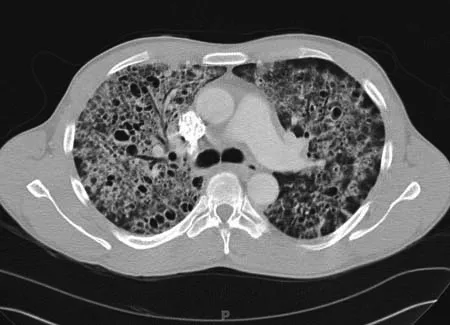
Pneumocystis pneumonia (PCP or PJP) is an opportunistic lung infection caused by Pneumocystis jirovecii, an unculturable fungus that lacks ergosterol, so standard antifungals do not work against it. It affects people with impaired T-cell immunity: HIV infection with a CD4 count below 200 cells/µL, and increasingly patients without HIV who receive corticosteroids, chemotherapy, rituximab or transplant immunosuppression. In HIV the illness is subacute, with weeks of dry cough, fever and exertional breathlessness. In other immunocompromised patients it is more abrupt and has a higher mortality. Typical findings are hypoxaemia out of proportion to the examination, desaturation on exertion, raised LDH and serum beta-D-glucan, and bilateral ground-glass opacities on CT. Diagnosis is confirmed by PCR or staining of induced sputum or bronchoalveolar lavage. First-line treatment is high-dose co-trimoxazole for 21 days, with adjunctive prednisolone in HIV patients whose PaO2 is below 9.3 kPa (70 mmHg). Co-trimoxazole prophylaxis prevents most cases in high-risk patients.
Patient case, mechanism, investigations, management, flashcards and exam-style questions.Open the lesson →
Key facts
- Pneumocystis jirovecii is a fungus without ergosterol; azoles and amphotericin do not work, and it cannot be cultured
- HIV risk: CD4 below 200 cells/µL (or below 14%), oral candidiasis or previous PCP
- Non-HIV risk: prolonged corticosteroids (for example prednisolone 20 mg or more for 4 weeks or longer) combined with other immunosuppression, haematological cancer, transplantation, rituximab
- Classic triad: dry cough, fever and exertional breathlessness, with exertional desaturation and often a normal chest examination
- CT shows bilateral ground-glass opacities; chest X-ray may be normal early; pneumatoceles can cause pneumothorax
- Diagnose with PCR or immunofluorescence on induced sputum or BAL; serum beta-D-glucan is a sensitive supporting test
- Treatment: co-trimoxazole (trimethoprim 15–20 mg/kg/day in divided doses) for 21 days; add prednisolone in HIV if PaO2 below 9.3 kPa (70 mmHg) or A–a gradient 35 mmHg or more
- Prophylaxis: co-trimoxazole 960 mg or 480 mg daily; stop in HIV once CD4 stays above 200 cells/µL for 3 months on ART
Differential diagnosis
| Condition | Clues | Key test |
|---|---|---|
| COVID-19 or other viral pneumonia | Acute onset, community exposure, peripheral ground-glass opacities | SARS-CoV-2 and respiratory viral PCR |
| Bacterial community-acquired pneumonia | Lobar consolidation, purulent sputum, high neutrophil count | Chest X-ray, cultures, urinary antigens |
| Pulmonary tuberculosis | Weeks of fever and weight loss, cavities or lymphadenopathy; any CD4 count | Sputum Xpert MTB/RIF Ultra, urine LAM in advanced HIV |
| Cytomegalovirus pneumonitis | Transplant recipient, viraemia, often with other organ involvement | Blood CMV PCR, BAL with histology |
| Drug-induced pneumonitis | Recent methotrexate, bleomycin, checkpoint inhibitor or amiodarone | Drug history, BAL to exclude infection |
| Kaposi sarcoma of the lung | Advanced HIV, skin or palatal lesions, nodular infiltrates, bloody effusion | Bronchoscopy showing red-purple endobronchial lesions |
| Invasive aspergillosis | Neutropenia, nodules with halo sign | Galactomannan, CT, BAL |
Exam pearls
Guideline
US HHS/NIH–CDC–HIVMA/IDSA Guidelines for prevention and treatment of opportunistic infections in adults and adolescents with HIV (Pneumocystis section, living) and ECIL-5 guidelines for Pneumocystis in haematology patients (2016)
References
- Panel on Guidelines for the Prevention and Treatment of Opportunistic Infections in Adults and Adolescents With HIV (NIH, CDC, HIVMA/IDSA). Guidelines for the prevention and treatment of opportunistic infections in adults and adolescents with HIV: Pneumocystis pneumonia. 2019.
- Maschmeyer G, Helweg-Larsen J, Pagano L, et al.. ECIL guidelines for treatment of Pneumocystis jirovecii pneumonia in non-HIV-infected haematology patients. J Antimicrob Chemother 2016.
- Maertens J, Cesaro S, Maschmeyer G, et al.. ECIL guidelines for preventing Pneumocystis jirovecii pneumonia in patients with haematological malignancies and stem cell transplant recipients. J Antimicrob Chemother 2016.
- Bozzette SA, Sattler FR, Chiu J, et al.. A controlled trial of early adjunctive treatment with corticosteroids for Pneumocystis carinii pneumonia in the acquired immunodeficiency syndrome. N Engl J Med 1990.
- Donnelly JP, Chen SC, Kauffman CA, et al.. Revision and update of the consensus definitions of invasive fungal disease from the European Organization for Research and Treatment of Cancer and the Mycoses Study Group Education and Research Consortium. Clin Infect Dis 2020.
- Lemiale V, Resche-Rigon M, Zerbib Y, et al.. Adjunctive corticosteroids in non-AIDS patients with severe Pneumocystis jirovecii pneumonia (PIC): a multicentre, double-blind, randomised controlled trial. Lancet Respir Med 2025.
Related topics
By Dr Khalid Seidi (B.Sc., M.D.) · MedEd World Clinical Knowledge library. Original teaching content checked against current guidelines (November 2026); confirm the latest local guidance before clinical use. Not a substitute for clinical judgement.