Clinical Knowledge › Internal medicine › Pulmonology › Respiratory infections
Atypical pneumonia (Mycoplasma, Legionella, Chlamydophila)
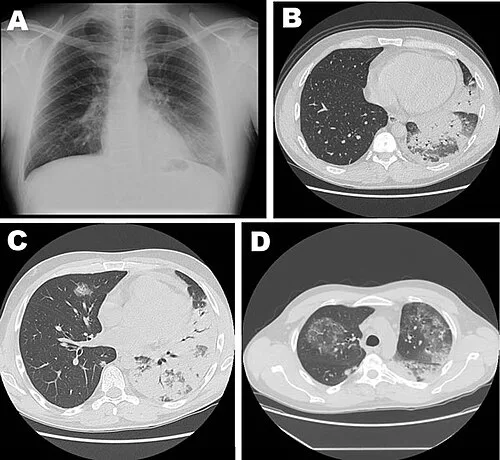
Atypical pneumonia is community-acquired pneumonia caused by organisms that are not seen on Gram stain, do not grow on routine culture and are not killed by beta-lactams: chiefly Mycoplasma pneumoniae, Legionella species and Chlamydia (Chlamydophila) pneumoniae, with C. psittaci and Coxiella burnetii as zoonotic relatives. Mycoplasma and Chlamydia lack a conventional cell wall or live inside cells, so penicillins and cephalosporins fail; macrolides, tetracyclines and respiratory fluoroquinolones work. Mycoplasma typically affects children and young adults in outbreaks every few years, with gradual dry cough, headache, a chest X-ray worse than the examination and extrapulmonary features such as cold-agglutinin haemolysis, mucositis and bullous myringitis; a large global resurgence occurred in 2023–2024. Legionella, acquired from contaminated water systems, causes severe pneumonia in older smokers and immunosuppressed people, with high fever, confusion, diarrhoea, hyponatraemia and abnormal liver tests; the urinary antigen detects serogroup 1. Diagnosis now relies on PCR and urinary antigen. Empirical CAP regimens include atypical cover in moderate and severe disease, and Legionnaires' disease is notifiable.
Patient case, mechanism, investigations, management, flashcards and exam-style questions.Open the lesson →
Key facts
- 'Atypical' organisms: Mycoplasma pneumoniae, Legionella pneumophila, Chlamydia pneumoniae; zoonotic: C. psittaci (birds) and Coxiella burnetii (Q fever)
- Beta-lactams are ineffective: Mycoplasma has no cell wall and Chlamydia and Legionella are intracellular; use a macrolide, doxycycline or fluoroquinolone
- Mycoplasma: young people, gradual onset, dry cough, headache, X-ray worse than signs, cold agglutinins (IgM anti-I) with haemolysis, erythema multiforme/mucositis, bullous myringitis
- Legionella: water systems (cooling towers, hotels, spas), older smokers, high fever, relative bradycardia, diarrhoea, confusion, hyponatraemia, raised liver enzymes and CK
- Legionella urinary antigen detects L. pneumophila serogroup 1 only; send sputum PCR and culture (buffered charcoal yeast extract) as well
- Mycoplasma is diagnosed by PCR on throat or nasopharyngeal swab; macrolide resistance is common in East Asia (about 70%) but low in Europe
- Severe CAP regimens combine a beta-lactam with a macrolide (or use a respiratory fluoroquinolone) partly to cover Legionella
- Legionnaires' disease is notifiable; a cluster triggers a public health search for the water source
Differential diagnosis
| Condition | Clues | Key test |
|---|---|---|
| Pneumococcal pneumonia | Abrupt rigors, lobar consolidation, pleuritic pain, rusty sputum | Blood culture, pneumococcal urinary antigen |
| Influenza or COVID-19 pneumonia | Seasonal outbreak, myalgia, bilateral ground-glass | Respiratory viral PCR |
| Pneumocystis pneumonia | HIV or immunosuppression, exertional desaturation, diffuse ground-glass | CD4 count, PCR on induced sputum or BAL |
| Pulmonary tuberculosis | Subacute cough, weight loss, upper-lobe cavity | Sputum NAAT and culture |
| Viral or post-infectious bronchitis | No infiltrate on chest X-ray | Chest X-ray |
| Hypersensitivity pneumonitis or eosinophilic pneumonia | Exposure or eosinophilia, no response to antibiotics | CT, BAL, eosinophil count |
| Pulmonary embolism | Pleuritic pain, hypoxaemia, risk factors | CTPA |
Exam pearls
Guideline
ATS/IDSA CAP guideline (2019) with the ATS CAP update (2025), NICE NG250 Pneumonia (2025) and ERS/ESICM/ESCMID/ALAT severe CAP guideline (2023)
References
- Metlay JP, Waterer GW, Long AC, et al.. Diagnosis and Treatment of Adults with Community-acquired Pneumonia. An Official Clinical Practice Guideline of the American Thoracic Society and Infectious Diseases Society of America. Am J Respir Crit Care Med 2019.
- Jones BE, Ramirez JA, Oren E, et al.. Diagnosis and Management of Community-acquired Pneumonia: An Official American Thoracic Society Clinical Practice Guideline. Am J Respir Crit Care Med 2026.
- National Institute for Health and Care Excellence (NICE). Pneumonia: diagnosis and management (NICE guideline NG250). 2025.
- Martin-Loeches I, Torres A, Nagavci B, et al.. ERS/ESICM/ESCMID/ALAT guidelines for the management of severe community-acquired pneumonia. Intensive Care Med 2023.
- Cunha BA, Burillo A, Bouza E.. Legionnaires' disease. Lancet 2016.
- Meyer Sauteur PM, Beeton ML, et al.. Mycoplasma pneumoniae: delayed re-emergence after COVID-19 pandemic restrictions. Lancet Microbe 2024.
Related topics
By Dr Khalid Seidi (B.Sc., M.D.) · MedEd World Clinical Knowledge library. Original teaching content checked against current guidelines (November 2026); confirm the latest local guidance before clinical use. Not a substitute for clinical judgement.