Clinical Knowledge › Internal medicine › Cardiology and angiology › Coronary artery disease
Acute coronary syndrome: overview
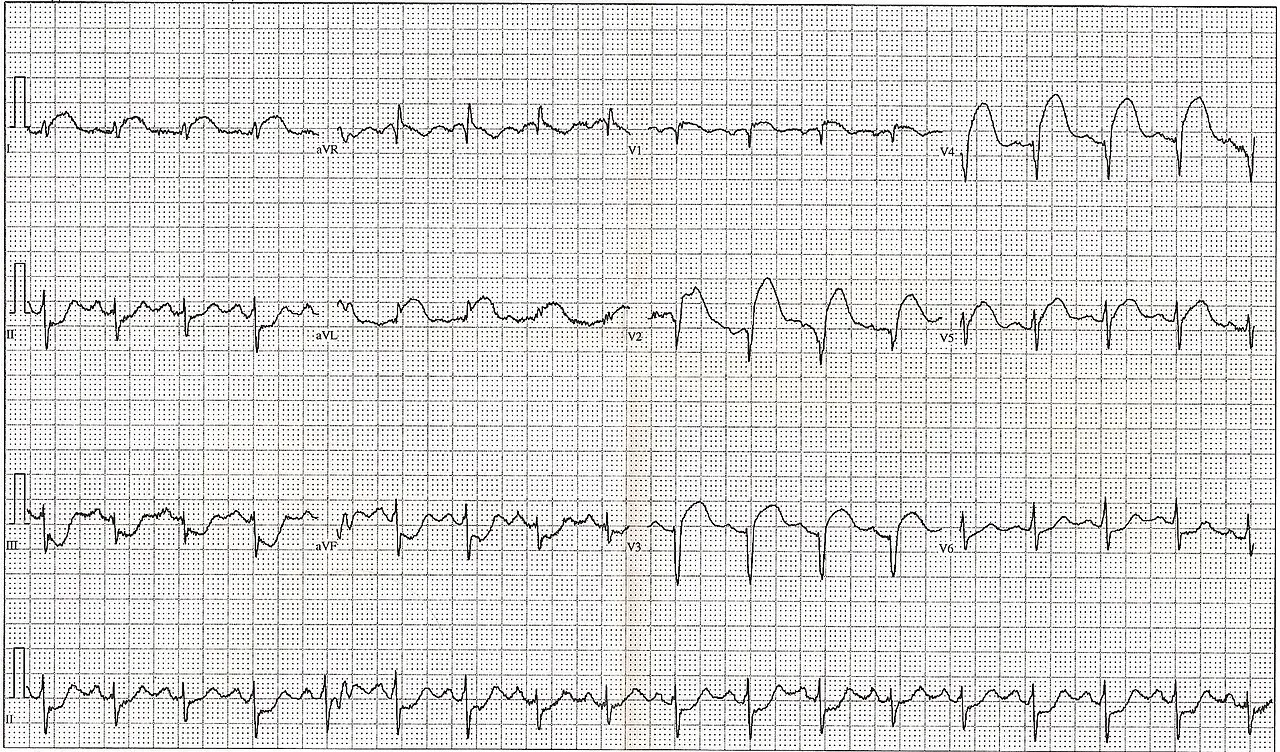
Acute coronary syndrome (ACS) is a spectrum of conditions caused by a sudden reduction in coronary blood flow, usually from thrombus on a ruptured or eroded atherosclerotic plaque. It is classified by the first ECG into ST-segment elevation ACS (usually STEMI from complete occlusion) and non-ST-elevation ACS, which is then split by high-sensitivity troponin into NSTEMI (myocardial necrosis) and unstable angina (ischaemia without necrosis). The Fifth Universal Definition of Myocardial Infarction (2026) groups infarction into primary, secondary and procedure-related categories and makes sex-specific troponin thresholds mandatory. Every patient with suspected ACS needs a 12-lead ECG within 10 minutes, rapid troponin testing, aspirin, analgesia and risk assessment. STEMI needs immediate reperfusion by primary PCI; NSTE-ACS is managed with antithrombotic therapy and an invasive strategy timed by risk. Secondary prevention with dual antiplatelet therapy, high-intensity lipid lowering, beta-blockers when LVEF is reduced, ACE inhibitors and cardiac rehabilitation reduces recurrence.
Patient case, mechanism, investigations, management, flashcards and exam-style questions.Open the lesson →
Key facts
- ACS = unstable angina, NSTEMI and STEMI, usually caused by thrombosis on a disrupted plaque
- Record and interpret a 12-lead ECG within 10 minutes of first medical contact; the ECG divides patients into STE-ACS and NSTE-ACS
- Myocardial infarction = acute myocardial injury (rise and/or fall of troponin with at least one value above the sex-specific 99th centile) plus evidence of ischaemia
- The 2026 Fifth Universal Definition replaced types 1–5 with primary, secondary and procedure-related MI, and renamed MINOCA 'myocardial injury with non-obstructive coronary arteries'
- Use a high-sensitivity troponin 0 h/1 h or 0 h/2 h algorithm to rule in or rule out NSTEMI
- STEMI: primary PCI within 120 minutes of diagnosis; if not achievable, fibrinolysis within 10 minutes of diagnosis
- Give aspirin to all; add a potent P2Y12 inhibitor (prasugrel or ticagrelor) for 12 months by default; give oxygen only if SpO2 is below 90%
- Secondary prevention: high-intensity statin (often with ezetimibe) to LDL below 1.4 mmol/L, ACE inhibitor, beta-blocker if LVEF is reduced, cardiac rehabilitation and smoking cessation
Differential diagnosis
| Condition | Clues | Key test |
|---|---|---|
| Aortic dissection | Tearing pain to the back, pulse or BP differential, new aortic regurgitation | CT aortography; bedside echo |
| Pulmonary embolism | Pleuritic pain, breathlessness, hypoxaemia, DVT signs, RV strain | CTPA |
| Acute pericarditis | Sharp positional pain eased by sitting forward, rub, diffuse saddle ST elevation with PR depression | ECG, echo, CRP |
| Myocarditis | Recent viral illness, chest pain, troponin rise, unobstructed coronaries | Cardiac MRI |
| Takotsubo syndrome | Postmenopausal woman after emotional or physical stress, apical ballooning | Angiography plus LV imaging |
| Oesophageal rupture or spasm | Pain after vomiting (rupture) or with swallowing | CT with oral contrast; manometry |
| Secondary MI (supply–demand) | Troponin rise during sepsis, haemorrhage, tachyarrhythmia or hypoxaemia | Treat the trigger; assess for coronary disease |
Exam pearls
Guideline
2023 ESC acute coronary syndromes guideline, 2025 ACC/AHA/ACEP/NAEMSP/SCAI ACS guideline and the Fifth Universal Definition of Myocardial Infarction (2026)
References
- Byrne RA, Rossello X, Coughlan JJ, et al.. 2023 ESC Guidelines for the management of acute coronary syndromes. Eur Heart J 2023.
- Rao SV, O'Donoghue ML, Ruel M, et al.. 2025 ACC/AHA/ACEP/NAEMSP/SCAI Guideline for the Management of Patients With Acute Coronary Syndromes. Circulation 2025.
- Mills NL, Newby LK, Zaman S, et al.. Fifth Universal Definition of Myocardial Infarction (2026). Eur Heart J 2026.
- Thygesen K, Alpert JS, Jaffe AS, et al.. Fourth Universal Definition of Myocardial Infarction (2018). Circulation 2018.
- Mach F, Koskinas KC, Roeters van Lennep JE, et al.. 2025 Focused Update of the 2019 ESC/EAS Guidelines for the management of dyslipidaemias. Eur Heart J 2025.
- Wallentin L, Becker RC, Budaj A, et al.. Ticagrelor versus clopidogrel in patients with acute coronary syndromes. N Engl J Med 2009.
Related topics
By Dr Khalid Seidi (B.Sc., M.D.) · MedEd World Clinical Knowledge library. Original teaching content checked against current guidelines (November 2026); confirm the latest local guidance before clinical use. Not a substitute for clinical judgement.