Clinical Knowledge › Internal medicine › Cardiology and angiology › Coronary artery disease
Coronary revascularisation (PCI and CABG)
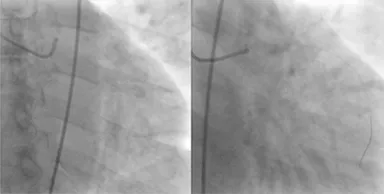
Coronary revascularisation restores blood flow beyond a stenosed or occluded coronary artery, either by percutaneous coronary intervention (PCI) with balloon angioplasty and drug-eluting stents, or by coronary artery bypass grafting (CABG) with arterial and venous conduits. In acute coronary syndromes, timely PCI of the culprit artery saves myocardium and lives. In chronic coronary syndromes, revascularisation relieves angina that persists despite medical therapy, but improves survival only in selected anatomy such as significant left main disease or multivessel disease with LV dysfunction; ISCHEMIA, REVIVED and ORBITA-2 reshaped this thinking. Ischaemia-guided decisions use fractional flow reserve or instantaneous wave-free ratio, and a heart team weighs anatomical complexity (SYNTAX score), diabetes, LV function and surgical risk. CABG is generally preferred for complex multivessel disease and diabetes, and PCI for simpler anatomy. Every patient also needs antiplatelet therapy, intensive secondary prevention and cardiac rehabilitation.
Patient case, mechanism, investigations, management, flashcards and exam-style questions.Open the lesson →
Key facts
- Primary PCI is the reperfusion strategy of choice in STEMI if it can be delivered within 120 minutes of diagnosis
- In chronic coronary syndromes, revascularise mainly for symptoms despite medical therapy; prognostic benefit is limited to selected anatomy
- Use FFR (0.80 or less) or iFR (0.89 or less) to judge intermediate stenoses without non-invasive proof of ischaemia
- A heart team decides between PCI and CABG using SYNTAX score, diabetes, LV function, comorbidity and patient preference
- CABG is favoured in multivessel disease with diabetes (FREEDOM) or high SYNTAX score, and in LV dysfunction (STICHES)
- The left internal mammary artery to LAD graft has the best long-term patency; radial artery is the preferred second conduit
- After elective PCI: aspirin plus clopidogrel for 6 months; after ACS: aspirin plus prasugrel or ticagrelor for 12 months (shorter if high bleeding risk)
- Stent thrombosis presents as abrupt STEMI, most often after premature stopping of dual antiplatelet therapy
Differential diagnosis
| Condition | Clues | Key test |
|---|---|---|
| Optimal medical therapy alone | Stable angina controlled by drugs, no high-risk anatomy | Symptom review; ischaemia testing; CT coronary angiography |
| PCI | One- or two-vessel disease, low SYNTAX score, ACS culprit lesion | Angiography with FFR/iFR; SYNTAX score |
| CABG | Three-vessel or complex left main disease, diabetes, LV dysfunction | Angiography, echo, surgical risk score (EuroSCORE II or STS) |
| Hybrid revascularisation | LIMA to LAD plus PCI to other vessels | Heart team review |
| Microvascular angina | Persistent angina with non-obstructive arteries | Coronary function testing |
| Non-cardiac chest pain after revascularisation | Atypical pain with no ischaemia | Stress imaging before repeat angiography |
Exam pearls
Guideline
2018 ESC/EACTS myocardial revascularisation guideline (with the 2024 ESC chronic coronary syndromes and 2023 ESC ACS guidelines) and the 2021 ACC/AHA/SCAI coronary revascularisation guideline (with the 2025 ACC/AHA ACS guideline)
References
- Neumann FJ, Sousa-Uva M, Ahlsson A, et al.. 2018 ESC/EACTS Guidelines on myocardial revascularization. Eur Heart J 2019.
- Lawton JS, Tamis-Holland JE, Bangalore S, et al.. 2021 ACC/AHA/SCAI Guideline for Coronary Artery Revascularization: A Report of the American College of Cardiology/American Heart Association Joint Committee on Clinical Practice Guidelines. Circulation 2022.
- Vrints C, Andreotti F, Koskinas KC, et al.. 2024 ESC Guidelines for the management of chronic coronary syndromes. Eur Heart J 2024.
- Byrne RA, Rossello X, Coughlan JJ, et al.. 2023 ESC Guidelines for the management of acute coronary syndromes. Eur Heart J 2023.
- Rao SV, O'Donoghue ML, Ruel M, et al.. 2025 ACC/AHA/ACEP/NAEMSP/SCAI Guideline for the Management of Patients With Acute Coronary Syndromes. Circulation 2025.
- Serruys PW, Morice MC, Kappetein AP, et al.. Percutaneous coronary intervention versus coronary-artery bypass grafting for severe coronary artery disease. N Engl J Med 2009.
Related topics
By Dr Khalid Seidi (B.Sc., M.D.) · MedEd World Clinical Knowledge library. Original teaching content checked against current guidelines (November 2026); confirm the latest local guidance before clinical use. Not a substitute for clinical judgement.