Clinical Knowledge › Internal medicine › Cardiology and angiology › Diseases of the aorta and arteries
Acute limb ischaemia
Acute limb ischaemia (ALI) is a sudden fall in limb perfusion, present for less than 2 weeks, that threatens the viability of the limb. It is a vascular emergency: skeletal muscle and nerve tolerate only about 4–6 hours of severe ischaemia before irreversible damage begins. The main causes are embolism, usually from the left atrium in atrial fibrillation or from a mural thrombus after myocardial infarction, and in-situ thrombosis of an atherosclerotic artery, bypass graft or stent; trauma, dissection and popliteal aneurysm are less common. The classic features are the six Ps: pain, pallor, pulselessness, perishing cold, paraesthesia and paralysis. Sensory loss and muscle weakness mark a threatened limb. Severity is graded with the Rutherford classification. Immediate unfractionated heparin and urgent vascular review are mandatory; revascularisation is by surgical embolectomy, bypass, or catheter-based thrombolysis and thrombectomy. After reperfusion, watch for compartment syndrome, hyperkalaemia and myoglobinuric kidney injury, and find and treat the source.
Patient case, mechanism, investigations, management, flashcards and exam-style questions.Open the lesson →
Key facts
- ALI is a sudden loss of limb perfusion of less than 2 weeks' duration that threatens limb viability
- Embolism (atrial fibrillation, post-MI mural thrombus) and thrombosis of diseased arteries or grafts are the main causes
- Six Ps: pain, pallor, pulselessness, perishing cold, paraesthesia, paralysis; sensory and motor loss mean the limb is threatened
- Rutherford I viable, IIa marginally threatened, IIb immediately threatened, III irreversible
- Give unfractionated heparin immediately unless contraindicated and call the vascular team
- IIb needs immediate revascularisation without delay for imaging; IIa allows CT angiography first; III needs amputation or palliation
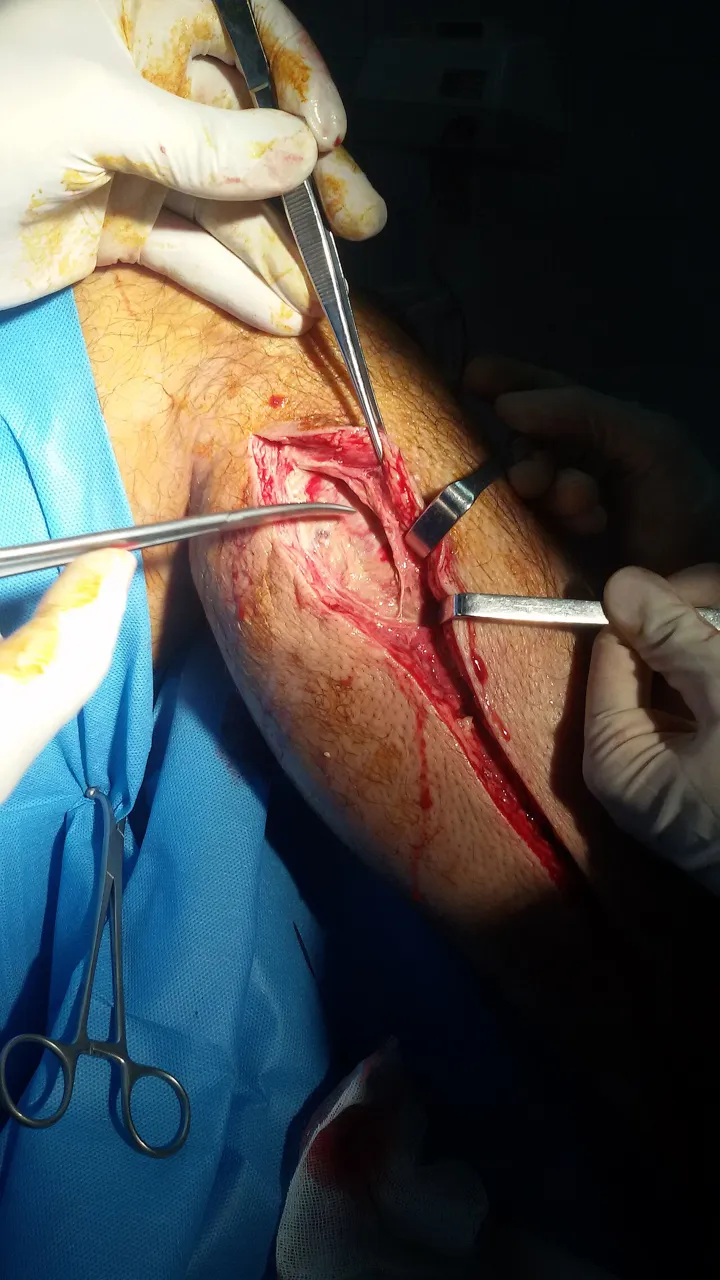
- Reperfusion can cause compartment syndrome, hyperkalaemia, acidosis and myoglobinuria; perform fasciotomy when indicated
- After embolism, look for the source (ECG, echocardiography) and anticoagulate long-term if AF is present
Differential diagnosis
| Condition | Clues | Key test |
|---|---|---|
| Acute deep vein thrombosis (phlegmasia cerulea dolens) | Swollen, blue, painful leg with pulses often palpable early | Venous duplex ultrasound |
| Acute aortic dissection | Tearing chest or back pain with limb ischaemia and pulse deficit | CT aortography |
| Low-output state or shock | Bilateral cold peripheries with hypotension and weak pulses | Haemodynamic assessment, echocardiogram |
| Acute compartment syndrome | Pain on passive stretch after trauma or reperfusion; pulses often present | Clinical diagnosis; compartment pressure |
| Peripheral neuropathy or nerve compression | Numbness and weakness without pallor, coldness or pulse loss | Normal Doppler signals; nerve studies |
| Chronic limb-threatening ischaemia | Weeks to months of rest pain or tissue loss with long-standing claudication | ABI, duplex; slower tempo |
Exam pearls
Guideline
ESVS 2020 clinical practice guidelines on acute limb ischaemia, 2024 ESC guidelines for peripheral arterial and aortic diseases and 2024 ACC/AHA multisociety guideline for lower extremity PAD
References
- Björck M, Earnshaw JJ, Acosta S, et al.. European Society for Vascular Surgery (ESVS) 2020 Clinical Practice Guidelines on the Management of Acute Limb Ischaemia. Eur J Vasc Endovasc Surg 2020.
- Mazzolai L, Teixido-Tura G, Lanzi S, et al.. 2024 ESC Guidelines for the management of peripheral arterial and aortic diseases. Eur Heart J 2024.
- Gornik HL, Aronow HD, Goodney PP, et al.. 2024 ACC/AHA/AACVPR/APMA/ABC/SCAI/SVM/SVN/SVS/SIR/VESS Guideline for the Management of Lower Extremity Peripheral Artery Disease. Circulation 2024.
- Rutherford RB, Baker JD, Ernst C, et al.. Recommended standards for reports dealing with lower extremity ischemia: revised version. J Vasc Surg 1997.
- Creager MA, Kaufman JA, Conte MS.. Clinical practice. Acute limb ischemia. N Engl J Med 2012.
- Ouriel K, Veith FJ, Sasahara AA.. A comparison of recombinant urokinase with vascular surgery as initial treatment for acute arterial occlusion of the legs. N Engl J Med 1998.
Related topics
By Dr Khalid Seidi (B.Sc., M.D.) · MedEd World Clinical Knowledge library. Original teaching content checked against current guidelines (November 2026); confirm the latest local guidance before clinical use. Not a substitute for clinical judgement.