Clinical Knowledge › Internal medicine › Cardiology and angiology › Diseases of the aorta and arteries
Acute mesenteric ischaemia
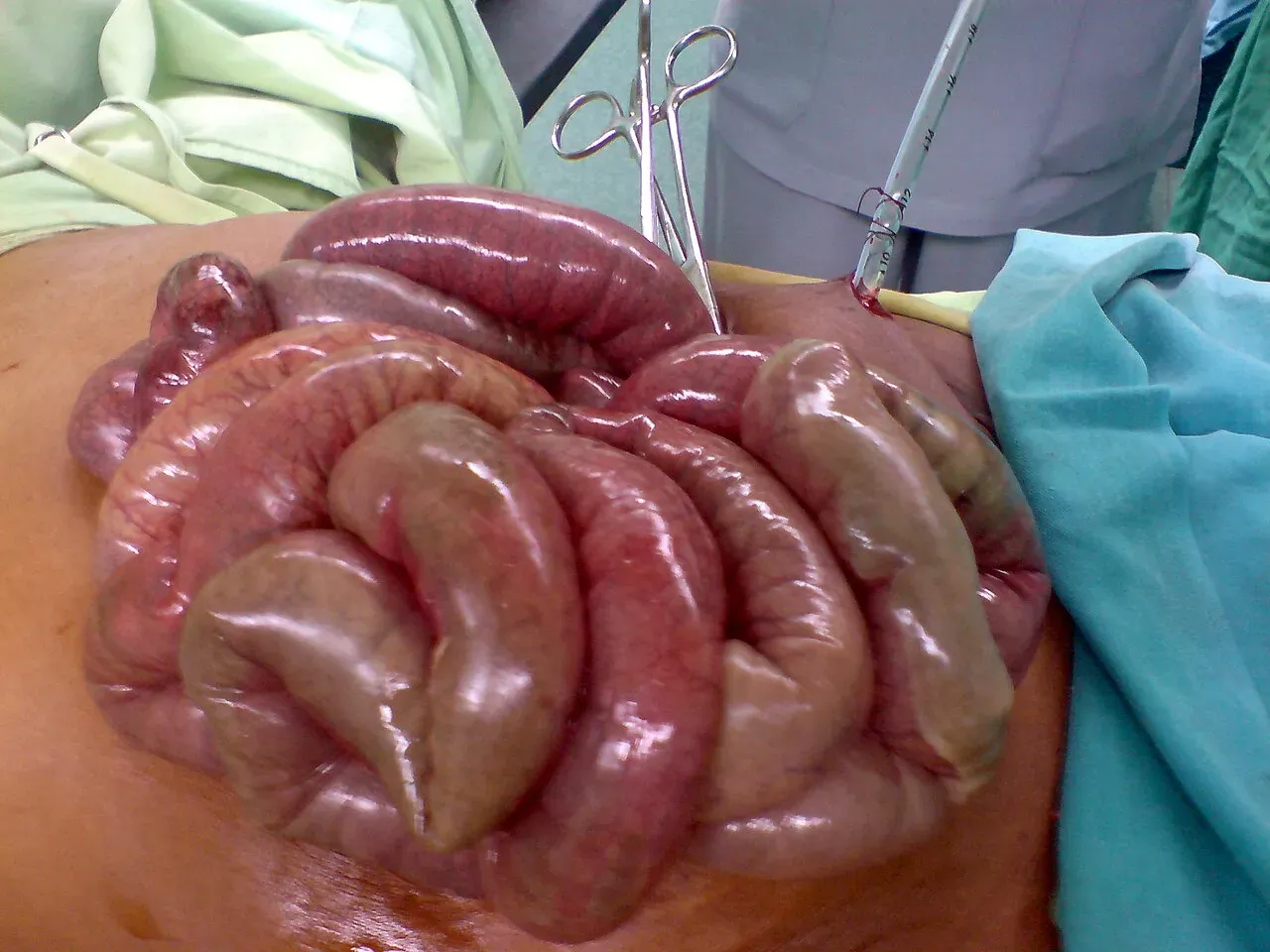
Acute mesenteric ischaemia (AMI) is a sudden interruption of blood flow to the small intestine and right colon that, untreated, progresses within hours to transmural infarction, peritonitis and death. About half of cases are arterial occlusions of the superior mesenteric artery (SMA): embolism, usually from the left atrium in atrial fibrillation, or thrombosis of an atherosclerotic SMA origin, often after months of postprandial pain and weight loss. The rest are non-occlusive mesenteric ischaemia (NOMI) from low flow and splanchnic vasoconstriction in critically ill patients, and mesenteric venous thrombosis. The hallmark is severe abdominal pain out of proportion to a soft, minimally tender abdomen, often with vomiting or diarrhoea. No blood test excludes it; a normal lactate is common early. Immediate biphasic CT angiography is the key test. Management is resuscitation, unfractionated heparin, antibiotics, urgent revascularisation (endovascular or open) and laparotomy with resection of dead bowel and a planned second look. Overall in-hospital mortality is still close to 50%.
Patient case, mechanism, investigations, management, flashcards and exam-style questions.Open the lesson →
Key facts
- AMI = sudden loss of intestinal blood flow; causes are SMA embolism, SMA thrombosis, NOMI and mesenteric venous thrombosis
- Classic sign: severe pain out of proportion to abdominal findings, often with forceful gut emptying
- Emboli lodge a few centimetres beyond the SMA origin, sparing the proximal jejunum; thrombosis occludes the origin
- Lactate is normal early in many patients; a raised lactate means advanced ischaemia, and no marker rules AMI out
- Immediate biphasic CT angiography is the diagnostic test of choice; do not wait for renal function
- Give IV unfractionated heparin, fluids and broad-spectrum antibiotics as soon as AMI is suspected
- Revascularise first, then resect non-viable bowel; plan a second-look laparotomy at 24–48 hours
- In-hospital mortality is about 50%: lowest for venous thrombosis, highest for NOMI
Differential diagnosis
| Condition | Clues | Key test |
|---|---|---|
| Perforated peptic ulcer | Sudden epigastric pain with a rigid abdomen from the start | Erect chest X-ray or CT: free gas |
| Acute pancreatitis | Epigastric pain radiating to the back, alcohol or gallstones | Lipase over 3× upper limit; CT |
| Small-bowel obstruction with strangulation | Colicky pain, distension, vomiting, previous surgery or hernia | CT: transition point, closed loop |
| Ruptured abdominal aortic aneurysm | Abdominal or back pain, shock, pulsatile mass | Bedside ultrasound or CT angiography |
| Ischaemic colitis | Milder left-sided pain followed by bloody diarrhoea in an older patient | CT and colonoscopy |
| Aortic dissection involving visceral branches | Tearing chest or back pain with abdominal pain and pulse deficits | CT aortography |
| Acute cholecystitis or biliary colic | Right upper quadrant pain, fever, Murphy sign | Ultrasound |
Exam pearls
Guideline
ESVS 2025 clinical practice guidelines on diseases of the mesenteric and renal arteries and veins, WSES 2022 updated guidelines on acute mesenteric ischaemia and 2024 ESC guidelines for peripheral arterial and aortic diseases
References
- Koelemay MJ, Geelkerken RH, Kärkkäinen J, et al.. European Society for Vascular Surgery (ESVS) 2025 Clinical Practice Guidelines on the Management of Diseases of the Mesenteric and Renal Arteries and Veins. Eur J Vasc Endovasc Surg 2025.
- Bala M, Catena F, Kashuk J, et al.. Acute mesenteric ischemia: updated guidelines of the World Society of Emergency Surgery. World J Emerg Surg 2022.
- Mazzolai L, Teixido-Tura G, Lanzi S, et al.. 2024 ESC Guidelines for the management of peripheral arterial and aortic diseases. Eur Heart J 2024.
- Clair DG, Beach JM.. Mesenteric Ischemia. N Engl J Med 2016.
- Reintam Blaser A, Mändul M, Björck M, et al.. Incidence, diagnosis, management and outcome of acute mesenteric ischaemia: a prospective, multicentre observational study (AMESI Study). Crit Care 2024.
- Kase K, Reintam Blaser A, Koitmäe M, et al.. Comparison between endovascular and surgical treatment of acute arterial occlusive mesenteric ischemia. World J Emerg Surg 2025.
Related topics
By Dr Khalid Seidi (B.Sc., M.D.) · MedEd World Clinical Knowledge library. Original teaching content checked against current guidelines (November 2026); confirm the latest local guidance before clinical use. Not a substitute for clinical judgement.