Clinical Knowledge › Internal medicine › Cardiology and angiology › Diseases of the aorta and arteries
Raynaud phenomenon
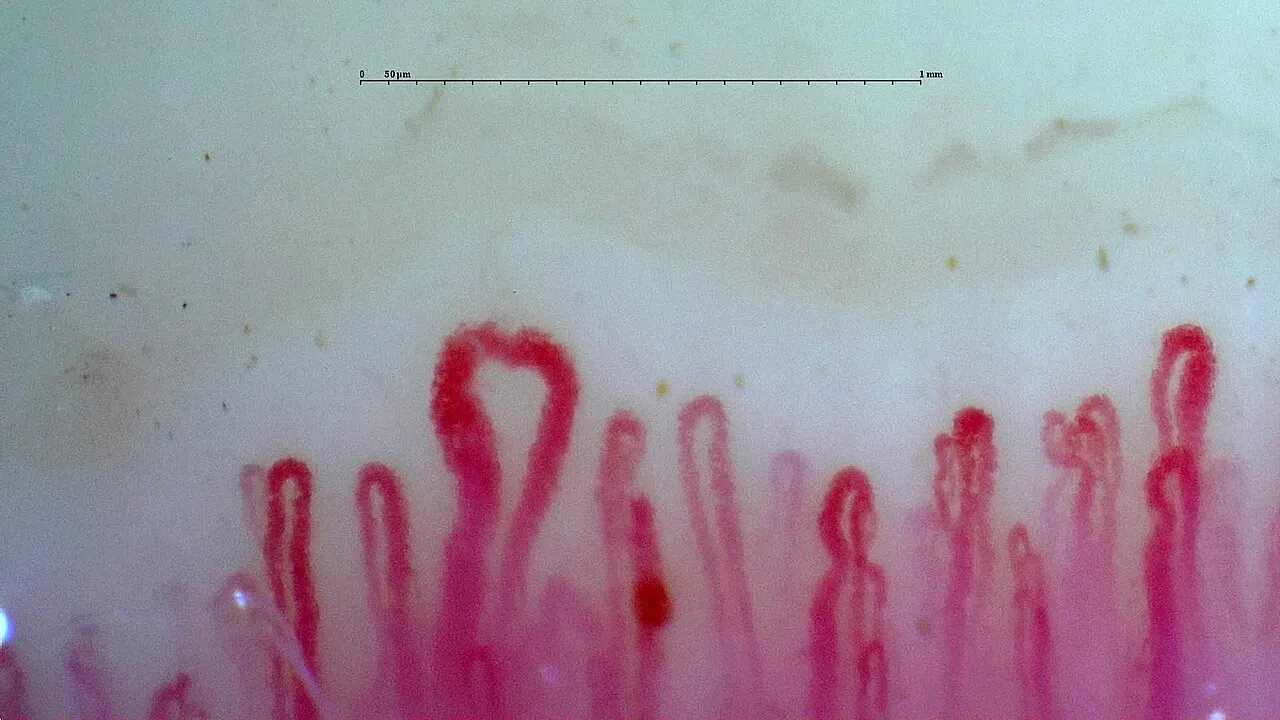
Raynaud phenomenon is episodic, exaggerated vasospasm of the digital arteries and arterioles triggered by cold or emotional stress. Attacks cause sharply demarcated colour changes of the fingers or toes: white from ischaemia, blue from deoxygenation and red from reactive hyperaemia on rewarming, with numbness, tingling or pain. It affects roughly 3–5% of people, mostly women. Primary Raynaud phenomenon starts in adolescence or early adulthood, is symmetrical and benign, and has normal nailfold capillaries and negative autoantibodies. Secondary Raynaud phenomenon is associated with an underlying disease, most importantly systemic sclerosis, in which it is almost universal and often the first sign; others include lupus, vibrating tools and drugs. Red flags are onset after 40, asymmetry, digital ulcers, abnormal capillaroscopy and positive antinuclear antibodies. Treatment is keeping the whole body warm, avoiding triggers and smoking, then a dihydropyridine calcium channel blocker; severe secondary disease may need PDE5 inhibitors or intravenous iloprost.
Patient case, mechanism, investigations, management, flashcards and exam-style questions.Open the lesson →
Key facts
- Raynaud phenomenon is reversible digital vasospasm triggered by cold or stress
- The classic triphasic sequence is white (ischaemia), blue (cyanosis), then red (reactive hyperaemia)
- Primary disease: young onset, symmetrical, no tissue damage, normal capillaroscopy and negative ANA
- Secondary disease: onset after 40, asymmetric or severe, digital ulcers, abnormal capillaries, positive ANA
- Systemic sclerosis is the key association: over 90% of patients have Raynaud phenomenon, often years before skin changes
- Nailfold capillaroscopy and ANA are the most useful tests to separate primary from secondary disease
- General measures first; nifedipine or amlodipine is the first-line drug; PDE5 inhibitors and IV iloprost for severe disease
- Avoid non-selective beta-blockers, ergotamine, sympathomimetics and smoking
Differential diagnosis
| Condition | Clues | Key test |
|---|---|---|
| Acrocyanosis | Persistent painless blue discoloration of hands, not episodic | Clinical; normal pulses and capillaroscopy |
| Chilblains (pernio) | Tender red-purple papules on toes or fingers after cold damp exposure | Clinical; consider lupus if persistent |
| Thromboangiitis obliterans | Young smoker with digital ischaemia, ulcers and absent distal pulses | Angiography; smoking history |
| Digital emboli | Sudden painful single-digit ischaemia, splinter haemorrhages | Echocardiogram, arterial duplex for proximal source |
| Thoracic outlet syndrome | Unilateral symptoms with arm position, subclavian compression | Positional duplex, chest X-ray for cervical rib |
| Erythromelalgia | Burning red hot extremities triggered by heat, relieved by cooling | Clinical; full blood count for myeloproliferative disease |
| Cryoglobulinaemia or cold agglutinin disease | Purpura, livedo, ulcers; associated hepatitis C or lymphoproliferative disease | Cryoglobulins, complement, hepatitis C serology, direct antiglobulin test |
Exam pearls
Guideline
EULAR recommendations for the treatment of systemic sclerosis: 2023 update (published 2025), international consensus criteria for Raynaud phenomenon (2014) and 2013 ACR/EULAR classification criteria for systemic sclerosis
References
- Del Galdo F, Lescoat A, Conaghan PG, et al.. EULAR recommendations for the treatment of systemic sclerosis: 2023 update. Ann Rheum Dis 2025.
- Maverakis E, Patel F, Kronenberg DG, et al.. International consensus criteria for the diagnosis of Raynaud's phenomenon. J Autoimmun 2014.
- van den Hoogen F, Khanna D, Fransen J, et al.. 2013 classification criteria for systemic sclerosis: an American College of Rheumatology/European League Against Rheumatism collaborative initiative. Ann Rheum Dis 2013.
- Wigley FM, Flavahan NA.. Raynaud's phenomenon. N Engl J Med 2016.
- Rirash F, Tingey PC, Harding SE, et al.. Calcium channel blockers for primary and secondary Raynaud's phenomenon. Cochrane Database Syst Rev 2017.
- Strachan MWJ, Ralston SH, Dhaun N, Sutherland R, eds.. Davidson's Principles and Practice of Medicine. 2026.
Related topics
By Dr Khalid Seidi (B.Sc., M.D.) · MedEd World Clinical Knowledge library. Original teaching content checked against current guidelines (November 2026); confirm the latest local guidance before clinical use. Not a substitute for clinical judgement.