Clinical Knowledge › Internal medicine › Cardiology and angiology › Diseases of the aorta and arteries
Peripheral arterial disease
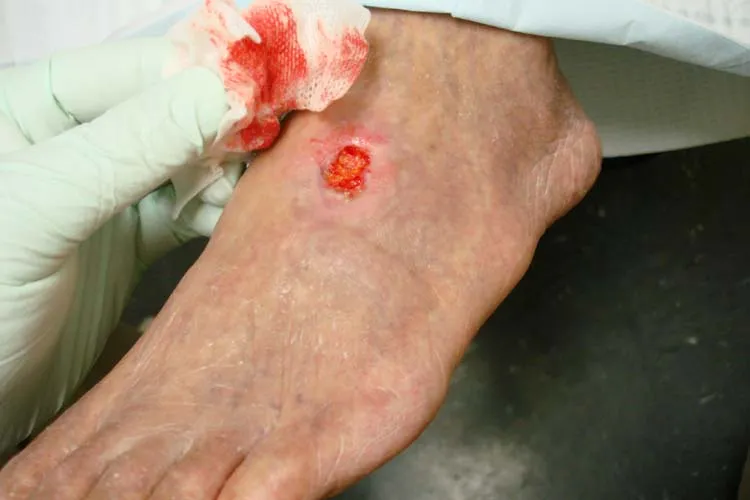
Peripheral arterial disease (PAD) of the lower limbs is atherosclerotic narrowing or occlusion of the arteries supplying the legs. It affects over 200 million people and marks of widespread atherosclerosis: most patients die of myocardial infarction or stroke rather than limb loss. Smoking and diabetes are the strongest risk factors. Many patients are asymptomatic; the classic symptom is intermittent claudication, a reproducible cramping calf, thigh or buttock pain on walking that settles within minutes of rest. Chronic limb-threatening ischaemia (CLTI) adds rest pain, non-healing ulcers or gangrene and threatens the leg. Diagnosis rests on a resting ankle-brachial index (ABI) of 0.90 or less, with toe pressures when arteries are calcified, followed by duplex ultrasound and CT or MR angiography when revascularisation is planned. Every patient needs smoking cessation, high-intensity statin therapy, antithrombotic therapy, blood pressure and diabetes control and structured exercise. Revascularisation is reserved for lifestyle-limiting claudication despite exercise and for CLTI.
Patient case, mechanism, investigations, management, flashcards and exam-style questions.Open the lesson →
Key facts
- PAD is a coronary risk equivalent: cardiovascular death, not amputation, is the main threat
- Smoking and diabetes are the strongest risk factors; diabetes causes distal, calcified disease
- A resting ABI of 0.90 or less confirms PAD; an ABI above 1.40 means incompressible arteries, so measure the toe-brachial index
- Claudication is reproducible exercise-induced muscle pain relieved by standing still within about 10 minutes
- CLTI is PAD with ischaemic rest pain, a wound present for over 2 weeks or gangrene, and needs urgent vascular referral
- Supervised exercise therapy for at least 12 weeks is first-line treatment for claudication
- All patients need a high-intensity statin (LDL-C below 1.4 mmol/L and a 50% reduction) and an antiplatelet; low-dose rivaroxaban plus aspirin suits high-risk patients
- Revascularisation is for lifestyle-limiting claudication after exercise and best medical therapy, or for limb salvage in CLTI
Differential diagnosis
| Condition | Clues | Key test |
|---|---|---|
| Lumbar spinal stenosis (neurogenic claudication) | Leg pain on standing or walking, relieved by sitting or bending forward; pulses normal | Normal ABI; MRI lumbar spine |
| Chronic venous insufficiency or venous claudication | Bursting thigh pain on walking after iliofemoral DVT, eased by elevation; oedema and skin changes | Venous duplex ultrasound |
| Osteoarthritis of hip or knee | Pain at the joint, with start-up stiffness and variable distance; not relieved promptly by rest | Normal ABI; joint X-ray |
| Thromboangiitis obliterans (Buerger disease) | Young heavy smoker, distal limb ischaemia, migratory superficial thrombophlebitis | Angiography: corkscrew collaterals, normal proximal arteries |
| Popliteal artery entrapment syndrome | Young athlete with calf claudication; pulses fall with active plantar flexion | Duplex or MRI with provocative manoeuvres |
| Diabetic peripheral neuropathy | Burning numb feet at rest, worse at night, stocking sensory loss | Monofilament and nerve conduction; ABI or TBI to look for coexisting PAD |
| Chronic compartment syndrome | Young runner with tight calf pain at a fixed exercise level | Compartment pressure measurement after exercise |
Exam pearls
Guideline
2024 ESC guidelines for peripheral arterial and aortic diseases, 2024 ACC/AHA multisociety guideline for lower extremity PAD, ESVS 2024 guideline on asymptomatic PAD and intermittent claudication and Global Vascular Guidelines on CLTI (2019)
References
- Mazzolai L, Teixido-Tura G, Lanzi S, et al.. 2024 ESC Guidelines for the management of peripheral arterial and aortic diseases. Eur Heart J 2024.
- Gornik HL, Aronow HD, Goodney PP, et al.. 2024 ACC/AHA/AACVPR/APMA/ABC/SCAI/SVM/SVN/SVS/SIR/VESS Guideline for the Management of Lower Extremity Peripheral Artery Disease. Circulation 2024.
- Nordanstig J, Behrendt CA, Baumgartner I, et al.. European Society for Vascular Surgery (ESVS) 2024 Clinical Practice Guidelines on the Management of Asymptomatic Lower Limb Peripheral Arterial Disease and Intermittent Claudication. Eur J Vasc Endovasc Surg 2024.
- Conte MS, Bradbury AW, Kolh P, et al.. Global vascular guidelines on the management of chronic limb-threatening ischemia. J Vasc Surg 2019.
- Anand SS, Bosch J, Eikelboom JW, et al.. Rivaroxaban with or without aspirin in patients with stable peripheral or carotid artery disease: an international, randomised, double-blind, placebo-controlled trial. Lancet 2018.
- Bonaca MP, Bauersachs RM, Anand SS, et al.. Rivaroxaban in peripheral artery disease after revascularization. N Engl J Med 2020.
Related topics
By Dr Khalid Seidi (B.Sc., M.D.) · MedEd World Clinical Knowledge library. Original teaching content checked against current guidelines (November 2026); confirm the latest local guidance before clinical use. Not a substitute for clinical judgement.