Clinical Knowledge › Internal medicine › Endocrinology › Clinical problems
Amenorrhoea: approach to the patient
Amenorrhoea is the absence of menstruation. Primary amenorrhoea is no menarche by age 15 with normal secondary sexual characteristics, or by 13 without breast development; secondary amenorrhoea is loss of periods for 3 months in a woman with previously regular cycles (or 6 months if irregular). Pregnancy is the commonest cause and must be excluded first. Causes are then sorted by level: hypothalamus, pituitary, ovary, uterus and outflow. The four commonest causes of secondary amenorrhoea are polycystic ovary syndrome, functional hypothalamic amenorrhoea (low energy availability, weight loss, exercise or stress), hyperprolactinaemia and premature ovarian insufficiency. First-line tests are hCG, FSH, LH, oestradiol, prolactin and TSH, with testosterone if there is hyperandrogenism. High FSH means ovarian failure; low or normal FSH with low oestradiol means hypothalamic or pituitary disease. Primary amenorrhoea adds pelvic ultrasound and karyotype (Turner syndrome, Müllerian agenesis, androgen insensitivity). Treatment targets the cause and protects bone, heart and fertility.
Patient case, mechanism, investigations, management, flashcards and exam-style questions.Open the lesson →
Key facts
- Always exclude pregnancy first, whatever the history
- Primary amenorrhoea: no menses by 15 with secondary sexual development, or by 13 without breast development
- Secondary amenorrhoea: no menses for 3 months with previously regular cycles, or 6 months with irregular cycles
- Commonest secondary causes: PCOS, functional hypothalamic amenorrhoea, hyperprolactinaemia, premature ovarian insufficiency; plus thyroid disease and Asherman syndrome
- Commonest primary causes: gonadal dysgenesis (for example Turner syndrome), Müllerian agenesis and constitutional delay or hypothalamic causes
- FSH >25 IU/L with oligo- or amenorrhoea for at least 4 months before age 40 = premature ovarian insufficiency (ESHRE 2024: one raised FSH is enough)
- Low or normal FSH and LH with low oestradiol = hypogonadotrophic hypogonadism (functional, pituitary tumour, hyperprolactinaemia, Sheehan syndrome)
- Prolonged hypo-oestrogenism causes bone loss: check bone density after 6 months or more of amenorrhoea with low oestrogen
Differential diagnosis
| Condition | Clues | Key test |
|---|---|---|
| Pregnancy | Sexually active; breast tenderness, nausea | Urine or serum hCG |
| Polycystic ovary syndrome | Oligomenorrhoea since menarche, hirsutism, acne, obesity | Testosterone; ultrasound or AMH; normal FSH, LH often high |
| Functional hypothalamic amenorrhoea | Low weight or weight loss, high exercise, stress, eating disorder | Low/normal LH and FSH, low oestradiol; diagnosis of exclusion |
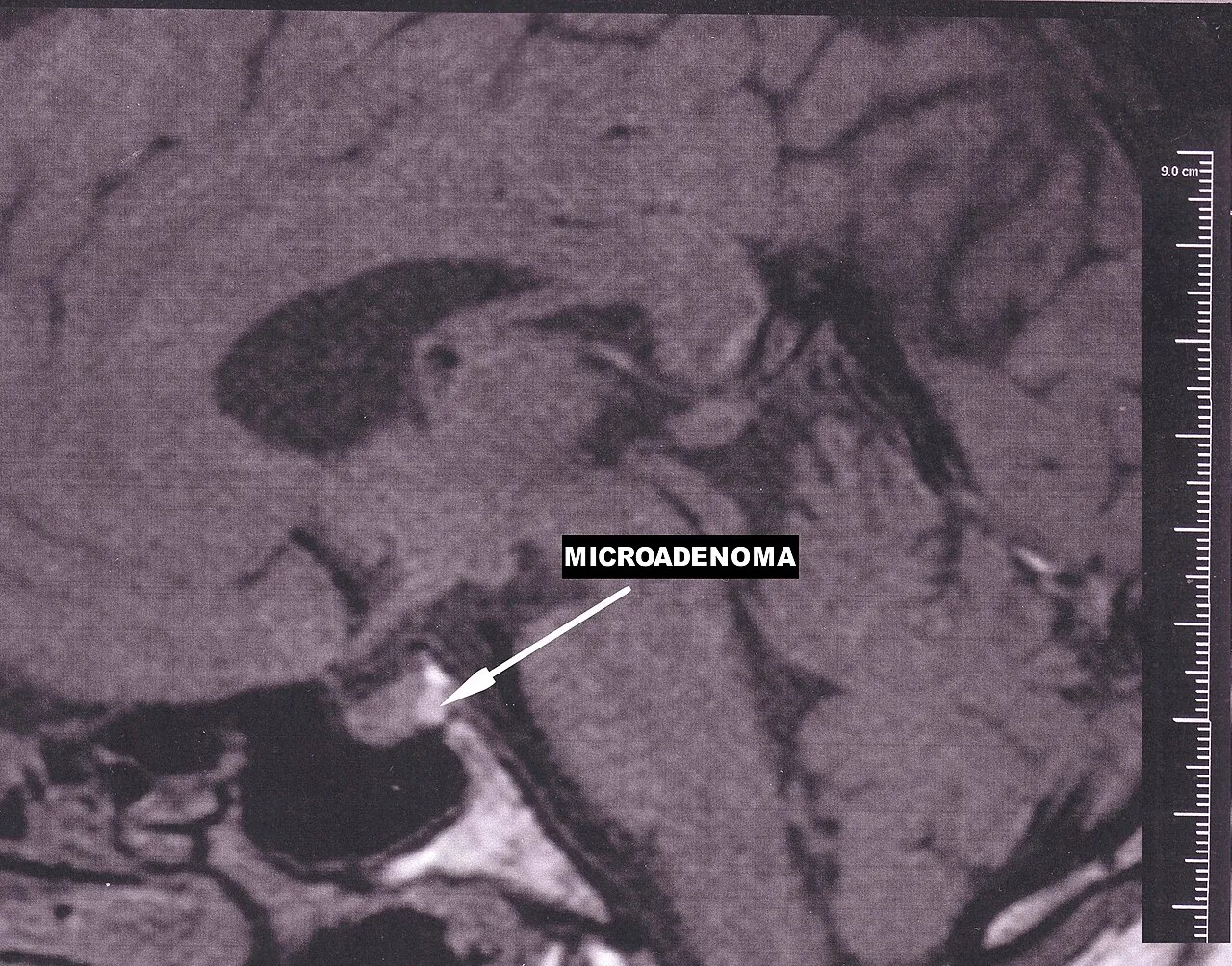
| Hyperprolactinaemia | Galactorrhoea, headache, visual field loss, antipsychotics | Prolactin; exclude drugs, hypothyroidism, macroprolactin; pituitary MRI |
| Premature ovarian insufficiency | Age <40, hot flushes, vaginal dryness; chemotherapy, autoimmunity, family history | FSH >25 IU/L; karyotype, FMR1 premutation, adrenal antibodies |
| Asherman syndrome | Amenorrhoea after uterine curettage or infection; cyclic pelvic pain | Normal hormones; hysteroscopy |
| Turner syndrome (gonadal dysgenesis) | Primary amenorrhoea, short stature, webbed neck, absent breasts | High FSH; karyotype 45,X or mosaic |
| Müllerian agenesis (MRKH) or androgen insensitivity | Primary amenorrhoea, normal breasts, absent or short vagina; scant pubic hair in androgen insensitivity | Pelvic ultrasound/MRI, testosterone, karyotype |
Exam pearls
Guideline
ESHRE/ASRM/CRE-WHiRL/IMS premature ovarian insufficiency guideline (2024), Endocrine Society functional hypothalamic amenorrhoea guideline (2017), 2023 International PCOS guideline, Pituitary Society prolactinoma consensus (2023) and ASRM evaluation of amenorrhoea (2008)
References
- Practice Committee of the American Society for Reproductive Medicine. Current evaluation of amenorrhea. Fertil Steril 2008.
- Gordon CM, Ackerman KE, Berga SL, et al.. Functional hypothalamic amenorrhea: an Endocrine Society clinical practice guideline. J Clin Endocrinol Metab 2017.
- Panay N, Anderson RA, Bennie A, et al.. Evidence-based guideline: premature ovarian insufficiency. Hum Reprod Open 2024.
- Teede HJ, Tay CT, Laven JJE, et al.. Recommendations from the 2023 international evidence-based guideline for the assessment and management of polycystic ovary syndrome. J Clin Endocrinol Metab 2023.
- Petersenn S, Fleseriu M, Casanueva FF, et al.. Diagnosis and management of prolactin-secreting pituitary adenomas: a Pituitary Society international consensus statement. Nat Rev Endocrinol 2023.
- Fleseriu M, Hashim IA, Karavitaki N, et al.. Hormonal replacement in hypopituitarism in adults: an Endocrine Society clinical practice guideline. J Clin Endocrinol Metab 2016.
Related topics
By Dr Khalid Seidi (B.Sc., M.D.) · MedEd World Clinical Knowledge library. Original teaching content checked against current guidelines (November 2026); confirm the latest local guidance before clinical use. Not a substitute for clinical judgement.