Clinical Knowledge › Internal medicine › Endocrinology › Clinical problems
Weight gain: approach to the patient
Weight gain is one of the commonest reasons people ask for 'hormone tests', yet most gain is driven by energy intake exceeding expenditure in an obesogenic environment, often amplified by medicines, life events and sleep or mood disturbance. The first task is to decide what is being gained: fat, or fluid from heart failure, kidney or liver disease, or a pregnancy. The second is to find modifiable drivers, especially drugs such as antipsychotics, insulin, sulfonylureas, glucocorticoids, some antidepressants, antiepileptics and depot progestogens, and life events such as stopping smoking or menopause. Endocrine causes are uncommon but important: hypothyroidism (modest, partly fluid), Cushing syndrome (central fat with thin skin, bruising and proximal weakness), PCOS, hypogonadism, growth hormone deficiency, insulinoma and hypothalamic damage. Severe early-onset obesity with hyperphagia suggests a monogenic or syndromic cause. A focused history, weight trajectory, waist measurement and a small set of tests usually suffice; specialised tests are reserved for discriminating features.
Patient case, mechanism, investigations, management, flashcards and exam-style questions.Open the lesson →
Key facts
- Most weight gain is due to positive energy balance; endocrine disease causes a small minority
- First separate fat gain from fluid (oedema, ascites, effusions) and exclude pregnancy
- Drugs are a common reversible cause: antipsychotics (olanzapine, clozapine), insulin, sulfonylureas, pioglitazone, glucocorticoids, mirtazapine, tricyclics, valproate, lithium, gabapentinoids, depot medroxyprogesterone
- Hypothyroidism usually causes only a few kilograms of gain, much of it fluid; levothyroxine is never a weight-loss drug
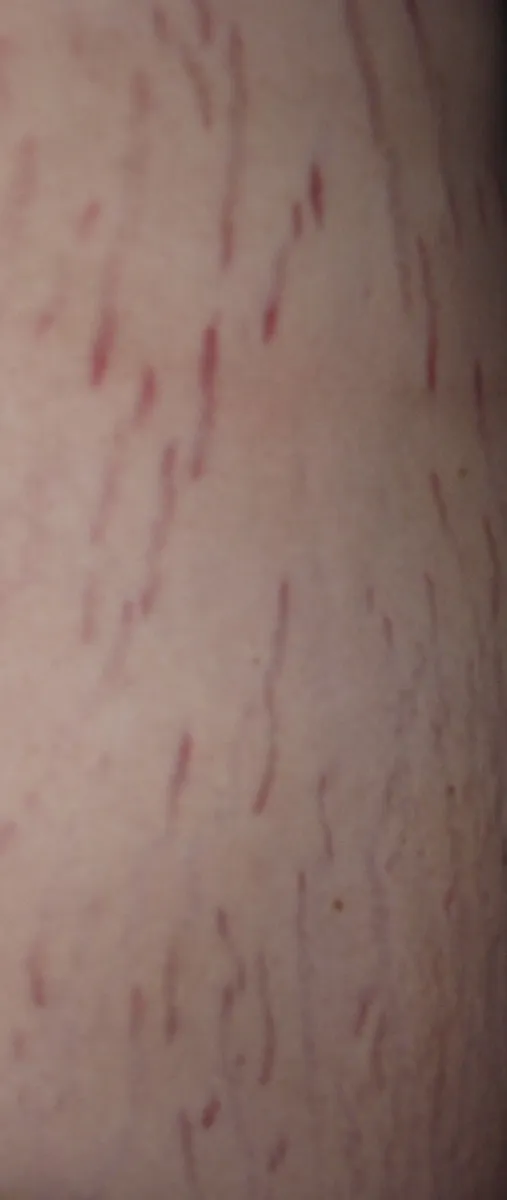
- Screen for Cushing syndrome only with discriminating features: easy bruising, facial plethora, proximal myopathy, wide (over 1 cm) purple striae
- Rapid gain over weeks with oedema suggests fluid; over months with striae and weakness suggests Cushing syndrome
- Severe obesity before age 5 with hyperphagia suggests monogenic (MC4R, leptin, POMC) or syndromic (Prader–Willi) obesity
- Stopping smoking leads to an average gain of about 4–5 kg, but the health benefit far outweighs it
Differential diagnosis
| Condition | Clues | Key test |
|---|---|---|
| Lifestyle-related (positive energy balance) | Gradual gain, sedentary job, high-energy diet, poor sleep, no specific signs | Clinical; BMI, waist-to-height ratio, HbA1c, lipids |
| Drug-induced weight gain | Gain after starting antipsychotic, insulin, steroid, mirtazapine, valproate or depot progestogen | Medication history and timeline |
| Hypothyroidism | Fatigue, cold intolerance, constipation, dry skin, bradycardia; modest gain | TSH and free T4 |
| Cushing syndrome | Central fat with thin skin, bruising, proximal myopathy, wide purple striae, hypertension, diabetes | 1 mg overnight dexamethasone suppression test, late-night salivary cortisol |
| Polycystic ovary syndrome | Oligomenorrhoea, hirsutism, acne, acanthosis | Total testosterone, SHBG, pelvic ultrasound or AMH |
| Fluid retention (heart failure, nephrotic syndrome, cirrhosis) | Rapid gain, oedema, ascites, breathlessness | NT-proBNP, urine PCR, albumin, LFTs, echocardiography |
| Hypothalamic obesity | Hyperphagia after craniopharyngioma surgery or cranial irradiation; other pituitary deficits | Pituitary function, MRI |
| Monogenic or syndromic obesity | Severe obesity from early childhood, hyperphagia, developmental delay or dysmorphism | Genetic testing (obesity gene panel, Prader–Willi methylation) |
Exam pearls
Guideline
NICE NG246 Overweight and obesity management (2025); Lancet Diabetes & Endocrinology Commission on the definition and diagnostic criteria of clinical obesity (2025); Endocrine Society diagnosis of Cushing syndrome (2008) with the Pituitary Society Cushing disease consensus update (2021); Endocrine Society pharmacological management of obesity (2015)
References
- National Institute for Health and Care Excellence (NICE). Overweight and obesity management (NG246). NICE guideline 2025.
- Rubino F, Cummings DE, Eckel RH, et al.. Definition and diagnostic criteria of clinical obesity. Lancet Diabetes Endocrinol 2025.
- Nieman LK, Biller BMK, Findling JW, et al.. The diagnosis of Cushing's syndrome: an Endocrine Society clinical practice guideline. J Clin Endocrinol Metab 2008.
- Fleseriu M, Auchus R, Bancos I, et al.. Consensus on diagnosis and management of Cushing's disease: a guideline update. Lancet Diabetes Endocrinol 2021.
- Apovian CM, Aronne LJ, Bessesen DH, et al.. Pharmacological management of obesity: an Endocrine Society clinical practice guideline. J Clin Endocrinol Metab 2015.
- Melmed S, Auchus RJ, Goldfine AB, Rosen CJ, Kopp PA (eds).. Williams Textbook of Endocrinology. Elsevier 2024.
Related topics
By Dr Khalid Seidi (B.Sc., M.D.) · MedEd World Clinical Knowledge library. Original teaching content checked against current guidelines (November 2026); confirm the latest local guidance before clinical use. Not a substitute for clinical judgement.