Clinical Knowledge › Internal medicine › Gastroenterology and hepatology › Diseases of the colon, rectum and anus
Benign anorectal disorders (haemorrhoids, anal fissure, anorectal abscess and fistula)
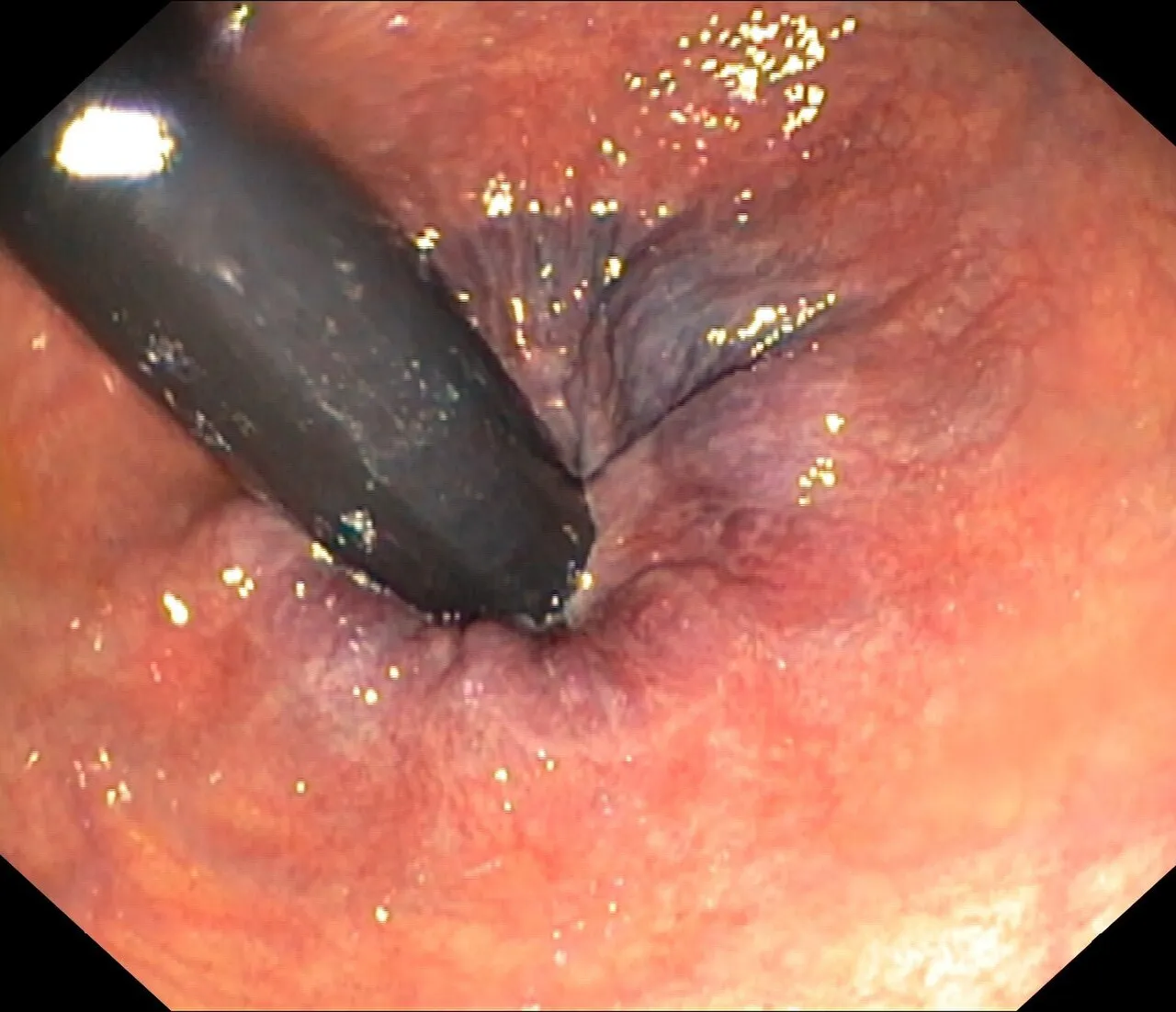
Benign anorectal disorders are among the commonest reasons for bleeding, pain and swelling at the anus. Haemorrhoids are enlarged, displaced vascular cushions: internal haemorrhoids cause painless bright red bleeding and prolapse (Goligher grades I–IV), whereas a thrombosed external haemorrhoid causes a sudden painful bluish lump. An anal fissure is a tear in the anoderm, usually in the posterior midline, causing severe pain on defecation; it persists because internal sphincter spasm reduces blood flow. An anorectal abscess usually arises from an infected anal gland and needs prompt incision and drainage; about a third leave a fistula-in-ano, classified by Parks according to its relation to the sphincters. Management starts with fibre and stool softening, then office procedures such as rubber band ligation, topical nitrate or calcium channel blocker for fissure, and surgery when needed, always protecting continence. Atypical features, such as lateral fissures, complex fistulas or rectal bleeding with alarm features, call for tests for Crohn disease, infection and colorectal cancer.
Patient case, mechanism, investigations, management, flashcards and exam-style questions.Open the lesson →
Key facts
- Internal haemorrhoids lie above the dentate line (visceral innervation, painless bleeding); external haemorrhoids lie below it (somatic innervation, painful)
- Goligher grades: I bleed without prolapse; II prolapse and reduce spontaneously; III need manual reduction; IV irreducible
- Fibre and fluids first; rubber band ligation is the office treatment of choice for grade I–III internal haemorrhoids; excisional haemorrhoidectomy for grade III–IV or failed office treatment
- About 90% of anal fissures are posterior midline; lateral or multiple fissures suggest Crohn disease, HIV, TB, syphilis or carcinoma
- Chronic fissure (over 6–8 weeks): sentinel tag, hypertrophied papilla, exposed internal sphincter fibres; treat with topical diltiazem or GTN, then botulinum toxin or lateral internal sphincterotomy
- Anorectal abscess: incision and drainage without delay; antibiotics only for cellulitis, systemic sepsis, immunosuppression or other specific indications
- Parks classification of fistula: intersphincteric (commonest), trans-sphincteric, suprasphincteric, extrasphincteric; MRI pelvis is the imaging of choice for complex fistulas
- Simple low fistula: fistulotomy; complex fistula: draining seton, then sphincter-preserving repair (LIFT, advancement flap)
Differential diagnosis
| Condition | Clues | Key test |
|---|---|---|
| Colorectal or anal cancer | Older age, change in bowel habit, iron deficiency anaemia, weight loss, hard mass | Colonoscopy; biopsy of anal lesion |
| Perianal Crohn disease | Multiple or lateral fissures, complex fistulas, skin tags, diarrhoea | MRI pelvis, colonoscopy with ileal biopsies |
| Rectal prolapse | Concentric mucosal folds protruding, often in older women | Examination while straining; defecography |
| Pilonidal abscess | Natal cleft above the anus, hair-bearing | Clinical examination |
| Sexually transmitted proctitis (gonorrhoea, chlamydia, herpes, syphilis) | Tenesmus, discharge, painful ulcers in at-risk patients | NAAT swabs, syphilis serology, HIV test |
| Anal warts (condylomata acuminata) | Cauliflower-like papules, itching | Clinical; biopsy if atypical |
| Proctalgia fugax or levator ani syndrome | Episodic rectal pain without a lesion | Normal examination; exclusion |
Exam pearls
Guideline
ASCRS clinical practice guidelines for haemorrhoids (2024), anal fissures (2023) and anorectal abscess, fistula-in-ano and rectovaginal fistula (2022), with the ESCP haemorrhoidal disease guideline (2020)
References
- Hawkins AT, Davis BR, Bhama AR, et al.. The American Society of Colon and Rectal Surgeons Clinical Practice Guidelines for the Management of Hemorrhoids. Dis Colon Rectum 2024.
- Davids JS, Hawkins AT, Bhama AR, et al.. The American Society of Colon and Rectal Surgeons Clinical Practice Guidelines for the Management of Anal Fissures. Dis Colon Rectum 2023.
- Gaertner WB, Burgess PL, Davids JS, et al.. The American Society of Colon and Rectal Surgeons Clinical Practice Guidelines for the Management of Anorectal Abscess, Fistula-in-Ano, and Rectovaginal Fistula. Dis Colon Rectum 2022.
- van Tol RR, Kleijnen J, Watson AJM, et al.. European Society of ColoProctology: guideline for haemorrhoidal disease. Colorectal Dis 2020.
- Parks AG, Gordon PH, Hardcastle JD.. A classification of fistula-in-ano. Br J Surg 1976.
- Brown SR, Tiernan JP, Watson AJM, et al.. Haemorrhoidal artery ligation versus rubber band ligation for the management of symptomatic second-degree and third-degree haemorrhoids (HubBLe): a multicentre, open-label, randomised controlled trial. Lancet 2016.
Related topics
By Dr Khalid Seidi (B.Sc., M.D.) · MedEd World Clinical Knowledge library. Original teaching content checked against current guidelines (November 2026); confirm the latest local guidance before clinical use. Not a substitute for clinical judgement.