Clinical Knowledge › Internal medicine › Gastroenterology and hepatology › Diseases of the colon, rectum and anus
Colorectal cancer and screening
Colorectal cancer (CRC) is the third commonest cancer and the second leading cause of cancer death worldwide, and its incidence in adults under 50 is rising. Most tumours are adenocarcinomas that develop over about 10 years from adenomas or serrated lesions through the chromosomal instability, microsatellite instability or serrated (CpG island methylator) pathways. Risk rises with age, family history, Lynch syndrome and polyposis, long-standing colitis, obesity, red and processed meat, alcohol and smoking. Right-sided tumours present with iron deficiency anaemia; left-sided and rectal tumours with rectal bleeding, change in bowel habit or obstruction. Diagnosis is by colonoscopy and biopsy, with CT staging, pelvic MRI for rectal cancer and mismatch repair testing for every tumour. Treatment is surgical resection with adjuvant chemotherapy for node-positive colon cancer, total neoadjuvant therapy or organ preservation for many rectal cancers, immunotherapy for mismatch repair-deficient disease, and biomarker-guided systemic therapy for metastases. Screening with FIT or colonoscopy reduces incidence and mortality.
Patient case, mechanism, investigations, management, flashcards and exam-style questions.Open the lesson →
Key facts
- Most CRC arises from adenomas (chromosomal instability: APC, KRAS, TP53) or serrated lesions (BRAF, CIMP); about 15% are mismatch repair deficient
- Right-sided cancer: iron deficiency anaemia, weight loss, mass; left-sided: bleeding, change in bowel habit, obstruction; rectal: tenesmus
- Iron deficiency anaemia in a man or postmenopausal woman needs colonoscopy (and gastroscopy) whatever the haemoglobin
- Symptomatic FIT (at least 10 µg Hb/g faeces) triages patients for urgent colonoscopy in the UK
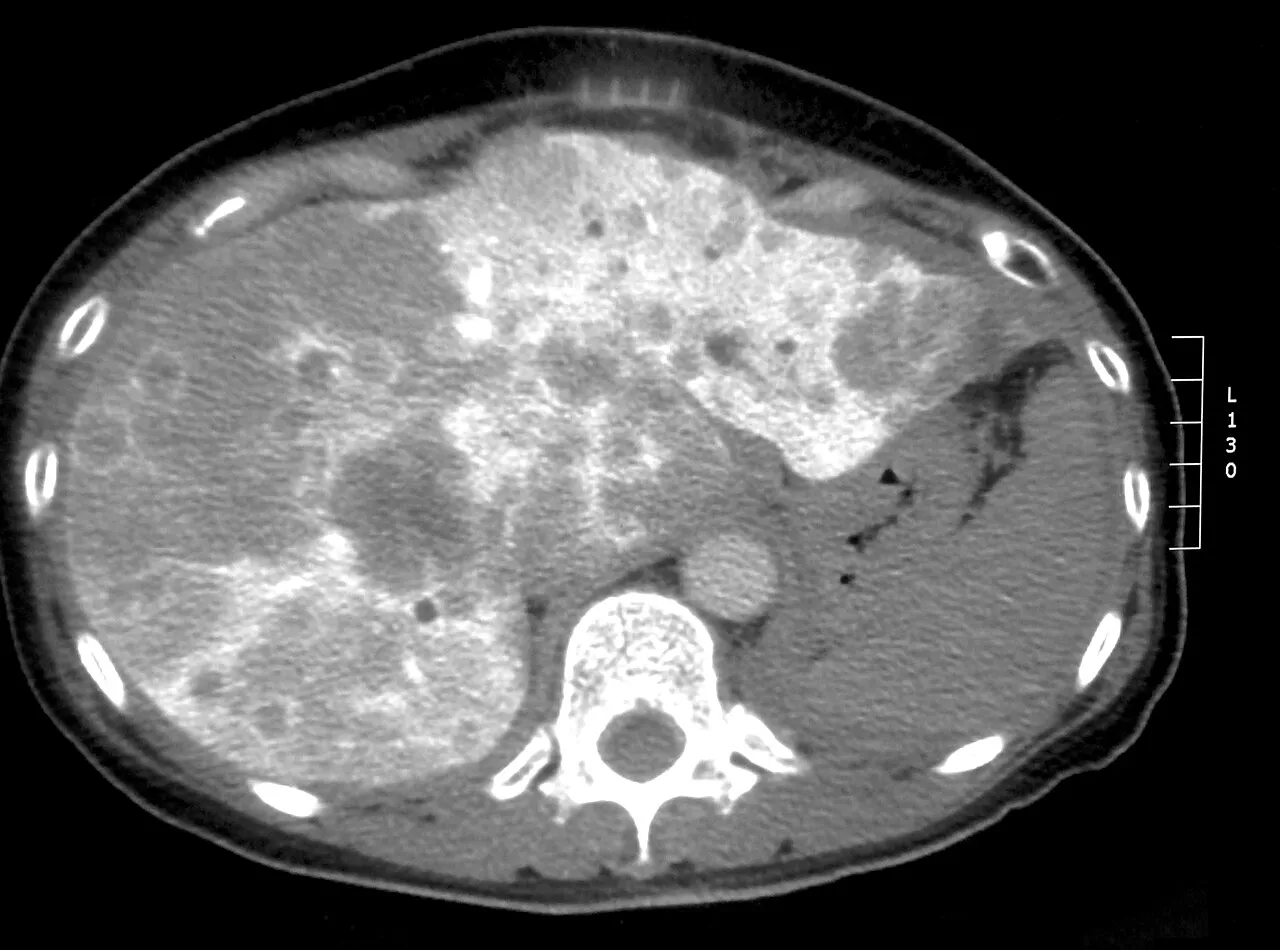
- Stage with CT chest, abdomen and pelvis; MRI pelvis for rectal cancer; CEA baseline; test every tumour for mismatch repair deficiency
- Stage III colon cancer: resection plus oxaliplatin-based adjuvant chemotherapy (3 months CAPOX for low-risk disease)
- dMMR/MSI-high tumours respond dramatically to PD-1 blockade, including organ preservation with dostarlimab in rectal cancer
- USPSTF 2021: screen average-risk adults aged 45–75; UK programmes offer FIT every 2 years from 50 to 74
Differential diagnosis
| Condition | Clues | Key test |
|---|---|---|
| Haemorrhoids or anal fissure | Bright red blood on paper, pain with fissure, normal bowel habit | Proctoscopy; colonoscopy if age or risk warrants |
| Inflammatory bowel disease | Younger, bloody diarrhoea, raised calprotectin | Colonoscopy and biopsy |
| Diverticular disease | Left iliac fossa pain, fever; painless bleeding in diverticular haemorrhage | CT in acute illness; colonoscopy after recovery |
| Irritable bowel syndrome | Long history, young age, no alarm features | Normal FBC, CRP, calprotectin and FIT |
| Ischaemic colitis | Older patient, sudden pain then bloody diarrhoea, splenic flexure | CT, colonoscopy |
| Angiodysplasia | Painless bleeding or iron deficiency, aortic stenosis | Colonoscopy, CT angiography |
| Other causes of iron deficiency | Coeliac disease, gastric cancer, menorrhagia | Coeliac serology, gastroscopy |
Exam pearls
Guideline
USPSTF colorectal cancer screening recommendation (2021), American Cancer Society screening update (2026), ESMO guidelines for localised colon cancer (2020) and metastatic colorectal cancer (2023), with NCCN updates
References
- Davidson KW, Barry MJ, Mangione CM, et al.. Screening for Colorectal Cancer: US Preventive Services Task Force Recommendation Statement. JAMA 2021.
- American Cancer Society. American Cancer Society guideline update for colorectal cancer screening in average-risk adults (2026). CA Cancer J Clin 2026.
- Argilés G, Tabernero J, Labianca R, et al.. Localised colon cancer: ESMO Clinical Practice Guidelines for diagnosis, treatment and follow-up. Ann Oncol 2020.
- Cervantes A, Adam R, Roselló S, et al.. Metastatic colorectal cancer: ESMO Clinical Practice Guideline for diagnosis, treatment and follow-up. Ann Oncol 2023.
- Bretthauer M, Løberg M, Wieszczy P, et al.. Effect of colonoscopy screening on risks of colorectal cancer and related death. N Engl J Med 2022.
- Cercek A, Lumish M, Sinopoli J, et al.. PD-1 blockade in mismatch repair-deficient, locally advanced rectal cancer. N Engl J Med 2022.
Related topics
By Dr Khalid Seidi (B.Sc., M.D.) · MedEd World Clinical Knowledge library. Original teaching content checked against current guidelines (November 2026); confirm the latest local guidance before clinical use. Not a substitute for clinical judgement.