Clinical Knowledge › Surgery › Trauma and emergency surgery
Blunt abdominal trauma
Blunt abdominal trauma follows road traffic collisions, falls, assaults and crush injuries, and transmits energy by compression, shearing and deceleration. The spleen and liver are the organs most often injured; hollow viscus, mesenteric, pancreatic, duodenal, diaphragmatic and renal injuries are less common but are the injuries most often missed. Assessment follows the ATLS primary survey, which in the 11th edition begins with control of exsanguinating haemorrhage (xABCDE). The key decision is driven by haemodynamic status rather than by the organ injured: a patient who stays unstable despite blood-based resuscitation, with free fluid on FAST, needs immediate laparotomy, usually as damage-control surgery; a stable or transient responder has contrast-enhanced CT. Most stable solid organ injuries are managed non-operatively, with angioembolisation for active contrast extravasation. Peritonitis, pneumoperitoneum, diaphragmatic rupture and failed non-operative management are indications to operate. A tertiary survey, serial examination and vigilance for abdominal compartment syndrome reduce missed injuries and late deaths.
Patient case, mechanism, investigations, management, flashcards and exam-style questions.Open the lesson →
Key facts
- The spleen and liver are the organs most often injured in blunt abdominal trauma; bowel and mesenteric injuries occur in about 1–5% of blunt trauma admissions but carry the greatest risk of delayed diagnosis
- Haemodynamic status, not CT grade, decides the pathway: unstable despite resuscitation with positive FAST means the operating theatre, not the CT scanner
- FAST detects free intraperitoneal fluid (usually more than about 200 mL) but cannot exclude hollow viscus, pancreatic, diaphragmatic or retroperitoneal injury
- Contrast-enhanced CT (portal venous ± arterial phase, usually as whole-body CT in polytrauma) is the investigation of choice in stable patients
- Non-operative management succeeds in most stable solid organ injuries and requires monitored beds, serial examination, repeat haemoglobin and an available theatre and interventional radiology
- Seat-belt sign, Chance fracture and free fluid without a solid organ injury suggest bowel or mesenteric injury
- Damage-control laparotomy (control bleeding and contamination, temporary closure, ICU correction, planned re-look) is used when hypothermia, acidosis and coagulopathy develop
- Abdominal compartment syndrome = sustained intra-abdominal pressure above 20 mmHg with new organ dysfunction; treat by decompressive laparotomy
Differential diagnosis
| Condition | Clues | Key test |
|---|---|---|
| Splenic injury | Left upper quadrant pain, left lower rib fractures, Kehr sign | CT with IV contrast: laceration, haematoma, blush |
| Liver injury | Right upper quadrant pain, right lower rib fractures | CT with IV contrast; AAST grade |
| Small bowel or mesenteric injury | Seat-belt sign, Chance fracture, evolving peritonitis | CT: free fluid without solid organ injury, bowel wall thickening, mesenteric stranding, extraluminal air |
| Pancreatic or duodenal injury | Epigastric blow (handlebar, steering wheel), back pain, rising amylase | Repeat CT; MRCP or ERCP for duct integrity |
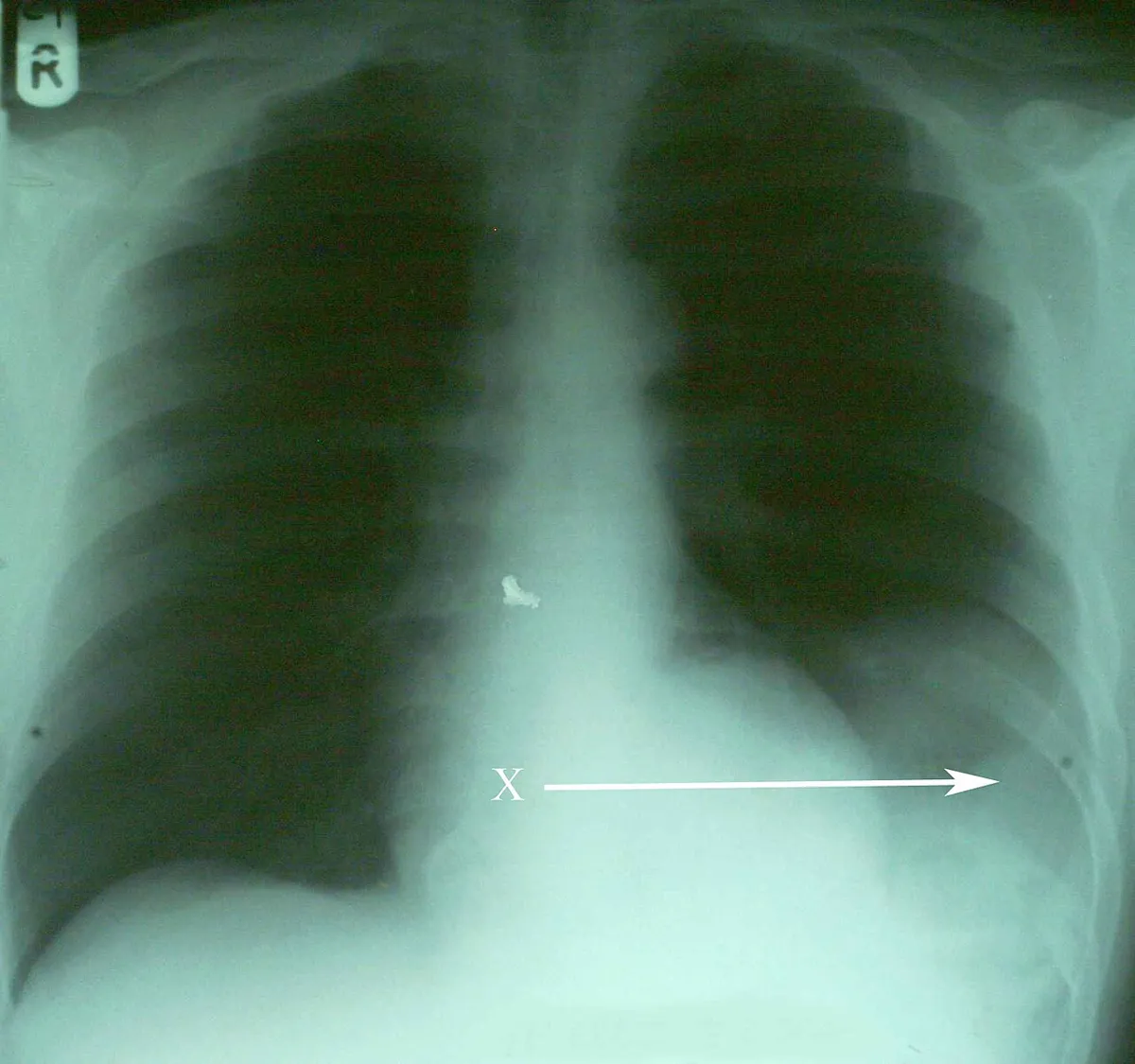
| Diaphragmatic rupture | Left-sided, breathlessness, bowel sounds in chest | Chest X-ray (NG tube in chest), CT, laparoscopy |
| Retroperitoneal haemorrhage from pelvic fracture | Unstable pelvis, negative FAST despite shock | Pelvic X-ray, CT; binder |
| Renal injury | Flank bruising, haematuria | CT with delayed (excretory) phase |
| Abdominal wall haematoma or contusion only | Localised tenderness without peritonism | Normal CT; serial examination |
Exam pearls
Guideline
ATLS 11th edition (American College of Surgeons, 2025); WSES abdominal trauma guidelines (spleen 2017, liver 2020, bowel 2022, Cesena laparoscopy 2023); European guideline on major bleeding and coagulopathy following trauma, 6th edition (2023); NICE NG39 Major trauma (2016)
References
- American College of Surgeons Committee on Trauma. Advanced Trauma Life Support (ATLS) Student Course Manual. 2025.
- National Institute for Health and Care Excellence. Major trauma: assessment and initial management (NG39). NICE 2016.
- Rossaint R, Afshari A, Bouillon B, et al.. The European guideline on management of major bleeding and coagulopathy following trauma: sixth edition. Crit Care 2023.
- Coccolini F, Montori G, Catena F, et al.. Splenic trauma: WSES classification and guidelines for adult and pediatric patients. World J Emerg Surg 2017.
- Coccolini F, Coimbra R, Ordonez C, et al.. Liver trauma: WSES 2020 guidelines. World J Emerg Surg 2020.
- Smyth L, Bendinelli C, Lee N, et al.. WSES guidelines on blunt and penetrating bowel injury: diagnosis, investigations, and treatment. World J Emerg Surg 2022.
Related topics
By Dr Khalid Seidi (B.Sc., M.D.) · MedEd World Clinical Knowledge library. Original teaching content checked against current guidelines (November 2026); confirm the latest local guidance before clinical use. Not a substitute for clinical judgement.