Clinical Knowledge › Surgery › Trauma and emergency surgery
Traumatic brain injury
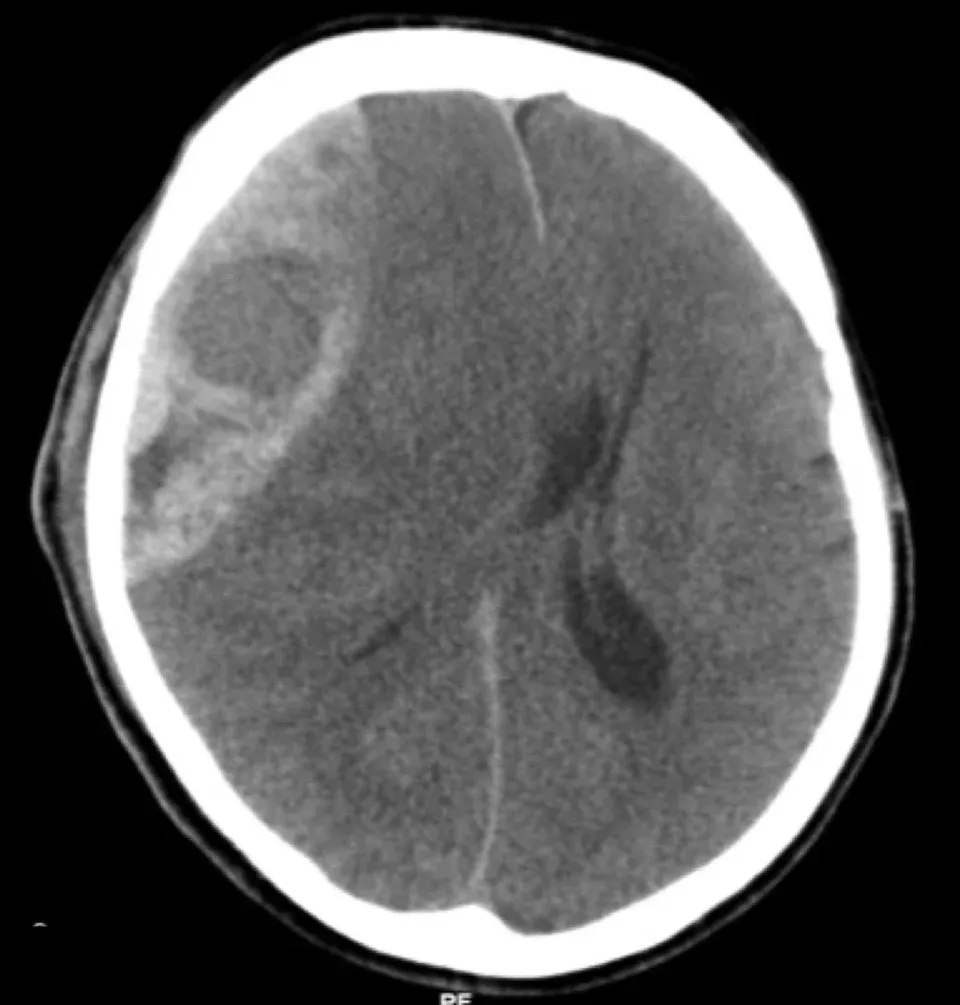
Traumatic brain injury (TBI) is a disruption of brain function caused by external force, from concussion to devastating diffuse injury. It is a leading cause of death and disability in young adults and increasingly affects older people who fall while taking anticoagulants. Severity is graded by the Glasgow Coma Scale (mild 13–15, moderate 9–12, severe 3–8). Primary injury (contusions, haematomas, diffuse axonal injury) happens at impact; much of the preventable damage is secondary, from hypoxia, hypotension, raised intracranial pressure, hypercapnia, seizures, fever and hyponatraemia. Assessment follows ATLS with spinal precautions; CT head decision rules (NICE NG232, Canadian CT Head Rule, PECARN in children) select patients for imaging. Severe TBI needs intubation, avoidance of hypoxia and hypotension, ICP and cerebral perfusion pressure management in a neuroscience centre, and urgent evacuation of significant extradural or subdural haematomas. Tranexamic acid within 3 hours, anticoagulant reversal, seizure prophylaxis and VTE prevention are part of care. Outcomes depend on age, GCS motor score, pupils and CT findings.
Patient case, mechanism, investigations, management, flashcards and exam-style questions.Open the lesson →
Key facts
- GCS severity: mild 13–15, moderate 9–12, severe 3–8; intubate when GCS is 8 or less or the airway is unprotected
- Secondary brain injury from hypoxia and hypotension roughly doubles mortality; a single episode of hypotension worsens outcome
- Cerebral perfusion pressure = MAP − ICP; BTF 4th edition targets ICP below 22 mmHg and CPP 60–70 mmHg
- NICE NG232: CT within 1 hour for adults with GCS below 13 on initial assessment, GCS below 15 at 2 hours, suspected open, depressed or basal skull fracture, post-traumatic seizure, focal deficit or more than 1 episode of vomiting
- Extradural haematoma: lens-shaped, often middle meningeal artery with temporal fracture and lucid interval; subdural: crescentic, bridging veins, older adults and anticoagulants
- Uncal herniation causes an ipsilateral fixed dilated pupil (oculomotor nerve) and contralateral hemiparesis; Cushing triad is a late sign
- Steroids increase mortality in TBI (CRASH); prophylactic antiseizure medication reduces early (7-day) seizures but not late epilepsy
- Tranexamic acid within 3 hours reduced head injury death in mild-to-moderate TBI in CRASH-3
Differential diagnosis
| Condition | Clues | Key test |
|---|---|---|
| Intoxication (alcohol, drugs) | Reduced GCS with smell of alcohol; may coexist with TBI | CT head; never attribute low GCS to alcohol alone |
| Hypoglycaemia | Confusion or coma, sweating; diabetic | Capillary glucose |
| Primary stroke or SAH causing a fall | Sudden headache or focal deficit before the fall | CT/CT angiography; history from witnesses |
| Seizure with post-ictal state | Witnessed convulsion, tongue biting, gradual recovery | History, CT, EEG if needed |
| Spinal cord injury | Flaccid paralysis, sensory level, neurogenic shock | Neurological examination; MRI spine |
| Hypoxic-ischaemic brain injury | Cardiac arrest or prolonged hypoxia | History; CT and MRI patterns |
| Non-accidental injury (infant) | Subdural haematomas, retinal haemorrhages, inconsistent history | CT, skeletal survey, ophthalmology, safeguarding |
Exam pearls
Guideline
Brain Trauma Foundation Guidelines for the Management of Severe TBI, 4th edition (2016/2017); NICE NG232 Head injury: assessment and early management (2023); ATLS 11th edition (2025); SIBICC consensus algorithm (2019); European bleeding guideline 6th edition (2023)
References
- Carney N, Totten AM, O'Reilly C, et al.. Guidelines for the Management of Severe Traumatic Brain Injury, Fourth Edition. Neurosurgery 2017.
- National Institute for Health and Care Excellence. Head injury: assessment and early management (NG232). NICE 2023.
- American College of Surgeons Committee on Trauma. Advanced Trauma Life Support (ATLS) Student Course Manual. 2025.
- Hawryluk GWJ, Aguilera S, Buki A, et al.. A management algorithm for patients with intracranial pressure monitoring: the Seattle International Severe Traumatic Brain Injury Consensus Conference (SIBICC). Intensive Care Med 2019.
- CRASH-3 trial collaborators. Effects of tranexamic acid on death, disability, vascular occlusive events and other morbidities in patients with acute traumatic brain injury (CRASH-3): a randomised, placebo-controlled trial. Lancet 2019.
- Hutchinson PJ, Kolias AG, Timofeev IS, et al.. Trial of Decompressive Craniectomy for Traumatic Intracranial Hypertension. N Engl J Med 2016.
Related topics
By Dr Khalid Seidi (B.Sc., M.D.) · MedEd World Clinical Knowledge library. Original teaching content checked against current guidelines (November 2026); confirm the latest local guidance before clinical use. Not a substitute for clinical judgement.