Clinical Knowledge › Obstetrics and gynaecology › Early pregnancy problems
Cervical insufficiency
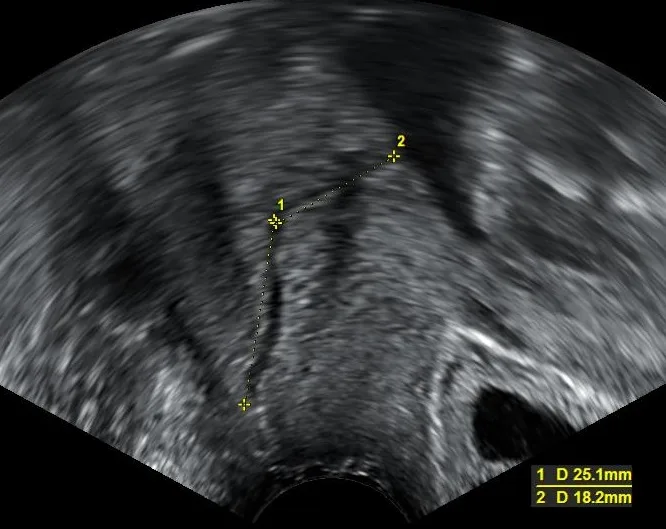
Cervical insufficiency is the inability of the cervix to retain a pregnancy in the second trimester in the absence of contractions or labour. It classically causes painless cervical dilatation, bulging membranes and recurrent mid-trimester loss or extreme preterm birth. Risk factors include previous mid-trimester loss, excisional cervical treatment (cone biopsy, deep or repeat LLETZ, trachelectomy), cervical trauma, uterine anomalies and connective tissue disorders. Diagnosis relies on history, transvaginal ultrasound cervical length (25 mm or less before 24 weeks is short) and speculum findings. Management follows RCOG Green-top Guideline No. 75 (2022) and NICE NG25: history-indicated cerclage at 12–14 weeks after three or more mid-trimester losses or preterm births, ultrasound-indicated cerclage or vaginal progesterone for a short cervix with a prior loss, rescue cerclage for exposed membranes, and transabdominal cerclage after failed vaginal cerclage. Sutures are removed at 36–37 weeks or in labour.
Patient case, mechanism, investigations, management, flashcards and exam-style questions.Open the lesson →
Key facts
- Definition: painless cervical dilatation in the second trimester without contractions, leading to mid-trimester loss or preterm birth
- Short cervix: transvaginal cervical length 25 mm or less between 16 and 24 weeks; screen high-risk women with serial scans
- History-indicated cerclage at 12–14 weeks for 3 or more previous preterm births and/or mid-trimester losses (RCOG)
- Ultrasound-indicated cerclage: previous spontaneous preterm birth or mid-trimester loss plus cervix 25 mm or less before 24 weeks; NICE offers a choice of cerclage or vaginal progesterone
- Rescue (emergency) cerclage for dilated cervix with exposed, unruptured membranes before 24–28 weeks may prolong pregnancy by about 5 weeks
- Transabdominal cerclage (laparoscopic or open, ideally before pregnancy) after a failed vaginal cerclage reduced births before 32 weeks in MAVRIC; it requires caesarean birth
- Contraindications to cerclage: labour, chorioamnionitis, active bleeding, ruptured membranes, fetal death or lethal anomaly
- Remove a vaginal cerclage at 36+0–37+0 weeks, or earlier if labour starts, to prevent cervical tearing
Differential diagnosis
| Condition | Clues | Key test |
|---|---|---|
| Preterm labour | Painful regular contractions with cervical change | CTG/tocography, fetal fibronectin or cervical length |
| Preterm prelabour rupture of membranes | Gush of fluid, pooling on speculum | Speculum, IGFBP-1 or PAMG-1 test |
| Intra-amniotic infection (chorioamnionitis) | Fever, uterine tenderness, fetal tachycardia, offensive discharge | FBC, CRP, cultures; amniocentesis in selected cases |
| Placental abruption | Painful bleeding, tense uterus | Clinical diagnosis; CTG, Kleihauer if rhesus negative |
| Late miscarriage from fetal or uterine causes | Fetal anomaly, fibroids, uterine anomaly | Anomaly scan, pelvic imaging, post-mortem/placental histology |
| Cervical ectropion or polyp | Contact bleeding, closed cervix | Speculum examination |
Exam pearls
Guideline
RCOG Green-top Guideline No. 75: Cervical cerclage (2022); NICE NG25 Preterm labour and birth (2015, updated 2022); ACOG Practice Bulletin No. 142 (2014, reaffirmed)
References
- Shennan AH, Story L; Royal College of Obstetricians and Gynaecologists. Cervical cerclage: Green-top Guideline No. 75. BJOG 2022.
- National Institute for Health and Care Excellence. Preterm labour and birth (NG25). NICE guideline NG25 2015.
- American College of Obstetricians and Gynecologists. Practice Bulletin No. 142: Cerclage for the management of cervical insufficiency. Obstet Gynecol 2014;123(2 Pt 1):372-379 2014.
- Society of Obstetricians and Gynaecologists of Canada. No. 373 – Cervical insufficiency and cervical cerclage. J Obstet Gynaecol Can 2019;41(2):233-247 2019.
- Alfirevic Z, Stampalija T, Medley N.. Cervical stitch (cerclage) for preventing preterm birth in singleton pregnancy. Cochrane Database Syst Rev 2017.
- Shennan A, Chandiramani M, Bennett P, et al.. MAVRIC: a multicenter randomized controlled trial of transabdominal vs transvaginal cervical cerclage. Am J Obstet Gynecol 2020.
Related topics
By Dr Khalid Seidi (B.Sc., M.D.) · MedEd World Clinical Knowledge library. Original teaching content checked against current guidelines (November 2026); confirm the latest local guidance before clinical use. Not a substitute for clinical judgement.