Clinical Knowledge › Obstetrics and gynaecology › Early pregnancy problems
Gestational trophoblastic disease
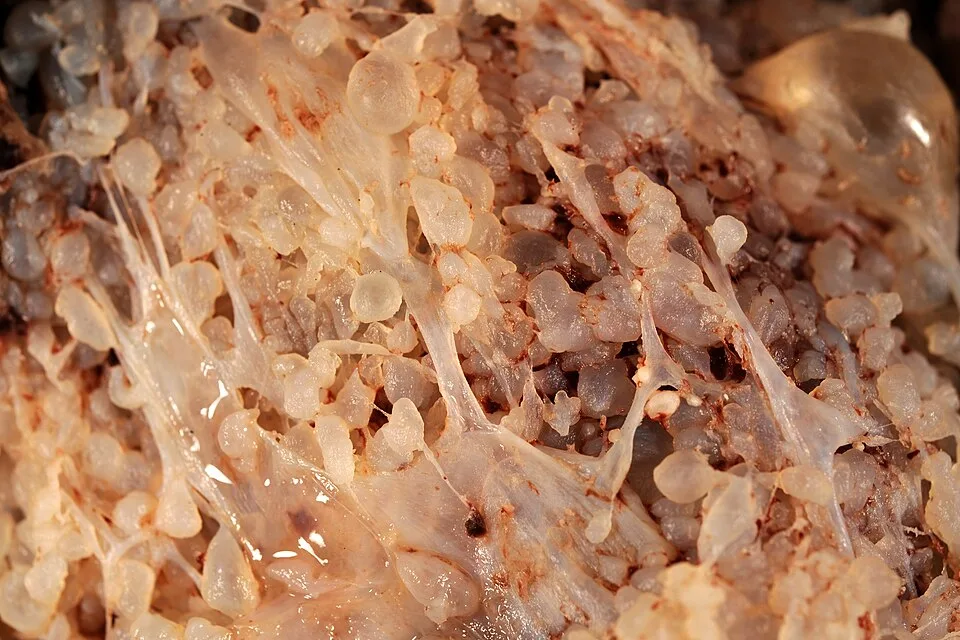
Gestational trophoblastic disease (GTD) is a spectrum of abnormal placental (trophoblast) proliferation. It ranges from the premalignant complete and partial hydatidiform moles to gestational trophoblastic neoplasia (GTN): invasive mole, choriocarcinoma, placental site and epithelioid trophoblastic tumours. A complete mole is diploid and wholly paternal with no fetus; a partial mole is triploid with fetal parts. Most moles are now found on first-trimester ultrasound or histology after miscarriage. Classic features are bleeding, a large-for-dates uterus, hyperemesis, early pre-eclampsia, hyperthyroidism and very high hCG. Treatment is suction evacuation, histology, registration with a specialist centre and serial hCG until normal. About 15% of complete and 0.5–1% of partial moles progress to GTN. GTN is diagnosed when hCG plateaus or rises, staged with FIGO anatomy plus the prognostic score (FIGO updated its GTN staging in 2026), and treated with methotrexate if low risk or EMA/CO if high risk. Cure rates approach 100% for low-risk and about 90% for high-risk disease.
Patient case, mechanism, investigations, management, flashcards and exam-style questions.Open the lesson →
Key facts
- Complete mole: diploid (usually 46,XX), all chromosomes paternal, no fetal tissue, p57 (KIP2) immunostain negative; GTN risk about 15%
- Partial mole: triploid (69,XXY or 69,XXX) with two paternal sets, fetal parts present, p57 positive; GTN risk 0.5–1%
- Presentation: first-trimester bleeding, uterus large for dates, hyperemesis, pre-eclampsia before 20 weeks, thyrotoxicosis, theca lutein cysts, hCG often above 100 000 IU/L
- Treatment of a mole is suction evacuation under ultrasound guidance; avoid medical evacuation where possible; send all tissue for histology
- Register with a specialist centre; follow hCG until normal (complete mole: if normal within 56 days, stop 6 months after evacuation)
- Post-molar GTN (FIGO): hCG plateau over 4 values in 3 weeks, rise of 10% or more over 3 values in 2 weeks, or histological choriocarcinoma
- FIGO prognostic score 6 or less = low risk (single-agent methotrexate or actinomycin D); 7 or more = high risk (EMA/CO); 13 or more = ultra-high risk
- Lungs are the commonest metastatic site (cannonball shadows); do not biopsy suspected metastases because they bleed
Differential diagnosis
| Condition | Clues | Key test |
|---|---|---|
| Missed or incomplete miscarriage with hydropic change | Bleeding, non-viable pregnancy, hCG not markedly raised | Histology with p57 immunostaining |
| Multiple pregnancy | Large-for-dates uterus, hyperemesis, high hCG | Ultrasound shows two or more gestational sacs |
| Ectopic pregnancy or pregnancy of unknown location | Bleeding with pain, empty uterus | Transvaginal ultrasound and serial hCG |
| Retained products of conception after birth or miscarriage | Persistent bleeding, vascular tissue in uterus | Ultrasound, hCG trend, histology |
| Graves disease | Thyrotoxicosis with goitre or eye signs | TSH-receptor antibodies; hCG normal for gestation |
| Non-gestational choriocarcinoma or germ cell tumour | hCG raised with no recent pregnancy, ovarian mass | Imaging, tumour markers, genetic (DNA) analysis of tumour |
| Phantom hCG (heterophile antibodies) | Persistently low raised serum hCG with negative urine hCG | Urine hCG and dilution studies |
Exam pearls
Guideline
RCOG Green-top Guideline No. 38: Management of gestational trophoblastic disease (2020/2021); FIGO Cancer Report 2025 update on GTD; FIGO staging for GTN (2026)
References
- Tidy J, Seckl M, Hancock BW; Royal College of Obstetricians and Gynaecologists. Management of gestational trophoblastic disease (Green-top Guideline No. 38). BJOG 2021.
- Ngan HYS, Seckl MJ, Berkowitz RS, et al.. Diagnosis and management of gestational trophoblastic disease: 2025 update. Int J Gynaecol Obstet 2025.
- Ngan HYS, Seckl MJ, Horowitz N, et al.. FIGO staging for gestational trophoblastic neoplasia: 2026. Int J Gynaecol Obstet 2026.
- Ngan HYS, Seckl MJ, Berkowitz RS, et al.. Diagnosis and management of gestational trophoblastic disease: 2021 update. Int J Gynaecol Obstet 2021.
- Seckl MJ, Sebire NJ, Berkowitz RS.. Gestational trophoblastic disease. Lancet 2010.
- Lurain JR.. Gestational trophoblastic disease I: epidemiology, pathology, clinical presentation and diagnosis of gestational trophoblastic disease, and management of hydatidiform mole. Am J Obstet Gynecol 2010.
Related topics
By Dr Khalid Seidi (B.Sc., M.D.) · MedEd World Clinical Knowledge library. Original teaching content checked against current guidelines (November 2026); confirm the latest local guidance before clinical use. Not a substitute for clinical judgement.