Clinical Knowledge › Surgery › Elective orthopaedics
Dupuytren's contracture
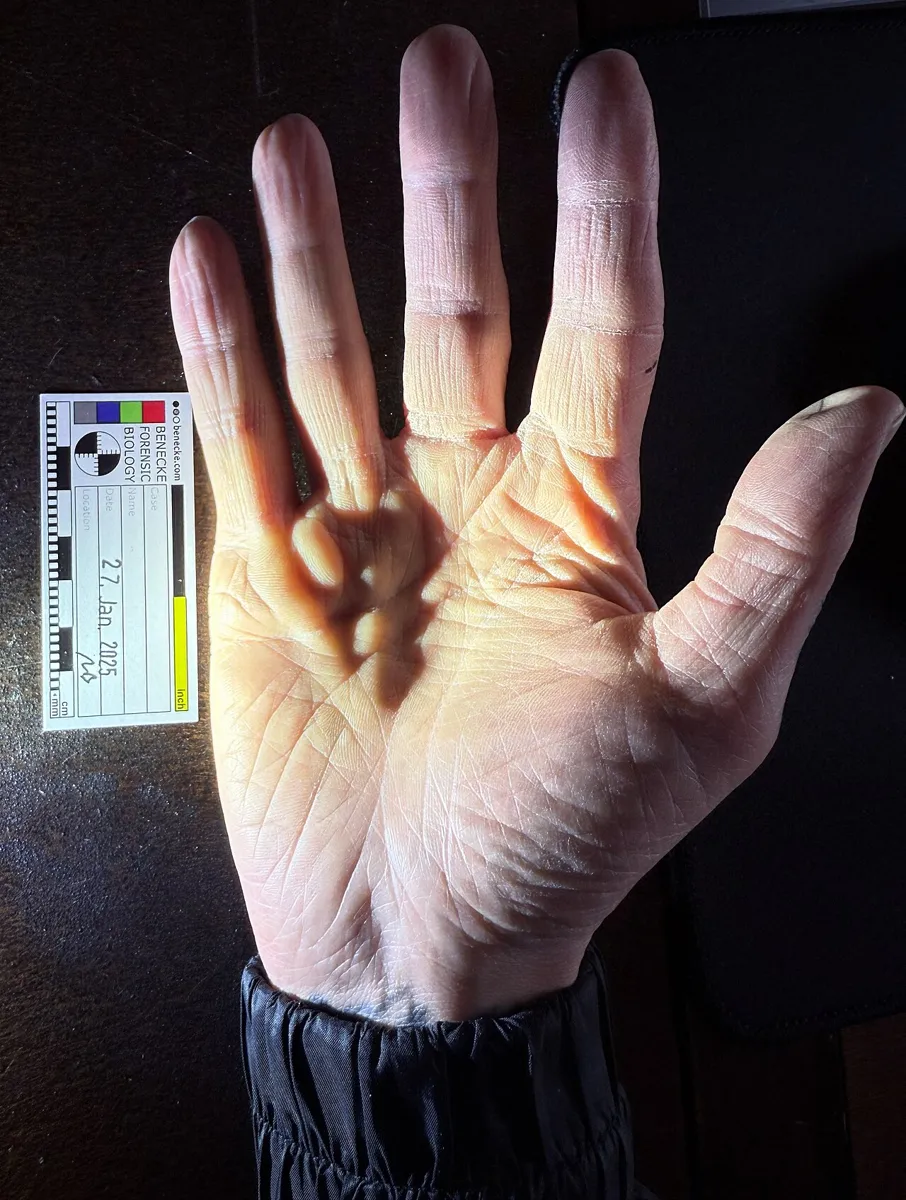
Dupuytren's disease is a benign, progressive fibroproliferative disorder of the palmar and digital fascia in which myofibroblast-rich nodules mature into collagen cords that pull the fingers into fixed flexion, most often the ring and little fingers at the metacarpophalangeal (MCP) and proximal interphalangeal (PIP) joints. It is commonest in older men of northern European ancestry and is linked to family history, diabetes and alcohol. Diagnosis is clinical: painless nodules and cords, skin pitting and a positive Hueston tabletop test. Nodules without contracture need only reassurance and observation. Intervention is considered when the MCP contracture reaches about 30 degrees, any PIP contracture develops, or function is impaired. Options are percutaneous needle fasciotomy, collagenase injection where available, limited (segmental) fasciectomy and dermofasciectomy for recurrent or aggressive disease. Surgery is most durable but risks digital nerve injury, stiffness and complex regional pain syndrome; recurrence after any treatment is common.
Patient case, mechanism, investigations, management, flashcards and exam-style questions.Open the lesson →
Key facts
- Dupuytren's disease affects the palmar fascia; normal fascial bands become pathological cords containing myofibroblasts and type III collagen
- Ring finger is most often involved, then little finger; MCP and PIP joints contract, the DIP joint is usually spared
- Risk factors: male sex, age over 50, northern European ancestry, family history, diabetes, alcohol, smoking, antiepileptic drugs and manual vibration exposure
- Hueston tabletop test: inability to place the palm flat on a table is a practical trigger for referral
- Usual treatment threshold: MCP contracture about 30 degrees or more, or any PIP contracture, or functional loss
- Needle fasciotomy is quick with fast recovery but recurs early (about 85% at 5 years in the landmark Dutch RCT) compared with limited fasciectomy (about 21%)
- Limited fasciectomy is the commonest operation; dermofasciectomy with a full-thickness skin graft reduces recurrence in aggressive or recurrent disease
- Ectopic disease (knuckle pads, plantar fibromatosis, Peyronie disease) and early onset indicate a strong 'Dupuytren diathesis' and high recurrence risk
Differential diagnosis
| Condition | Clues | Key test |
|---|---|---|
| Trigger finger (stenosing tenosynovitis) | Painful clicking or locking that can be passively corrected; nodule at the A1 pulley moves with the tendon | Clinical; ultrasound of the A1 pulley if unclear |
| Camptodactyly | Congenital or adolescent PIP flexion of the little finger without palmar cord | Clinical history from childhood; X-ray normal |
| Ulnar nerve palsy (claw hand) | Hyperextended MCP with flexed IP joints, intrinsic wasting and sensory loss in the ulnar digits | Nerve conduction studies |
| Flexor tendon adhesion or old injury | Previous laceration or infection; loss of active flexion as well as extension | History; ultrasound or MRI |
| Diabetic cheiroarthropathy | Thick waxy skin and limited joint mobility in many fingers; prayer sign; no discrete cord | Clinical; HbA1c |
| Rheumatoid arthritis deformity | Synovitis, ulnar deviation, swan neck or boutonnière deformities | Rheumatoid factor, anti-CCP, hand X-ray |
| Epithelioid sarcoma or other soft-tissue tumour | Growing, firm or ulcerating palmar mass in a young adult | Ultrasound or MRI then biopsy at a sarcoma centre |
Exam pearls
Guideline
No single international guideline; evidence base summarised from NICE TA459 (2017, collagenase), NICE IPG573 (2016, radiotherapy for early disease), the UK DISC trial (HTA 2024) and the RIDD adalimumab trial (2022)
References
- Dias J, Tharmanathan P, Arundel C, et al.. Collagenase injection versus limited fasciectomy surgery to treat Dupuytren's contracture in adult patients in the UK: DISC, a non-inferiority RCT and economic evaluation. Health Technol Assess 2024.
- van Rijssen AL, ter Linden H, Werker PMN.. Five-year results of a randomized clinical trial on treatment in Dupuytren's disease: percutaneous needle fasciotomy versus limited fasciectomy. Plast Reconstr Surg 2012.
- Hurst LC, Badalamente MA, Hentz VR, et al.. Injectable collagenase clostridium histolyticum for Dupuytren's contracture. N Engl J Med 2009.
- Nanchahal J, Ball C, Rombach I, et al.. Anti-tumour necrosis factor therapy for early-stage Dupuytren's disease (RIDD): a phase 2b, randomised, double-blind, placebo-controlled trial. Lancet Rheumatol 2022.
- National Institute for Health and Care Excellence. Collagenase clostridium histolyticum for treating Dupuytren's contracture (TA459). NICE 2017.
- National Institute for Health and Care Excellence. Radiation therapy for early Dupuytren's disease (interventional procedures guidance IPG573). NICE 2016.
Related topics
By Dr Khalid Seidi (B.Sc., M.D.) · MedEd World Clinical Knowledge library. Original teaching content checked against current guidelines (November 2026); confirm the latest local guidance before clinical use. Not a substitute for clinical judgement.