Clinical Knowledge › Surgery › Elective orthopaedics
Rotator cuff disorders and frozen shoulder
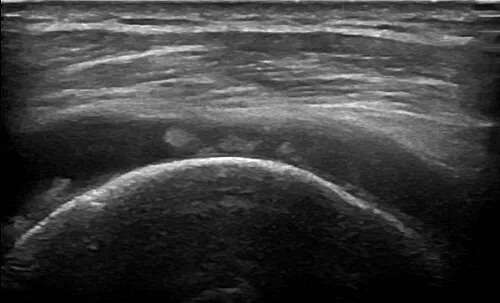
Rotator cuff disorders range from tendinopathy causing a painful arc and night pain to partial and full-thickness tears with weakness, massive tears and cuff tear arthropathy. In cuff disease passive movement is preserved, whereas frozen shoulder (adhesive capsulitis) restricts active and passive movement, especially external rotation, with normal radiographs. Frozen shoulder affects people aged 40–60, particularly those with diabetes or thyroid disease, and passes through painful, stiff and recovery phases over 1–3 years. Radiographs exclude arthritis, dislocation and calcific deposits; ultrasound and MRI define cuff tears. Tendinopathy is treated with exercise-based physiotherapy and, if needed, subacromial steroid injection; the CSAW placebo trial showed that subacromial decompression adds no meaningful benefit. Acute traumatic tears in active patients need early repair, degenerative tears start with physiotherapy, and cuff tear arthropathy may need reverse shoulder replacement. Frozen shoulder is managed with analgesia, steroid injection and physiotherapy, with manipulation or capsular release for persistent stiffness (UK FROST).
Patient case, mechanism, investigations, management, flashcards and exam-style questions.Open the lesson →
Key facts
- Rotator cuff (SITS): supraspinatus, infraspinatus, teres minor, subscapularis; supraspinatus is most often torn
- Painful arc between about 60° and 120° of abduction suggests cuff tendinopathy
- Cuff tears: active movement reduced but passive preserved; frozen shoulder: both reduced, especially external rotation
- Frozen shoulder: age 40–60, diabetes and thyroid disease, normal radiographs, natural course 1–3 years
- Exclude locked posterior dislocation with an axillary radiograph before diagnosing frozen shoulder
- CSAW: arthroscopic subacromial decompression was no better than placebo arthroscopy
- Acute traumatic cuff tears in active patients should be imaged and repaired early
- UK FROST: physiotherapy with steroid injection, manipulation and capsular release all helped; MUA most cost-effective
Differential diagnosis
| Condition | Clues | Key test |
|---|---|---|
| Glenohumeral osteoarthritis | Older, crepitus, reduced passive movement | Radiograph: joint-space loss, osteophytes |
| Locked posterior dislocation | After seizure or electric shock, arm held internally rotated, no external rotation | Axillary radiograph or CT |
| Cervical radiculopathy | Neck pain, dermatomal arm pain, reflex change | MRI cervical spine |
| Acromioclavicular joint disease | Pain on top of shoulder, cross-body adduction painful | Radiograph; local injection |
| Polymyalgia rheumatica | Bilateral shoulder and hip girdle stiffness, age over 50, raised ESR | ESR, CRP; prompt steroid response |
| Septic arthritis | Fever, hot joint, severe pain on any movement | Aspiration and culture |
| Referred pain (cardiac, diaphragmatic, Pancoast tumour) | Pain not reproduced by shoulder movement, systemic features | ECG, chest radiograph, LFTs |
Exam pearls
Guideline
AAOS Management of Rotator Cuff Injuries clinical practice guideline (2025 update) and BESS/BOA patient care pathways for subacromial shoulder pain and for frozen shoulder (2015)
References
- American Academy of Orthopaedic Surgeons. Management of Rotator Cuff Injuries: Evidence-Based Clinical Practice Guideline (update). AAOS 2025.
- Kulkarni R, Gibson J, Brownson P, et al.. BESS/BOA patient care pathways: subacromial shoulder pain. Shoulder Elbow 2015.
- Rangan A, Goodchild L, Gibson J, et al.. BESS/BOA patient care pathways: frozen shoulder. Shoulder Elbow 2015.
- Beard DJ, Rees JL, Cook JA, et al.. Arthroscopic subacromial decompression for subacromial shoulder pain (CSAW): a multicentre, pragmatic, parallel group, placebo-controlled, three-group, randomised surgical trial. Lancet 2018.
- Rangan A, Brealey SD, Keding A, et al.. Management of adults with primary frozen shoulder in secondary care (UK FROST): a multicentre, pragmatic, three-arm, superiority randomised clinical trial. Lancet 2020.
- Millar NL, Meakins A, Struyf F, et al.. Frozen shoulder. Nat Rev Dis Primers 2022.
Related topics
By Dr Khalid Seidi (B.Sc., M.D.) · MedEd World Clinical Knowledge library. Original teaching content checked against current guidelines (November 2026); confirm the latest local guidance before clinical use. Not a substitute for clinical judgement.