Clinical Knowledge › Neurology › Movement disorders and ataxias
Dystonia
Dystonia is a movement disorder of sustained or intermittent involuntary muscle contractions causing patterned, often twisting movements and postures, worsened by action and often eased by a sensory trick. The 2013 consensus classifies it by clinical features (age at onset, distribution – focal, segmental, multifocal, generalised or hemidystonia – temporal pattern, isolated or combined) and by aetiology. Adult-onset focal dystonias are commonest: cervical dystonia, blepharospasm, writer's cramp and laryngeal dystonia. Childhood-onset dystonia is more often generalised and genetic (DYT-TOR1A); every child or young adult deserves a levodopa trial for dopa-responsive dystonia and screening for Wilson disease, and hemidystonia needs brain imaging. Botulinum toxin is first line for focal dystonia; anticholinergics, baclofen and clonazepam help some; pallidal deep brain stimulation treats generalised and refractory cervical dystonia. Status dystonicus is an emergency.
Patient case, mechanism, investigations, management, flashcards and exam-style questions.Open the lesson →
Key facts
- Dystonia = sustained or intermittent muscle contractions causing patterned twisting movements or postures, worsened by action, often eased by a sensory trick
- Axis I: age at onset, body distribution (focal, segmental, multifocal, generalised, hemidystonia), temporal pattern, isolated or combined; axis II: aetiology
- Commonest adult form: cervical dystonia (torticollis, laterocollis, antecollis, retrocollis), often with head tremor
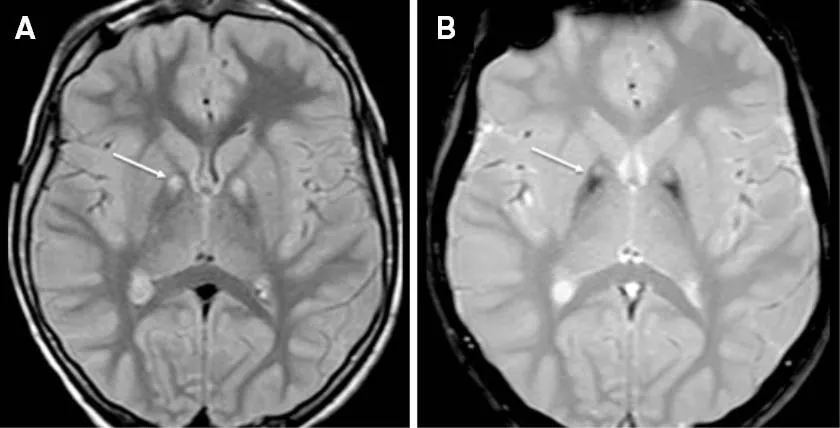
- Hemidystonia implies a structural lesion of the contralateral basal ganglia (stroke, tumour) – image
- Dopa-responsive dystonia (GCH1): childhood leg dystonia with diurnal worsening and dramatic, sustained response to low-dose levodopa – trial levodopa in all early-onset dystonia
- DYT-TOR1A (DYT1): autosomal dominant with about 30% penetrance, onset in childhood in a limb, spreading to generalised dystonia; more common in Ashkenazi Jewish families
- Screen for Wilson disease (caeruloplasmin, urine copper, slit lamp) in dystonia starting before about 50
- Botulinum toxin is first line for focal dystonia (strong evidence for cervical dystonia and blepharospasm); GPi DBS for generalised and refractory cervical dystonia
Differential diagnosis
| Condition | Clues | Key test |
|---|---|---|
| Functional dystonia | Sudden onset, fixed posture at rest, pain, inconsistency, no sensory trick | Clinical positive signs |
| Musculoskeletal torticollis | Pain and restricted movement after trauma or infection; atlantoaxial subluxation in children | Imaging of cervical spine |
| Tics | Premonitory urge, suppressible, brief | Clinical |
| Parkinson disease with dystonia | Foot dystonia in off periods, bradykinesia | Clinical; DaT-SPECT |
| Drug-induced acute dystonia | Recent dopamine blocker | Drug history; responds to anticholinergic |
| Myotonia or stiff person syndrome | Stiffness, spasms, startle | EMG, anti-GAD antibodies |
| Posterior fossa tumour or IV nerve palsy | Head tilt to correct diplopia | Eye examination, MRI |
Exam pearls
Guideline
International consensus on phenomenology and classification of dystonia (2013); AAN practice guideline update on botulinum neurotoxin (2016); EFNS dystonia guidance (2011)
References
- Albanese A, Bhatia K, Bressman SB, et al.. Phenomenology and classification of dystonia: a consensus update. Mov Disord 2013.
- Simpson DM, Hallett M, Ashman EJ, et al.. Practice guideline update summary: botulinum neurotoxin for the treatment of blepharospasm, cervical dystonia, adult spasticity, and headache. Neurology 2016.
- Albanese A, Asmus F, Bhatia KP, et al.. EFNS guidelines on diagnosis and treatment of primary dystonias. Eur J Neurol 2011.
- Ropper AH, Samuels MA, Klein JP, Prasad S.. Adams and Victor's Principles of Neurology. 2023.
- Jankovic J, Mazziotta JC, Pomeroy SL, Newman NJ, eds.. Bradley and Daroff's Neurology in Clinical Practice. 2022.
- Papadakis MA, Rabow MW, McQuaid KR, eds.. CURRENT Medical Diagnosis & Treatment 2026. 2026.
Related topics
By Dr Khalid Seidi (B.Sc., M.D.) · MedEd World Clinical Knowledge library. Original teaching content checked against current guidelines (November 2026); confirm the latest local guidance before clinical use. Not a substitute for clinical judgement.