Clinical Knowledge › Neurology › Movement disorders and ataxias
Sydenham chorea
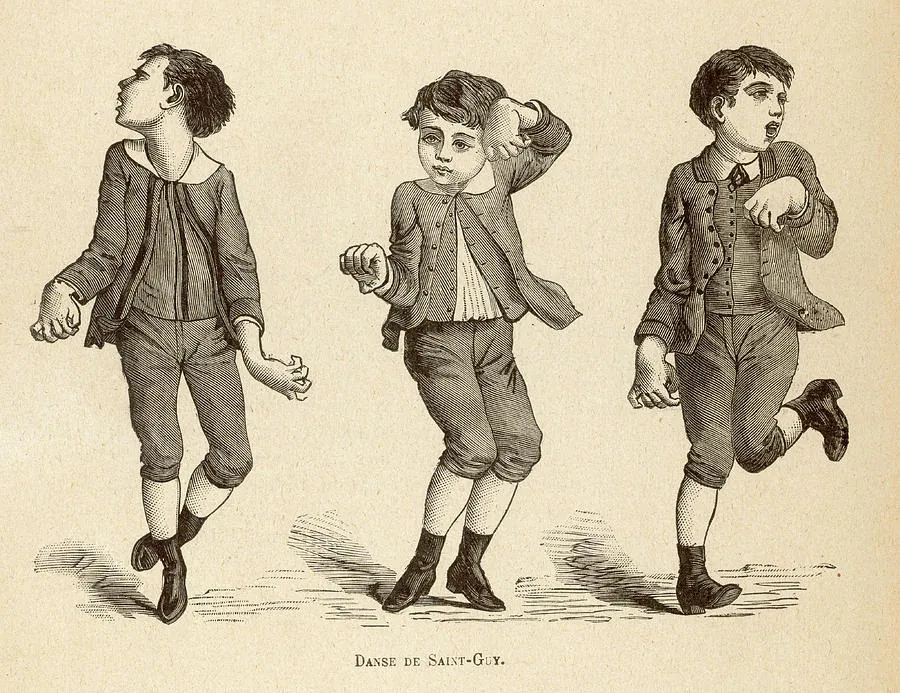
Sydenham chorea is an autoimmune neuropsychiatric disorder and a major manifestation of acute rheumatic fever, following group A streptococcal pharyngitis by 1–8 months. It is the commonest acquired chorea of childhood worldwide, mainly at ages 5–15, with female predominance after puberty. Cross-reactive antibodies against basal ganglia neurones cause chorea (often asymmetric), hypotonia, motor impersistence (milkmaid grip, darting tongue) and dysarthria, with emotional lability, obsessive–compulsive symptoms and inattention. Because of the long latency, streptococcal antibodies may be normal, and chorea alone fulfils the Jones criteria once other causes are excluded. Every patient needs echocardiography, as carditis is common and often subclinical. Management combines eradication and long-term secondary prophylaxis with benzathine penicillin G, symptomatic treatment of disabling chorea (valproate, carbamazepine or antipsychotics), corticosteroids if severe, and psychiatric support. Most episodes resolve within months; recurrences occur.
Patient case, mechanism, investigations, management, flashcards and exam-style questions.Open the lesson →
Key facts
- Major Jones criterion of acute rheumatic fever; occurs 1–8 months after group A streptococcal pharyngitis
- Age 5–15 years; girls more than boys after puberty; endemic in regions with rheumatic heart disease
- Chorea alone is sufficient for the diagnosis of rheumatic fever (AHA 2015 Jones criteria) once other causes are excluded
- Clinical: chorea (often asymmetric), hypotonia, motor impersistence (milkmaid grip, darting 'jack-in-the-box' tongue), pronator sign, dysarthria, handwriting deterioration
- Neuropsychiatric: emotional lability, obsessive–compulsive symptoms, anxiety, inattention, sometimes psychosis
- ASO and anti-DNase B may be normal because of the long latency; echocardiography is mandatory (carditis in a large proportion)
- Secondary prophylaxis: benzathine penicillin G 1.2 million units IM every 3–4 weeks (600 000 units if under 20–27 kg) for years
- Symptomatic treatment for disabling chorea: valproate, carbamazepine or antipsychotics (risperidone, haloperidol); prednisolone for severe or refractory chorea
Differential diagnosis
| Condition | Clues | Key test |
|---|---|---|
| Systemic lupus erythematosus / antiphospholipid syndrome | Rash, arthritis, cytopenias, thrombosis | ANA, anti-dsDNA, antiphospholipid antibodies |
| Drug-induced chorea | Anticonvulsants, stimulants, oral contraceptives | Drug history |
| Tic disorder | Premonitory urge, suppressible, stereotyped | Clinical |
| Wilson disease | Liver disease, Kayser–Fleischer rings, older child | Caeruloplasmin, urine copper |
| Huntington disease (juvenile) | Family history, rigidity, seizures, cognitive decline | HTT testing |
| Benign hereditary chorea (NKX2-1) | Early childhood onset, non-progressive, thyroid/lung involvement | Genetic testing |
| Autoimmune encephalitis (NMDA receptor) | Dyskinesia with psychiatric symptoms, seizures, reduced consciousness | CSF and serum antibodies |
Exam pearls
Guideline
AHA revised Jones criteria (2015) and WHO guideline on the prevention and diagnosis of rheumatic fever and rheumatic heart disease (2024)
References
- Gewitz MH, Baltimore RS, Tani LY, et al.. Revision of the Jones criteria for the diagnosis of acute rheumatic fever in the era of Doppler echocardiography: a scientific statement from the American Heart Association. Circulation 2015.
- World Health Organization. WHO guideline on the prevention and diagnosis of rheumatic fever and rheumatic heart disease. WHO 2024.
- Punukollu M, Mushet N, Linney M, Hennessy C, Morton M.. Neuropsychiatric manifestations of Sydenham's chorea: a systematic review. Dev Med Child Neurol 2016.
- Ropper AH, Samuels MA, Klein JP, Prasad S.. Adams and Victor's Principles of Neurology. 2023.
- Jankovic J, Mazziotta JC, Pomeroy SL, Newman NJ, eds.. Bradley and Daroff's Neurology in Clinical Practice. 2022.
- Papadakis MA, Rabow MW, McQuaid KR, eds.. CURRENT Medical Diagnosis & Treatment 2026. 2026.
Related topics
By Dr Khalid Seidi (B.Sc., M.D.) · MedEd World Clinical Knowledge library. Original teaching content checked against current guidelines (November 2026); confirm the latest local guidance before clinical use. Not a substitute for clinical judgement.