Clinical Knowledge › Neurology › Movement disorders and ataxias
Restless legs syndrome
Restless legs syndrome (RLS, Willis–Ekbom disease) is a sensorimotor disorder defined by an urge to move the legs, usually with unpleasant sensations, that begins or worsens at rest, is relieved by movement, is worse in the evening or night and is not explained by another condition (IRLSSG 2014). It affects 5–10% of adults, with significant disease in 2–3%, more often women and older adults. Primary RLS is familial with brain iron deficiency; secondary RLS occurs with iron deficiency, pregnancy, chronic kidney disease, neuropathy and drugs such as sedating antihistamines, dopamine antagonists and many antidepressants. Diagnosis is clinical; check ferritin and transferrin saturation in everyone. Treatment starts with removing aggravating factors and correcting iron when ferritin is 75 µg/L or below or saturation is under 20%. The 2024 AASM guideline favours gabapentin or pregabalin first line and advises against standard use of dopamine agonists because of augmentation.
Patient case, mechanism, investigations, management, flashcards and exam-style questions.Open the lesson →
Key facts
- IRLSSG criteria (URGE): Urge to move the legs, Rest worsens, Gets better with movement, Evening/night predominance, and not solely due to another condition
- Prevalence 5–10% (clinically significant 2–3%); women and older adults more affected; familial in about half of primary cases
- Iron is central: check ferritin and transferrin saturation in all patients; brain iron deficiency occurs even with low-normal serum ferritin
- Secondary causes: iron deficiency, pregnancy (third trimester), end-stage renal disease, peripheral neuropathy, spinal cord lesions
- Aggravating drugs: sedating antihistamines, dopamine antagonists (metoclopramide, antipsychotics), SSRIs/SNRIs, mirtazapine, tricyclics, lithium; also caffeine, alcohol, sleep deprivation
- AASM 2024: iron replacement if ferritin 75 µg/L or below or transferrin saturation under 20%; gabapentin, gabapentin enacarbil, pregabalin first line
- Dopamine agonists (pramipexole, ropinirole, rotigotine) are no longer recommended for standard use because of augmentation; levodopa augments most
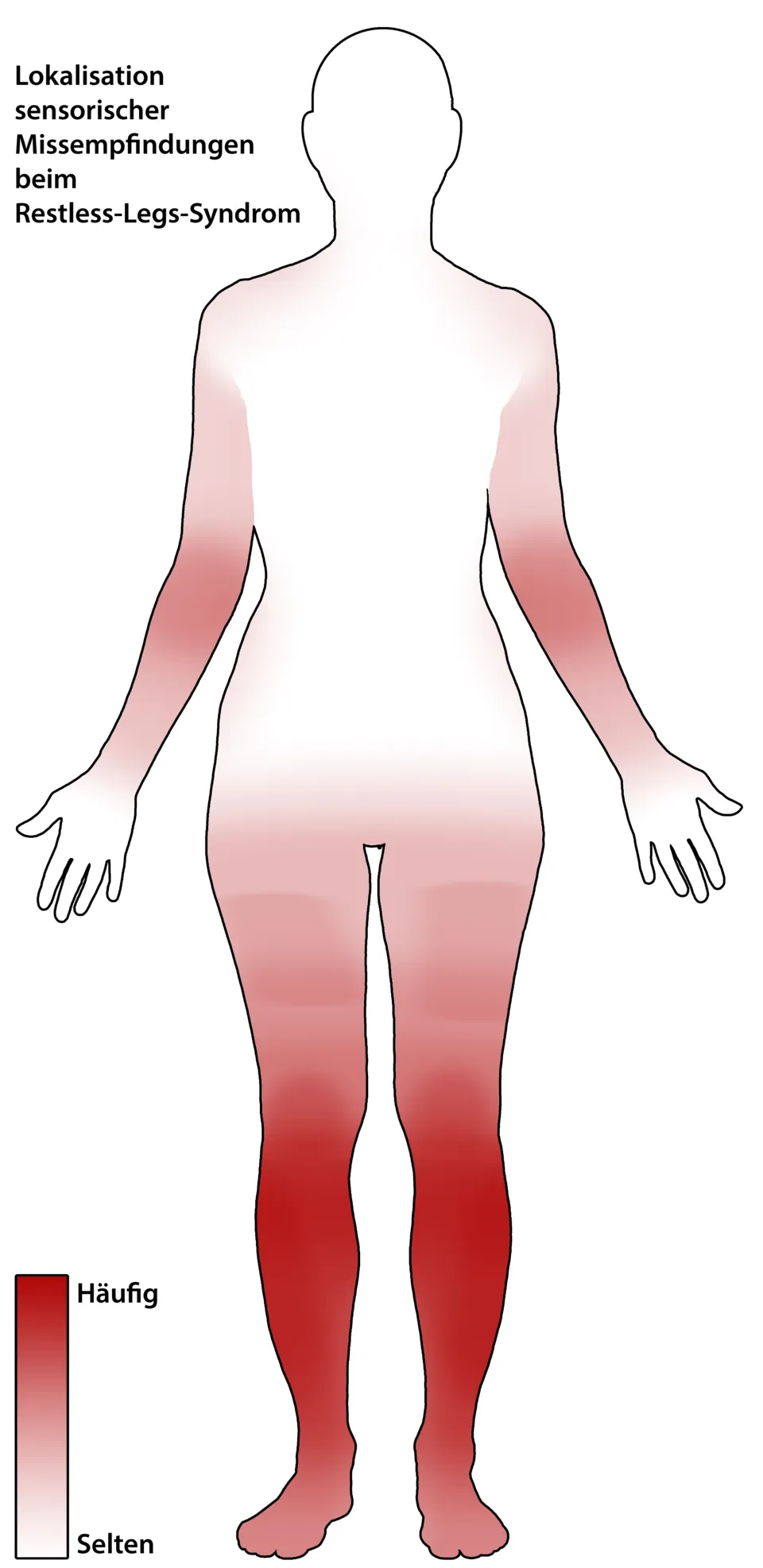
- Augmentation: symptoms start earlier, become more intense, spread to arms, and respond less after dopaminergic treatment
Differential diagnosis
| Condition | Clues | Key test |
|---|---|---|
| Leg cramps | Sudden painful muscle contraction, palpable knot, relieved by stretching | Clinical |
| Peripheral neuropathy | Burning or numbness not relieved by movement, no circadian pattern, sensory loss | Nerve conduction studies, glucose, B12 |
| Akathisia | Whole-body restlessness linked to antipsychotics, no circadian pattern | Drug history |
| Positional discomfort | Relieved by simple change of position, not walking | Clinical |
| Venous insufficiency or oedema | Aching, heaviness, varicose veins | Duplex ultrasound |
| Arthritis or vascular claudication | Pain with walking, joint signs | Clinical, ABPI |
| Hypnic jerks | Single jerks at sleep onset, no urge | Clinical |
Exam pearls
Guideline
AASM clinical practice guideline on treatment of RLS and periodic limb movement disorder (2024, published 2025); IRLSSG updated diagnostic criteria (2014)
References
- Winkelman JW, Berkowski JA, DelRosso LM, et al.. Treatment of restless legs syndrome and periodic limb movement disorder: an American Academy of Sleep Medicine clinical practice guideline. J Clin Sleep Med 2025.
- Allen RP, Picchietti DL, Garcia-Borreguero D, et al.. Restless legs syndrome/Willis–Ekbom disease diagnostic criteria: updated International Restless Legs Syndrome Study Group (IRLSSG) consensus criteria – history, rationale, description, and significance. Sleep Med 2014.
- Garcia-Borreguero D, Silber MH, Winkelman JW, et al.. Guidelines for the first-line treatment of restless legs syndrome/Willis–Ekbom disease, prevention and treatment of dopaminergic augmentation. Sleep Med 2016.
- Ropper AH, Samuels MA, Klein JP, Prasad S.. Adams and Victor's Principles of Neurology. 2023.
- Jankovic J, Mazziotta JC, Pomeroy SL, Newman NJ, eds.. Bradley and Daroff's Neurology in Clinical Practice. 2022.
- Papadakis MA, Rabow MW, McQuaid KR, eds.. CURRENT Medical Diagnosis & Treatment 2026. 2026.
Related topics
By Dr Khalid Seidi (B.Sc., M.D.) · MedEd World Clinical Knowledge library. Original teaching content checked against current guidelines (November 2026); confirm the latest local guidance before clinical use. Not a substitute for clinical judgement.