Clinical Knowledge › Obstetrics and gynaecology › Benign gynaecological conditions
Endometrial polyps and hyperplasia
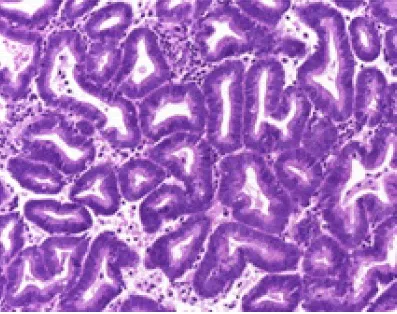
Endometrial polyps and endometrial hyperplasia are oestrogen-driven endometrial lesions and the 'P' and 'M' (malignancy and hyperplasia) of PALM-COEIN. Polyps are localised overgrowths of glands and stroma around a vascular stalk; they cause intermenstrual or postmenopausal bleeding and subfertility. Most are benign, but malignant change is commoner in symptomatic postmenopausal women and with tamoxifen, so symptomatic or postmenopausal polyps are removed hysteroscopically. Endometrial hyperplasia is an abnormal proliferation of glands caused by unopposed oestrogen (obesity, anovulation, oestrogen-only HRT, tamoxifen). The WHO classification separates hyperplasia without atypia (progression under 5% over 20 years) from atypical hyperplasia or endometrial intraepithelial neoplasia, which coexists with cancer in up to about 40%. Hyperplasia without atypia is treated with the LNG-IUD (first line) or continuous oral progestogens plus 6-monthly biopsy; atypical hyperplasia needs total hysterectomy, or LNG-IUD-based fertility-sparing treatment with 3-monthly biopsies.
Patient case, mechanism, investigations, management, flashcards and exam-style questions.Open the lesson →
Key facts
- Endometrial polyps are present in roughly 8–35% of women, increase with age, and are associated with obesity, tamoxifen and HRT
- Malignancy within polyps is rare in premenopausal women but higher in symptomatic postmenopausal women; remove symptomatic and postmenopausal polyps
- WHO classification of endometrial hyperplasia: hyperplasia without atypia versus atypical hyperplasia/endometrial intraepithelial neoplasia (EIN)
- Hyperplasia without atypia progresses to cancer in under 5% over 20 years and often regresses once risk factors are removed
- Atypical hyperplasia coexists with endometrial cancer in up to about 40% of hysterectomy specimens
- Hyperplasia without atypia: LNG-IUD first line (higher regression than oral progestogens); treat at least 6 months; biopsy every 6 months until 2 consecutive negatives
- Atypical hyperplasia: total hysterectomy (no subtotal, no morcellation, no ablation); fertility-sparing LNG-IUD with 3-monthly biopsies if childbearing is wanted
- Postmenopausal bleeding with endometrial thickness of 4 mm or more on TVUS needs endometrial sampling (NICE NG12: urgent pathway from age 55)
Differential diagnosis
| Condition | Clues | Key test |
|---|---|---|
| Endometrial carcinoma | Postmenopausal bleeding, older age, obesity; irregular thick endometrium | Endometrial biopsy or hysteroscopy-directed biopsy |
| Submucosal fibroid | Heavy bleeding; hypoechoic lesion with shadowing | Saline sonography or hysteroscopy |
| Atrophic endometritis / atrophy | Postmenopausal spotting with thin endometrium (under 4 mm) | TVUS endometrial thickness |
| Cervical polyp or cancer | Postcoital bleeding, visible lesion | Speculum examination, cervical screening, biopsy |
| Retained products of conception | Recent pregnancy, vascular echogenic tissue | Pregnancy history, hCG, ultrasound |
| Adenomyosis | Heavy painful periods with globular uterus | TVUS MUSA features or MRI |
| Oestrogen-secreting ovarian tumour | Hyperplasia with postmenopausal bleeding and adnexal mass | Pelvic ultrasound, inhibin (granulosa cell tumour) |
Exam pearls
Guideline
RCOG/BSGE Green-top Guideline No. 67 Management of endometrial hyperplasia (2016); ACOG Clinical Consensus No. 5 Management of endometrial intraepithelial neoplasia or atypical endometrial hyperplasia (2023); AAGL practice guidelines for endometrial polyps (2012); NICE NG12 Suspected cancer (2015, updated)
References
- Royal College of Obstetricians and Gynaecologists / British Society for Gynaecological Endoscopy. Management of endometrial hyperplasia (Green-top Guideline No. 67). RCOG 2016.
- American College of Obstetricians and Gynecologists. Management of endometrial intraepithelial neoplasia or atypical endometrial hyperplasia (Clinical Consensus No. 5). Obstet Gynecol 2023.
- AAGL. AAGL practice report: practice guidelines for the diagnosis and management of endometrial polyps. J Minim Invasive Gynecol 2012.
- Gallos ID, Shehmar M, Thangaratinam S, Papapostolou TK, Coomarasamy A, Gupta JK. Oral progestogens vs levonorgestrel-releasing intrauterine system for endometrial hyperplasia: a systematic review and metaanalysis. Am J Obstet Gynecol 2010.
- Lieng M, Istre O, Qvigstad E. Treatment of endometrial polyps: a systematic review. Acta Obstet Gynecol Scand 2010.
- Sanderson PA, Critchley HOD, Williams ARW, Arends MJ, Saunders PTK. New concepts for an old problem: the diagnosis of endometrial hyperplasia. Hum Reprod Update 2017.
Related topics
By Dr Khalid Seidi (B.Sc., M.D.) · MedEd World Clinical Knowledge library. Original teaching content checked against current guidelines (November 2026); confirm the latest local guidance before clinical use. Not a substitute for clinical judgement.