Clinical Knowledge › Obstetrics and gynaecology › Gynaecological oncology
HPV vaccination
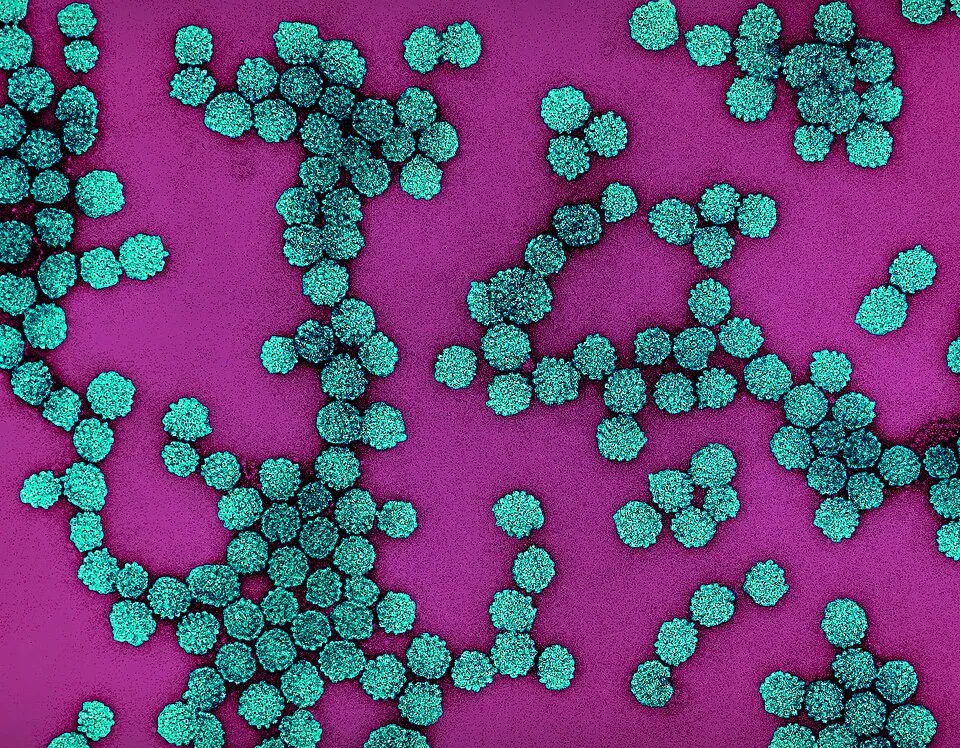
HPV vaccines contain virus-like particles made from the L1 capsid protein of selected human papillomavirus types. They contain no viral DNA and induce antibody levels far higher than natural infection. Bivalent (16/18), quadrivalent (6/11/16/18) and nonavalent (adding 31/33/45/52/58) vaccines prevent persistent infection, CIN, cervical cancer, other anogenital and oropharyngeal cancers and, for vaccines containing types 6 and 11, genital warts. Programmes target 9–14-year-olds, before sexual debut, increasingly regardless of sex. Population data from Sweden, England and Scotland show cervical cancer falls of around 87–90% in women vaccinated at 12–13 years. WHO (2022) endorses a single-dose schedule up to age 20, and the UK (2023), Australia, Canada and many other countries now give one dose to adolescents, supported by the ESCUDDO non-inferiority trial (2025); three doses remain advised for immunocompromised people. The vaccines are very safe: injection-site pain and fainting are the common problems. Vaccination is deferred in pregnancy and does not replace cervical screening.
Patient case, mechanism, investigations, management, flashcards and exam-style questions.Open the lesson →
Key facts
- Vaccines are recombinant L1 virus-like particles: non-infectious, no viral DNA; protection is mainly type-specific neutralising antibody
- Types: bivalent (16, 18); quadrivalent (6, 11, 16, 18); nonavalent (6, 11, 16, 18, 31, 33, 45, 52, 58) covering about 90% of cervical cancers
- Primary target: girls (and in many countries boys) aged 9–14 years, before sexual debut
- WHO 2022: 1 or 2 doses for ages 9–20; 2 doses from 21 years; at least 2 and ideally 3 doses for immunocompromised people including HIV
- UK since September 2023: 1 dose at 12–13 years (eligible to 25th birthday); GBMSM up to 45 years; 3 doses if immunosuppressed or HIV
- England: cervical cancer fell by about 87% and CIN3 by about 97% in women offered vaccination at 12–13 years
- Common adverse effects: injection-site pain, swelling, headache and vasovagal syncope; observe seated for about 15 minutes
- Not recommended in pregnancy (no harm shown if given inadvertently); vaccinated people still need cervical screening
Differential diagnosis
| Condition | Clues | Key test |
|---|---|---|
| Bivalent vaccine (Cervarix, Cecolin) | Types 16 and 18 only; no wart protection | Check product types |
| Quadrivalent vaccine (Gardasil) | Adds types 6 and 11 (warts, respiratory papillomatosis) | Product label |
| Nonavalent vaccine (Gardasil 9) | Adds five further oncogenic types; used in UK and US programmes | Product label |
| Therapeutic HPV vaccines (investigational) | Target E6/E7 to treat existing lesions; not licensed for routine use | Trial setting only |
| Cervical screening | Secondary prevention detecting HPV and precancer; complements vaccination | HPV test |
| Vasovagal syncope after vaccination | Pallor, brief loss of consciousness, rapid recovery | Clinical; observe seated |
| Anaphylaxis | Urticaria, wheeze, hypotension within minutes | Clinical; give IM adrenaline |
Exam pearls
Guideline
WHO position paper on human papillomavirus vaccines (December 2022); UKHSA Green Book chapter 18a and JCVI single-dose advice (2022–2023); ACIP HPV recommendations (2019) with 2026 US schedule developments; NACI HPV statement (2024)
References
- World Health Organization. Human papillomavirus vaccines: WHO position paper, December 2022. Wkly Epidemiol Rec 2022.
- UK Health Security Agency. Immunisation against infectious disease (the Green Book), chapter 18a: Human papillomavirus (HPV). UKHSA 2023.
- Meites E, Szilagyi PG, Chesson HW, et al.. Human papillomavirus vaccination for adults: updated recommendations of the Advisory Committee on Immunization Practices. MMWR Morb Mortal Wkly Rep 2019.
- Kreimer AR, Porras C, Liu D, et al.. Noninferiority of one HPV vaccine dose to two doses. N Engl J Med 2025.
- Lei J, Ploner A, Elfström KM, et al.. HPV vaccination and the risk of invasive cervical cancer. N Engl J Med 2020.
- Falcaro M, Castañon A, Ndlela B, et al.. The effects of the national HPV vaccination programme in England, UK, on cervical cancer and grade 3 cervical intraepithelial neoplasia incidence: a register-based observational study. Lancet 2021.
Related topics
By Dr Khalid Seidi (B.Sc., M.D.) · MedEd World Clinical Knowledge library. Original teaching content checked against current guidelines (November 2026); confirm the latest local guidance before clinical use. Not a substitute for clinical judgement.