Clinical Knowledge › Obstetrics and gynaecology › Gynaecological oncology
Ovarian cancer
Ovarian cancer is the most lethal gynaecological cancer because most women present with advanced peritoneal disease. About 90% are epithelial carcinomas, and high-grade serous carcinoma, which usually begins as serous tubal intraepithelial carcinoma in the fallopian tube, accounts for most deaths. Risk rises with age, BRCA1/2 and other homologous recombination gene variants, Lynch syndrome, endometriosis (clear cell and endometrioid types) and incessant ovulation; combined oral contraception, parity, breastfeeding and salpingectomy are protective. Symptoms are vague and persistent: bloating, early satiety, pelvic or abdominal pain and urinary frequency. CA-125 and ultrasound triage women, the Risk of Malignancy Index or IOTA/O-RADS models guide referral, and CT and histology confirm FIGO stage. Treatment combines cytoreductive surgery aiming for no visible residual disease with carboplatin–paclitaxel, followed by maintenance with PARP inhibitors (especially for BRCA-mutated or HRD-positive tumours) and/or bevacizumab. Every woman with epithelial ovarian cancer should be offered germline genetic testing. Population screening does not reduce mortality.
Patient case, mechanism, investigations, management, flashcards and exam-style questions.Open the lesson →
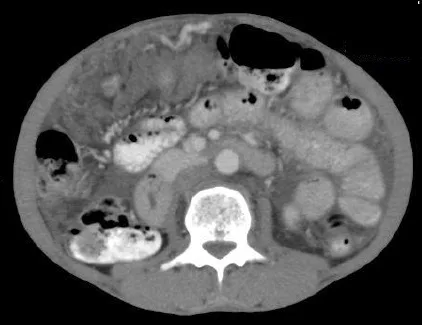
Key facts
- Leading cause of gynaecological cancer death; about 75% present at FIGO stage III–IV
- High-grade serous carcinoma (about 70%) arises mostly from the fimbrial end of the fallopian tube (serous tubal intraepithelial carcinoma), with TP53 mutation in almost all
- BRCA1 lifetime risk about 40–45%, BRCA2 about 15–20%; Lynch syndrome, RAD51C, RAD51D, BRIP1 and PALB2 also raise risk
- Protective: combined oral contraception (risk falls about 20% per 5 years of use), parity, breastfeeding, tubal ligation and salpingectomy
- NICE CG122: persistent bloating, early satiety, pelvic/abdominal pain or urinary urgency/frequency (especially 12 or more times a month, aged 50 or over) → CA-125; 35 IU/mL or more → pelvic ultrasound
- RMI = ultrasound score (U 0, 1 or 3) × menopausal status (M 1 or 3) × CA-125; RMI 250 or more → specialist gynaecological oncology MDT
- Under 40 with a complex mass: also measure AFP, hCG (and LDH) to look for germ cell tumours
- Standard care: complete cytoreduction + carboplatin–paclitaxel; maintenance PARP inhibitor (olaparib, niraparib) ± bevacizumab; UKCTOCS showed no mortality benefit from screening
Differential diagnosis
| Condition | Clues | Key test |
|---|---|---|
| Benign ovarian cyst (functional, dermoid, endometrioma) | Younger woman, simple or characteristic cyst | Ultrasound (IOTA simple rules/O-RADS); CA-125 often normal |
| Tubo-ovarian abscess | Fever, pelvic pain, raised CRP, sexually active | Ultrasound; inflammatory markers; response to antibiotics |
| Uterine fibroids | Firm mass continuous with the uterus | Ultrasound/MRI showing uterine origin |
| Colorectal or gastric cancer with ovarian metastases (Krukenberg) | Bilateral solid masses, GI symptoms, mucinous histology | CEA, CA-125:CEA ratio below 25, colonoscopy/OGD, CK7/CK20 IHC |
| Germ cell or sex cord-stromal tumour | Young woman, solid mass, hormonal effects | AFP, hCG, LDH, inhibin B |
| Irritable bowel syndrome | Bloating and pain; but new IBS symptoms at 50 or over are unusual | CA-125 before diagnosing IBS in a woman of 50 or more |
| Cirrhotic or cardiac ascites | Ascites with liver or heart disease | SAAG, cytology, imaging; CA-125 raised by any ascites |
| Primary peritoneal mesothelioma or peritoneal TB | Ascites, peritoneal thickening | Biopsy; TB culture/histology |
Exam pearls
Guideline
ESGO–ESMO–ESP consensus conference recommendations on ovarian cancer (2024), NICE CG122 Ovarian cancer recognition and initial management (2011) and NICE NG241 familial and genetic risk (2024), FIGO 2014 staging
References
- Ledermann JA, Matias-Guiu X, Amant F, et al.. ESGO-ESMO-ESP consensus conference recommendations on ovarian cancer: pathology and molecular biology and early, advanced and recurrent disease. Ann Oncol 2024.
- National Institute for Health and Care Excellence. Ovarian cancer: recognition and initial management (CG122). NICE 2011.
- National Institute for Health and Care Excellence. Ovarian cancer: identifying and managing familial and genetic risk (NG241). NICE 2024.
- Prat J; FIGO Committee on Gynecologic Oncology. Staging classification for cancer of the ovary, fallopian tube, and peritoneum. Int J Gynaecol Obstet 2014.
- Menon U, Gentry-Maharaj A, Burnell M, et al.. Ovarian cancer population screening and mortality after long-term follow-up in the UK Collaborative Trial of Ovarian Cancer Screening (UKCTOCS): a randomised controlled trial. Lancet 2021.
- Moore K, Colombo N, Scambia G, et al.. Maintenance olaparib in patients with newly diagnosed advanced ovarian cancer. N Engl J Med 2018.
Related topics
By Dr Khalid Seidi (B.Sc., M.D.) · MedEd World Clinical Knowledge library. Original teaching content checked against current guidelines (November 2026); confirm the latest local guidance before clinical use. Not a substitute for clinical judgement.