Clinical Knowledge › Internal medicine › Rheumatology and immunology › Vasculitis
IgA vasculitis (Henoch–Schönlein purpura)
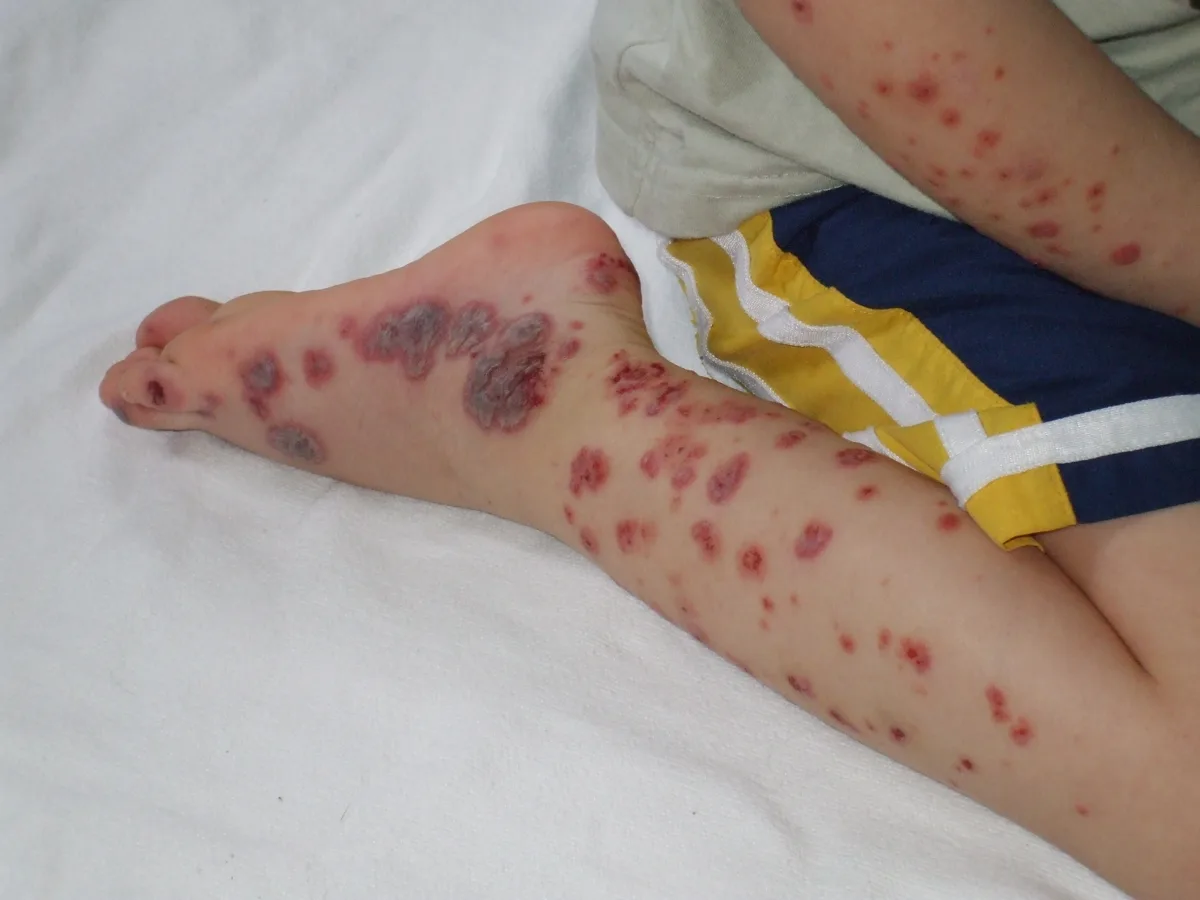
IgA vasculitis, formerly Henoch–Schönlein purpura, is an immune-complex small-vessel vasculitis with IgA1-dominant deposits in skin, gut and glomeruli. It is the commonest vasculitis of childhood, peaking at 4–6 years, often 1–3 weeks after an upper respiratory infection; adults are affected less often but have more severe kidney disease. The classic tetrad is palpable purpura with lower-limb and buttock predominance and normal platelet count, arthralgia or arthritis of large lower-limb joints, colicky abdominal pain with possible gastrointestinal bleeding or ileo-ileal intussusception, and nephritis with haematuria and proteinuria. Diagnosis is clinical, supported by skin or kidney biopsy showing IgA deposits. Most children recover within 4–6 weeks with supportive care. Glucocorticoids relieve severe abdominal pain or orchitis but do not prevent nephritis. Urinalysis and blood pressure are monitored for at least 6–12 months, because nephritis determines long-term prognosis; persistent proteinuria or impaired kidney function needs biopsy and specialist treatment.
Patient case, mechanism, investigations, management, flashcards and exam-style questions.Open the lesson →
Key facts
- Commonest childhood vasculitis (about 10–20 per 100 000 children per year), peak age 4–6 years, autumn and winter, often after an upper respiratory infection
- Immune complexes of galactose-deficient IgA1 deposit in small vessels: leucocytoclastic vasculitis with IgA on direct immunofluorescence
- Palpable purpura on the legs and buttocks with a NORMAL platelet count and clotting is mandatory for classification
- Arthritis (about 75%) affects knees and ankles and is transient and non-erosive
- Gastrointestinal involvement (50–75%): colicky pain, bleeding, and intussusception that is usually ileo-ileal (ultrasound, not contrast enema)
- Nephritis in 20–55% of children, usually within 4–6 weeks; adults have more frequent and more severe kidney disease
- Steroids treat severe abdominal pain or orchitis but do not prevent nephritis
- Monitor urinalysis and blood pressure for at least 6–12 months; long-term CKD risk depends on the severity of nephritis
Differential diagnosis
| Condition | Clues | Key test |
|---|---|---|
| Meningococcal septicaemia | Unwell, fever, rapidly spreading non-blanching rash, shock | Blood cultures, meningococcal PCR; immediate antibiotics |
| Immune thrombocytopenia | Petechiae and bruising anywhere, well child, no joint or gut features | Low platelet count |
| Acute leukaemia | Pallor, bone pain, hepatosplenomegaly, lymphadenopathy | Blood film; cytopenias or blasts |
| Acute haemorrhagic oedema of infancy | Infant under 2 years, large rosette purpura and oedema of face and limbs, well child | Clinical; self-limiting |
| Non-accidental injury | Bruises in unusual sites, inconsistent history | Skeletal survey; safeguarding assessment |
| Haemolytic uraemic syndrome | Bloody diarrhoea, pallor, oliguria | Haemolysis with schistocytes, low platelets, AKI |
| ANCA-associated or cryoglobulinaemic vasculitis (adults) | Lung involvement, neuropathy, hepatitis C | ANCA, cryoglobulins, complement |
| Systemic lupus erythematosus | Rash, cytopenias, low complement | ANA, anti-dsDNA, C3/C4 |
Exam pearls
Guideline
SHARE European consensus recommendations for IgA vasculitis (2019), KDIGO 2025 guideline for IgA nephropathy and IgA vasculitis, and EULAR/PRINTO/PRES classification criteria (2010)
References
- Ozen S, Marks SD, Brogan P, et al.. European consensus-based recommendations for diagnosis and treatment of immunoglobulin A vasculitis—the SHARE initiative. Rheumatology (Oxford) 2019.
- Ozen S, Pistorio A, Iusan SM, et al.. EULAR/PRINTO/PRES criteria for Henoch-Schönlein purpura, childhood polyarteritis nodosa, childhood Wegener granulomatosis and childhood Takayasu arteritis: Ankara 2008. Part II: Final classification criteria. Ann Rheum Dis 2010.
- Kidney Disease: Improving Global Outcomes (KDIGO). Executive summary of the KDIGO 2025 Clinical Practice Guideline for the Management of Immunoglobulin A Nephropathy (IgAN) and Immunoglobulin A Vasculitis (IgAV). Kidney Int 2025.
- Jennette JC, Falk RJ, Bacon PA, et al.. 2012 revised International Chapel Hill Consensus Conference Nomenclature of Vasculitides. Arthritis Rheum 2013.
- Kliegman RM, St Geme JW, Blum NJ, et al., eds.. Nelson Textbook of Pediatrics. 2024.
- Penman ID, Ralston SH, Strachan MWJ, Hobson RP, eds.. Davidson's Principles and Practice of Medicine. 2022.
Related topics
By Dr Khalid Seidi (B.Sc., M.D.) · MedEd World Clinical Knowledge library. Original teaching content checked against current guidelines (November 2026); confirm the latest local guidance before clinical use. Not a substitute for clinical judgement.