Clinical Knowledge › Internal medicine › Rheumatology and immunology › Vasculitis
Polyarteritis nodosa (PAN)
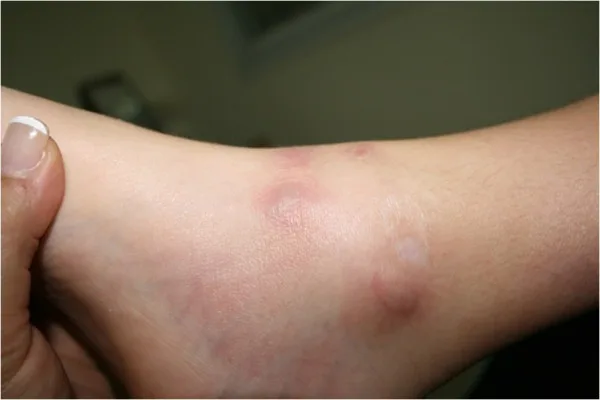
Polyarteritis nodosa is a necrotising vasculitis of medium-sized (and some small) arteries that, by definition, spares capillaries, venules and glomeruli and is not associated with ANCA. Segmental transmural inflammation with fibrinoid necrosis causes microaneurysms, thrombosis and infarction in the organs supplied. It typically affects middle-aged adults with fever, weight loss and myalgia plus mononeuritis multiplex (foot or wrist drop), skin lesions (livedo racemosa, tender nodules, ulcers, digital gangrene), renal artery involvement with hypertension and renal infarcts, mesenteric ischaemia with post-prandial pain, and orchitis. The lungs are characteristically spared. Hepatitis B was once a major cause and remains important where vaccination is incomplete; deficiency of adenosine deaminase 2 (DADA2) causes PAN-like disease with early strokes in children and young adults. Diagnosis rests on biopsy of affected tissue or angiography showing microaneurysms and stenoses, with ANCA negativity and hepatitis B testing. Severe idiopathic PAN is treated with glucocorticoids and cyclophosphamide, milder disease with glucocorticoids plus a steroid-sparing agent; hepatitis B-associated PAN needs antivirals with short immunosuppression and sometimes plasma exchange.
Patient case, mechanism, investigations, management, flashcards and exam-style questions.Open the lesson →
Key facts
- Necrotising arteritis of medium arteries without glomerulonephritis, capillary vasculitis or ANCA (2012 Chapel Hill definition)
- Peak age 40–60; men slightly more than women; incidence has fallen with hepatitis B vaccination
- Mononeuritis multiplex in up to 70%: asymmetrical painful foot drop or wrist drop
- Renal artery vasculitis causes renin-mediated hypertension, renal infarction and impairment, but not red cell casts
- Lungs are spared: lung involvement suggests ANCA vasculitis, EGPA or another diagnosis
- Angiography shows multiple microaneurysms and stenoses in renal and mesenteric arteries; biopsy shows segmental fibrinoid necrosis with lesions of different ages
- Hepatitis B-associated PAN: antivirals plus short glucocorticoids ± plasma exchange; avoid prolonged immunosuppression
- Severe idiopathic PAN: IV methylprednisolone plus cyclophosphamide; DADA2: TNF inhibitors
Differential diagnosis
| Condition | Clues | Key test |
|---|---|---|
| Microscopic polyangiitis | Rapidly progressive glomerulonephritis with red cell casts, lung haemorrhage | MPO-ANCA; renal biopsy with pauci-immune crescents |
| Granulomatosis with polyangiitis | ENT and lung involvement, nodules, glomerulonephritis | PR3-ANCA; biopsy granulomas |
| Eosinophilic granulomatosis with polyangiitis | Asthma, eosinophilia, neuropathy | Eosinophil count; MPO-ANCA in a minority |
| Fibromuscular dysplasia | Renal artery stenosis with beading in a young woman, no inflammation | Normal markers; imaging pattern |
| Segmental arterial mediolysis | Abdominal aneurysms with haemorrhage, no systemic inflammation | Normal CRP; angiographic pattern |
| Infective endocarditis with mycotic aneurysms | Fever, murmur, embolic phenomena | Blood cultures and echocardiography |
| Cryoglobulinaemic vasculitis | Purpura, neuropathy, glomerulonephritis, hepatitis C | Cryoglobulins, low C4, HCV RNA |
| Cholesterol embolism | After angiography or anticoagulation, livedo, eosinophilia, AKI | Skin or renal biopsy with cholesterol clefts |
Exam pearls
Guideline
ACR/Vasculitis Foundation 2021 guideline for the management of polyarteritis nodosa, 2012 revised International Chapel Hill nomenclature and French Vasculitis Study Group revised Five-Factor Score (2011)
References
- Chung SA, Gorelik M, Langford CA, et al.. 2021 American College of Rheumatology/Vasculitis Foundation guideline for the management of polyarteritis nodosa. Arthritis Rheumatol 2021.
- Jennette JC, Falk RJ, Bacon PA, et al.. 2012 revised International Chapel Hill Consensus Conference nomenclature of vasculitides. Arthritis Rheum 2013.
- Guillevin L, Pagnoux C, Seror R, et al.. The Five-Factor Score revisited: assessment of prognoses of systemic necrotizing vasculitides based on the French Vasculitis Study Group (FVSG) cohort. Medicine (Baltimore) 2011.
- Pagnoux C, Seror R, Henegar C, et al.. Clinical features and outcomes in 348 patients with polyarteritis nodosa: a systematic retrospective study of patients diagnosed between 1963 and 2005 and entered into the French Vasculitis Study Group Database. Arthritis Rheum 2010.
- Lightfoot RW Jr, Michel BA, Bloch DA, et al.. The American College of Rheumatology 1990 criteria for the classification of polyarteritis nodosa. Arthritis Rheum 1990.
- Zhou Q, Yang D, Ombrello AK, et al.. Early-onset stroke and vasculopathy associated with mutations in ADA2. N Engl J Med 2014.
Related topics
By Dr Khalid Seidi (B.Sc., M.D.) · MedEd World Clinical Knowledge library. Original teaching content checked against current guidelines (November 2026); confirm the latest local guidance before clinical use. Not a substitute for clinical judgement.