Clinical Knowledge › Internal medicine › Rheumatology and immunology › Vasculitis
Kawasaki disease
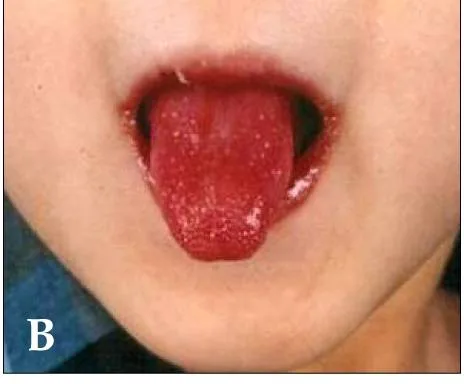
Kawasaki disease is an acute, self-limiting vasculitis of medium-sized arteries that mainly affects children under 5 years, with the highest incidence in North-East Asia. It is the leading cause of acquired heart disease in children in high-income countries because about 25% of untreated children develop coronary artery aneurysms. The diagnosis is clinical: fever for at least 5 days plus at least 4 of 5 principal features (bilateral non-exudative conjunctival injection, red cracked lips or strawberry tongue, polymorphous rash, oedema or erythema of the hands and feet followed by periungual peeling, and unilateral cervical lymphadenopathy of 1.5 cm or more). Infants often have incomplete disease, so raised CRP or ESR with supplementary laboratory criteria or an abnormal echocardiogram should prompt treatment. IVIG 2 g/kg as a single infusion, ideally within 10 days of fever onset, with aspirin reduces the aneurysm rate to about 4%. High-risk children may receive adjunctive corticosteroids or infliximab, and long-term follow-up depends on the maximum coronary Z score.
Patient case, mechanism, investigations, management, flashcards and exam-style questions.Open the lesson →
Key facts
- Medium-vessel vasculitis of young children (peak 6 months to 5 years); boys more than girls; highest incidence in North-East Asia
- Classic diagnosis: fever of 5 days or more plus 4 of 5 principal features (CRASH: Conjunctivitis, Rash, Adenopathy, Strawberry tongue and lips, Hands and feet)
- Incomplete Kawasaki disease is common in infants under 6 months, who also have the highest aneurysm risk
- Untreated, about 25% develop coronary artery aneurysms; timely IVIG reduces this to about 4%
- Treatment: IVIG 2 g/kg single infusion over 10–12 hours plus aspirin, ideally within 10 days of fever onset (teaching dose; check local formulary)
- IVIG resistance (fever 36 hours or more after the infusion ends) occurs in 10–20%: second IVIG, infliximab or corticosteroids
- Coronary aneurysms are classified by Z score: small 2.5 to <5, medium 5 to <10, large or giant 10 or more (or 8 mm or more)
- Aspirin carries a Reye syndrome risk: give inactivated influenza vaccine, and delay live vaccines for about 11 months after IVIG
Differential diagnosis
| Condition | Clues | Key test |
|---|---|---|
| Scarlet fever | Sore throat, sandpaper rash, circumoral pallor, no conjunctivitis | Rapid strep test or throat culture; ASO titre |
| Measles | Cough, coryza, exudative conjunctivitis, Koplik spots, rash spreading from head down | Measles IgM or PCR |
| Toxic shock syndrome | Hypotension early, diffuse erythroderma, tampon or wound focus, multi-organ failure | Blood and wound cultures; CK, creatinine |
| Multisystem inflammatory syndrome in children (MIS-C) | Older child, prominent GI symptoms and shock, recent SARS-CoV-2 | SARS-CoV-2 serology; troponin, BNP; lymphopenia |
| Adenovirus infection | Exudative conjunctivitis and pharyngitis, lower CRP | Respiratory viral PCR |
| Stevens–Johnson syndrome or drug reaction | New drug, mucosal erosions, target lesions, skin sloughing | Drug history; skin biopsy |
| Systemic juvenile idiopathic arthritis | Quotidian fever spikes, evanescent salmon rash, arthritis, hepatosplenomegaly | Ferritin; course over weeks; normal coronaries |
| Staphylococcal scalded skin syndrome | Young child, tender erythroderma, Nikolsky sign, no conjunctivitis | Clinical; cultures from focus |
Exam pearls
Guideline
AHA scientific statement on diagnosis, treatment and long-term management of Kawasaki disease (2017) with the AHA 2024 update; ACR/Vasculitis Foundation Kawasaki disease guideline (2021)
References
- McCrindle BW, Rowley AH, Newburger JW, et al.. Diagnosis, Treatment, and Long-Term Management of Kawasaki Disease: A Scientific Statement for Health Professionals From the American Heart Association. Circulation 2017.
- Jone PN, Tremoulet A, Choueiter N, et al.. Update on Diagnosis and Management of Kawasaki Disease: A Scientific Statement From the American Heart Association. Circulation 2024.
- Gorelik M, Chung SA, Ardalan K, et al.. 2021 American College of Rheumatology/Vasculitis Foundation Guideline for the Management of Kawasaki Disease. Arthritis Rheumatol 2022.
- Kobayashi T, Saji T, Otani T, et al.. Efficacy of immunoglobulin plus prednisolone for prevention of coronary artery abnormalities in severe Kawasaki disease (RAISE study): a randomised, open-label, blinded-endpoints trial. Lancet 2012.
- Burns JC, Roberts SC, Tremoulet AH, et al.. Infliximab versus second intravenous immunoglobulin for treatment of resistant Kawasaki disease in the USA (KIDCARE): a randomised, multicentre comparative effectiveness trial. Lancet Child Adolesc Health 2021.
- Jennette JC, Falk RJ, Bacon PA, et al.. 2012 revised International Chapel Hill Consensus Conference Nomenclature of Vasculitides. Arthritis Rheum 2013.
Related topics
By Dr Khalid Seidi (B.Sc., M.D.) · MedEd World Clinical Knowledge library. Original teaching content checked against current guidelines (November 2026); confirm the latest local guidance before clinical use. Not a substitute for clinical judgement.