Clinical Knowledge › Anaesthesiology › Pain medicine
Interventional pain procedures
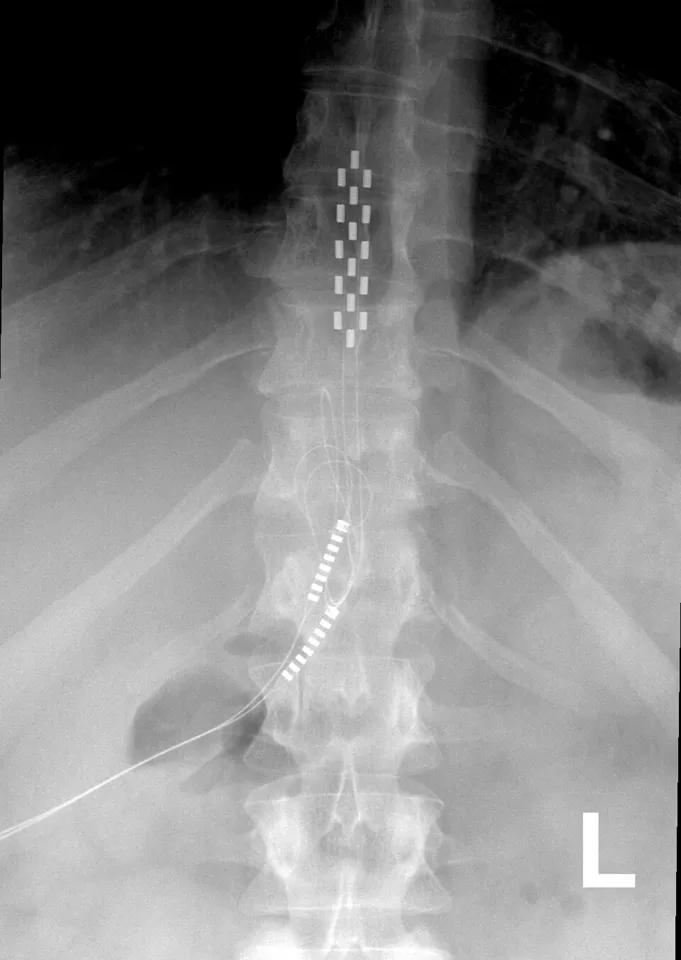
Interventional pain procedures are image-guided injections, ablations and implanted devices used by pain specialists when conservative care has failed, always as part of a biopsychosocial plan rather than alone. They include diagnostic and therapeutic nerve blocks, epidural steroid injections, facet medial branch blocks with radiofrequency denervation, sacroiliac joint injections, sympathetic blocks and coeliac plexus neurolysis, spinal cord and dorsal root ganglion stimulation, and intrathecal drug delivery. Evidence varies: epidural injection of local anaesthetic and steroid can help acute severe sciatica, radiofrequency denervation after a positive medial branch block is an option for selected facet pain (NICE NG59) despite the negative MINT trials and spinal cord stimulation helps refractory neuropathic leg pain and CRPS. Safety depends on patient selection, consent, imaging guidance, non-particulate steroid for transforaminal injections, sterile technique and anticoagulant management by procedure risk (ASRA/ESRA 2018, ASIPP 2024).
Patient case, mechanism, investigations, management, flashcards and exam-style questions.Open the lesson →
Key facts
- Interventions are adjuncts within multidisciplinary, biopsychosocial pain management, not stand-alone cures
- NICE NG59: do not offer spinal injections for non-specific low back pain; consider epidural local anaesthetic plus steroid for acute severe sciatica
- NICE NG59: consider radiofrequency denervation for chronic facet-mediated back pain only after a positive diagnostic medial branch block
- MINT (2017) found radiofrequency denervation added little or no clinically important benefit to exercise for chronic low back pain
- Spinal cord stimulation: refractory neuropathic pain over 6 months (e.g. after spinal surgery, CRPS) after a successful trial (NICE TA159)
- Use non-particulate steroid (dexamethasone) for cervical transforaminal injections: particulate steroid has caused spinal cord and brain infarction
- Anticoagulant and antiplatelet management depends on procedure bleeding risk: high-risk (SCS, intrathecal pump, vertebral augmentation) need interruption as for neuraxial blocks
- Coeliac plexus neurolysis with alcohol relieves upper abdominal cancer pain (pancreas); side effects include orthostatic hypotension and diarrhoea
Differential diagnosis
| Condition | Clues | Key test |
|---|---|---|
| Facet (zygapophyseal) joint pain | Axial back pain worse on extension and rotation, no radicular signs | Diagnostic medial branch block |
| Lumbar radicular pain (sciatica) | Leg pain worse than back pain in a dermatome, positive straight leg raise | MRI if considering injection or surgery |
| Sacroiliac joint pain | Buttock pain below L5, positive provocation tests (3 or more) | Image-guided diagnostic SI joint injection |
| Discogenic pain | Axial pain worse sitting and flexing | MRI; specialist assessment |
| Serious spinal pathology | Cancer history, weight loss, fever, night pain, neurological deficit | Urgent MRI, bloods; no injection until excluded |
| Chronic primary pain | Widespread pain, fatigue, distress, no single generator | Biopsychosocial assessment; injections unlikely to help |
| Hip osteoarthritis | Groin pain, reduced internal rotation | Hip X-ray; intra-articular injection |
Exam pearls
Guideline
NICE NG59 Low back pain and sciatica (2016, updated 2020); NICE TA159 spinal cord stimulation (2008); ASRA/ESRA/AAPM/INS/NANS/WIP interventional spine and pain procedures on antiplatelet and anticoagulant drugs (2nd ed, 2018); ASIPP perioperative anticoagulant guideline (2024); multispecialty lumbar facet joint consensus (2020)
References
- Narouze S, Benzon HT, Provenzano D, et al.. Interventional Spine and Pain Procedures in Patients on Antiplatelet and Anticoagulant Medications (Second Edition): Guidelines From the American Society of Regional Anesthesia and Pain Medicine, the European Society of Regional Anaesthesia and Pain Therapy, the American Academy of Pain Medicine, the International Neuromodulation Society, the North American Neuromodulation Society, and the World Institute of Pain. Reg Anesth Pain Med 2018.
- Manchikanti L, Sanapati MR, Nampiaparampil D, et al.. Perioperative management of antiplatelet and anticoagulant therapy in patients undergoing interventional techniques: 2024 updated guidelines from the American Society of Interventional Pain Physicians (ASIPP). Pain Physician 2024.
- National Institute for Health and Care Excellence. Low back pain and sciatica in over 16s: assessment and management (NG59). NICE, London 2016.
- National Institute for Health and Care Excellence. Spinal cord stimulation for chronic pain of neuropathic or ischaemic origin (TA159). NICE, London 2008.
- Cohen SP, Bhaskar A, Bhatia A, et al.. Consensus practice guidelines on interventions for lumbar facet joint pain from a multispecialty, international working group. Reg Anesth Pain Med 2020.
- Juch JNS, Maas ET, Ostelo RWJG, et al.. Effect of Radiofrequency Denervation on Pain Intensity Among Patients With Chronic Low Back Pain: The Mint Randomized Clinical Trials. JAMA 2017.
Related topics
By Dr Khalid Seidi (B.Sc., M.D.) · MedEd World Clinical Knowledge library. Original teaching content checked against current guidelines (November 2026); confirm the latest local guidance before clinical use. Not a substitute for clinical judgement.