Clinical Knowledge › Anaesthesiology › Pain medicine
WHO analgesic ladder
The WHO analgesic ladder, published in 1986 in 'Cancer pain relief', was a simple three-step framework that made oral morphine the backbone of cancer pain control worldwide. Step 1 is a non-opioid (paracetamol or an NSAID) with or without an adjuvant; step 2 adds a weak opioid such as codeine or tramadol for mild to moderate pain; step 3 replaces it with a strong opioid such as morphine for moderate to severe pain. Its five principles still apply: by mouth, by the clock, by the ladder, for the individual and with attention to detail. The 2018 WHO cancer pain guideline no longer treats the ladder as a rigid protocol: drugs are chosen by assessment, step 2 can be skipped, and a randomised trial found low-dose morphine more effective than weak opioids for moderate cancer pain. In acute postoperative pain the ladder is used in reverse (start strong, step down), and in chronic non-cancer pain climbing to strong opioids is usually wrong. Exam questions test the steps, dose conversions, breakthrough dosing, codeine pharmacogenetics and prevention of opioid adverse effects.
Patient case, mechanism, investigations, management, flashcards and exam-style questions.Open the lesson →
Key facts
- Three steps: non-opioid ± adjuvant; weak opioid + non-opioid ± adjuvant; strong opioid + non-opioid ± adjuvant
- Five principles: by mouth, by the clock (regular, not only PRN), by the ladder, for the individual, attention to detail
- Paracetamol teaching dose 1 g 6-hourly (maximum 4 g/day; reduce to 15 mg/kg if under 50 kg or with liver risk) – check local formulary
- Codeine is a prodrug converted by CYP2D6 to morphine: poor metabolisers get no analgesia, ultra-rapid metabolisers risk toxicity
- Oral morphine is the reference step-3 opioid; breakthrough dose is about one-sixth to one-tenth of the 24-hour regular dose
- WHO 2018: start analgesia according to severity; any of paracetamol, NSAID or opioid alone or in combination; step 2 may be skipped
- Prescribe a laxative with every regular opioid and an antiemetic as needed; tolerance does not develop to constipation
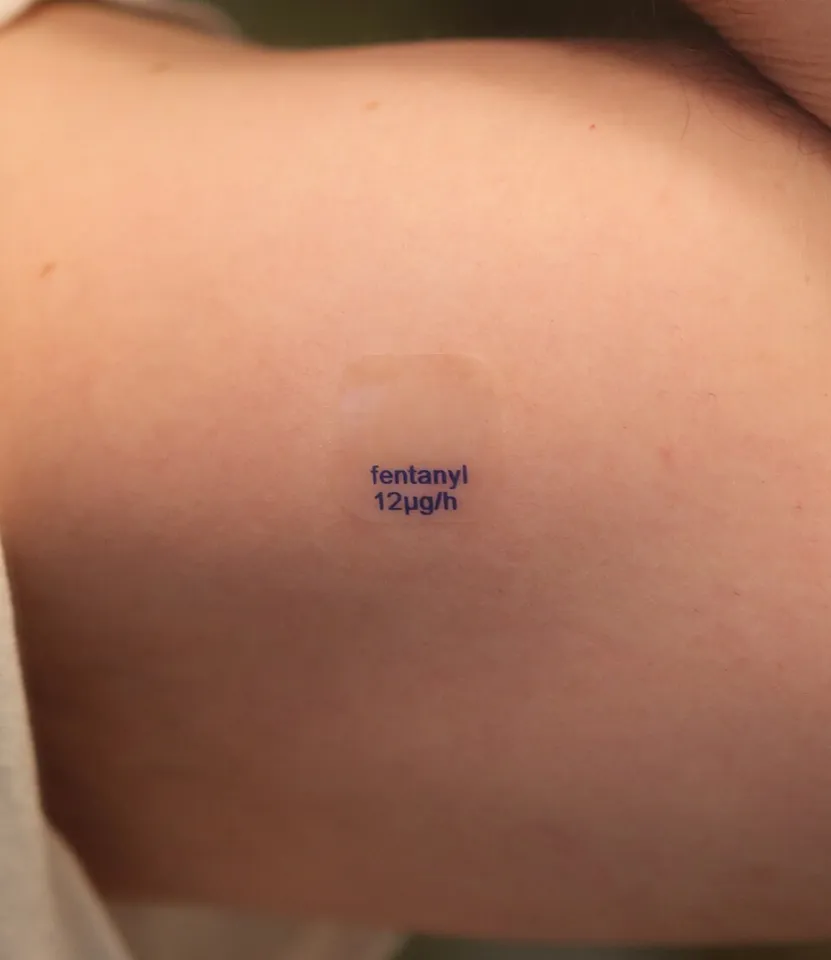
- In severe renal impairment (eGFR below 30) avoid regular morphine and codeine; fentanyl, alfentanil or cautious oxycodone are preferred
Differential diagnosis
| Condition | Clues | Key test |
|---|---|---|
| Nociceptive somatic pain (bone, soft tissue) | Well localised, aching, worse on movement | Responds to ladder drugs; bone pain may need NSAID, radiotherapy |
| Neuropathic pain | Burning, shooting, allodynia in a nerve territory | DN4 or LANSS; add adjuvant (amitriptyline, gabapentinoid, duloxetine) |
| Visceral pain | Poorly localised, colicky or deep, referred | Opioids helpful; antispasmodic (hyoscine butylbromide) for colic |
| Incident (movement-related) pain | Predictable spikes on movement or dressing | Pre-emptive short-acting dose before the activity |
| End-of-dose failure | Pain returns before the next modified-release dose | Pain diary; increase regular dose rather than frequency |
| Opioid-induced hyperalgesia | Diffuse pain worse as dose escalates, allodynia | Clinical; improves with dose reduction or rotation |
| Total pain (psychological, social, spiritual distress) | Pain out of keeping with disease, anxiety, depression | Holistic assessment; HADS; palliative team |
Exam pearls
Guideline
WHO guidelines for the pharmacological and radiotherapeutic management of cancer pain in adults and adolescents (2018); NICE CG140 strong opioids in palliative care (2012, updated 2016); CDC opioid prescribing guideline (2022)
References
- World Health Organization. WHO guidelines for the pharmacological and radiotherapeutic management of cancer pain in adults and adolescents. WHO, Geneva 2018.
- World Health Organization. Cancer pain relief. WHO, Geneva 1986.
- Vargas-Schaffer G.. Is the WHO analgesic ladder still valid? Twenty-four years of experience. Can Fam Physician 2010.
- Bandieri E, Romero M, Ripamonti CI, et al.. Randomized Trial of Low-Dose Morphine Versus Weak Opioids in Moderate Cancer Pain. J Clin Oncol 2016.
- National Institute for Health and Care Excellence. Palliative care for adults: strong opioids for pain relief (CG140). NICE, London 2012.
- National Institute for Health and Care Excellence. Chronic pain (primary and secondary) in over 16s: assessment of all chronic pain and management of chronic primary pain (NG193). NICE, London 2021.
Related topics
By Dr Khalid Seidi (B.Sc., M.D.) · MedEd World Clinical Knowledge library. Original teaching content checked against current guidelines (November 2026); confirm the latest local guidance before clinical use. Not a substitute for clinical judgement.