Clinical Knowledge › Anaesthesiology › Pain medicine
Neuropathic pain
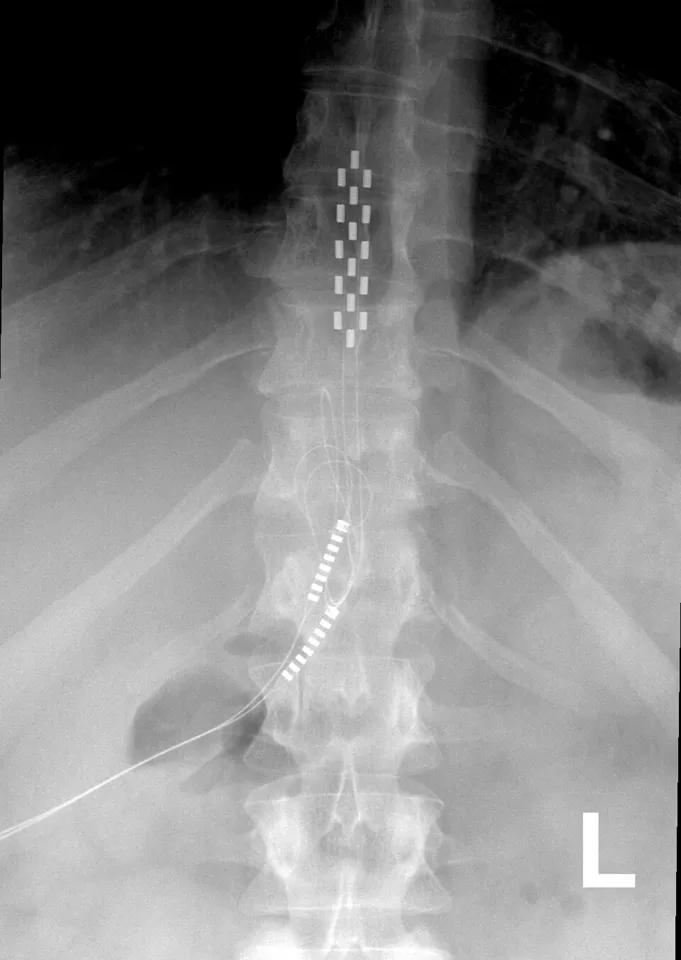
Neuropathic pain is pain caused by a lesion or disease of the somatosensory nervous system. It affects about 7–10% of adults and is common after surgery, amputation, shingles, diabetes, chemotherapy and stroke. Patients describe burning, shooting, electric or stabbing pain in a nerve, root or central territory, often with numbness, pins and needles, allodynia (pain from touch) and hyperalgesia. Mechanisms include ectopic firing from upregulated sodium channels, peripheral and central sensitisation, loss of inhibitory interneurons and glial activation; this is why opioids and NSAIDs work poorly. Diagnosis is clinical, graded as possible, probable or definite, supported by screening tools (DN4, LANSS, painDETECT) and confirmatory tests such as nerve conduction studies, skin biopsy or MRI. NeuPSIG 2025 keeps tricyclics, SNRIs and gabapentinoids first line, topical capsaicin and lidocaine second line, and opioids, botulinum toxin and rTMS third line; carbamazepine remains first line for trigeminal neuralgia. Pain clinics add neuromodulation, procedures and psychological therapy.
Patient case, mechanism, investigations, management, flashcards and exam-style questions.Open the lesson →
Key facts
- IASP definition: pain caused by a lesion or disease of the somatosensory nervous system (peripheral or central)
- Grading: possible (plausible distribution and history), probable (plus sensory signs in that distribution), definite (plus confirmatory test)
- Positive phenomena: burning, shooting, electric shocks, allodynia, hyperalgesia; negative phenomena: numbness, sensory loss
- Screening tools: DN4 score 4 or more of 10 suggests neuropathic pain; LANSS 12 or more of 24; painDETECT 19 or more likely
- First line (NeuPSIG 2025, NICE CG173): amitriptyline (or other TCA), duloxetine, gabapentin or pregabalin; switch rather than stop if one fails
- Second line for localised peripheral pain: capsaicin 8% patch, capsaicin cream, lidocaine 5% plaster; third line: botulinum toxin A, rTMS, opioids
- Trigeminal neuralgia is the exception: carbamazepine (or oxcarbazepine) first line
- Gabapentinoids are Class C controlled drugs in the UK (2019); combined with opioids they increase respiratory depression
Differential diagnosis
| Condition | Clues | Key test |
|---|---|---|
| Nociceptive (somatic) pain | Aching, well localised, worse with movement, no sensory signs | Examination; responds to NSAIDs and opioids |
| Nociplastic pain (e.g. fibromyalgia) | Widespread pain without nerve lesion, fatigue, sleep disturbance | Clinical criteria; normal neurological examination |
| Complex regional pain syndrome | Limb pain after injury with swelling, colour, temperature and sweating changes | Budapest criteria |
| Vascular claudication or critical ischaemia | Exercise-related calf pain or rest pain with absent pulses | ABPI, duplex |
| Spinal cord compression | Band-like pain with leg weakness, sphincter disturbance | Urgent MRI spine |
| Small fibre neuropathy | Burning feet with normal nerve conduction studies | Skin biopsy for intraepidermal nerve fibre density |
| Herpes zoster before the rash | Dermatomal burning pain, rash appears days later | Clinical; PCR of vesicle fluid once rash appears |
Exam pearls
Guideline
NeuPSIG (IASP) updated recommendations for pharmacotherapy and neuromodulation of neuropathic pain (Lancet Neurology 2025); NICE CG173 Neuropathic pain in adults (2013, updated 2020); NICE TA159 spinal cord stimulation (2008)
References
- Soliman N, Moisset X, Ferraro MC, et al.. Pharmacotherapy and non-invasive neuromodulation for neuropathic pain: a systematic review and meta-analysis. Lancet Neurol 2025.
- National Institute for Health and Care Excellence. Neuropathic pain in adults: pharmacological management in non-specialist settings (CG173). NICE, London 2013.
- Treede RD, Jensen TS, Campbell JN, et al.. Neuropathic pain: redefinition and a grading system for clinical and research purposes. Neurology 2008.
- Finnerup NB, Haroutounian S, Kamerman P, et al.. Neuropathic pain: an updated grading system for research and clinical practice. Pain 2016.
- Colloca L, Ludman T, Bouhassira D, et al.. Neuropathic pain. Nat Rev Dis Primers 2017.
- Tesfaye S, Sloan G, Petrie J, et al.. Comparison of amitriptyline supplemented with pregabalin, pregabalin supplemented with amitriptyline, and duloxetine supplemented with pregabalin for the treatment of diabetic peripheral neuropathic pain (OPTION-DM): a multicentre, double-blind, randomised crossover trial. Lancet 2022.
Related topics
By Dr Khalid Seidi (B.Sc., M.D.) · MedEd World Clinical Knowledge library. Original teaching content checked against current guidelines (November 2026); confirm the latest local guidance before clinical use. Not a substitute for clinical judgement.