Clinical Knowledge › Ear, nose and throat › Nose and paranasal sinuses
Nasal polyps
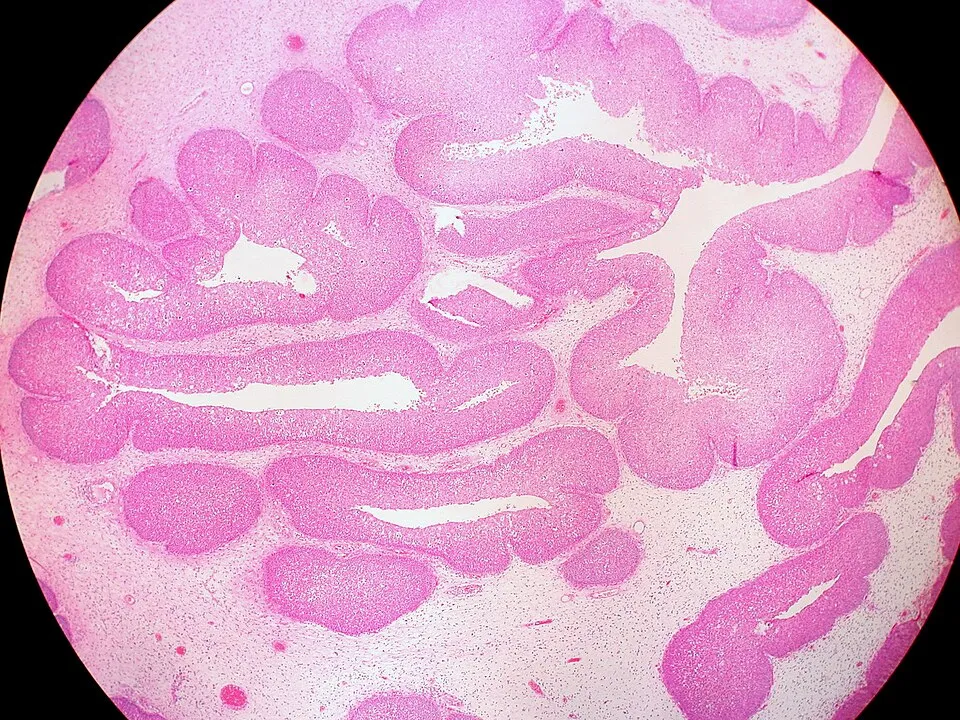
Nasal polyps are benign, oedematous outgrowths of sinonasal mucosa, usually arising from the ethmoid region and prolapsing into the middle meatus. Bilateral polyps are almost always a manifestation of chronic rhinosinusitis with nasal polyps (CRSwNP), a type 2 eosinophilic disease linked to late-onset asthma and aspirin-exacerbated respiratory disease (AERD: polyps, asthma and reactions to aspirin or NSAIDs). In a child, bilateral polyps suggest cystic fibrosis. A unilateral 'polyp' needs a different mindset: antrochoanal polyp in young people, but also inverted papilloma, malignancy, juvenile angiofibroma or meningoencephalocele. Patients report blockage, loss of smell, rhinorrhoea and postnasal drip; polyps appear as pale, grey, glistening, insensate masses on endoscopy. Treatment combines saline irrigation and intranasal corticosteroid, short oral steroid courses, endoscopic sinus surgery and, for severe uncontrolled disease, biologics (dupilumab, omalizumab, mepolizumab, tezepelumab, depemokimab). Recurrence is common, especially in AERD.
Patient case, mechanism, investigations, management, flashcards and exam-style questions.Open the lesson →
Key facts
- Bilateral nasal polyps = CRSwNP, typically type 2 inflammation with tissue eosinophils
- Polyps are pale, grey, glistening, mobile and insensate; turbinates are pink and sensitive to touch
- AERD (Samter triad): nasal polyps, asthma and respiratory reactions to aspirin/NSAIDs (COX-1 inhibition)
- Polyps in a child: sweat test for cystic fibrosis
- A unilateral polyp must be biopsied (after imaging if midline or in a child) to exclude inverted papilloma, malignancy or encephalocele
- Antrochoanal polyp: unilateral, young patient, from the maxillary sinus to the choana; remove including the antral stalk
- Medical therapy: intranasal steroid (drops or spray) plus saline; oral prednisolone short courses at most 1–2 per year
- Biologics are indicated in severe uncontrolled CRSwNP meeting EUFOREA criteria; response is reviewed at 6 and 12 months
Differential diagnosis
| Condition | Clues | Key test |
|---|---|---|
| Inferior turbinate hypertrophy | Pink, sensitive, shrinks with decongestant | Anterior rhinoscopy with decongestant; endoscopy |
| Antrochoanal polyp | Unilateral, young, extends to choana | Endoscopy; CT shows maxillary origin |
| Inverted papilloma | Unilateral, older man, irregular, may bleed; 5–10% associated with SCC | Biopsy; CT focal hyperostosis, MRI convoluted cerebriform pattern |
| Sinonasal malignancy | Unilateral, bleeding, pain, numbness, proptosis | Biopsy, CT/MRI |
| Juvenile nasopharyngeal angiofibroma | Adolescent male, recurrent heavy epistaxis | Contrast CT/MRI; do NOT biopsy in clinic |
| Meningoencephalocele | Child or adult with a midline mass that enlarges with crying (Furstenberg) | MRI before any biopsy |
| Granulomatosis with polyangiitis | Crusting, bleeding, perforation | ANCA, biopsy |
Exam pearls
Guideline
EPOS 2020 with the EPOS/EUFOREA 2023 update on biologics in CRSwNP, and AAO-HNS Adult Sinusitis CPG Update (2025)
References
- Fokkens WJ, Lund VJ, Hopkins C, et al.. European Position Paper on Rhinosinusitis and Nasal Polyps 2020. Rhinology 2020.
- Fokkens WJ, Viskens AS, Backer V, et al.. EPOS/EUFOREA update on indication and evaluation of biologics in chronic rhinosinusitis with nasal polyps 2023. Rhinology 2023.
- Payne SC, McKenna M, Buckley J, et al.. Clinical Practice Guideline: Adult Sinusitis Update. Otolaryngol Head Neck Surg 2025.
- Bachert C, Han JK, Desrosiers M, et al.. Efficacy and safety of dupilumab in patients with severe chronic rhinosinusitis with nasal polyps (LIBERTY NP SINUS-24 and LIBERTY NP SINUS-52). Lancet 2019.
- Gevaert P, Omachi TA, Corren J, et al.. Efficacy and safety of omalizumab in nasal polyposis: 2 randomized phase 3 trials. J Allergy Clin Immunol 2020.
- Han JK, Bachert C, Fokkens W, et al.. Mepolizumab for chronic rhinosinusitis with nasal polyps (SYNAPSE): a randomised, double-blind, placebo-controlled, phase 3 trial. Lancet Respir Med 2021.
Related topics
By Dr Khalid Seidi (B.Sc., M.D.) · MedEd World Clinical Knowledge library. Original teaching content checked against current guidelines (November 2026); confirm the latest local guidance before clinical use. Not a substitute for clinical judgement.