Clinical Knowledge › Internal medicine › Haematology and oncology › Clinical problems
Neutropenia: approach to the patient
Neutropenia is an absolute neutrophil count (ANC) below the lower reference limit, usually 1.5 × 10⁹/L in adults; it is mild at 1.0–1.5, moderate at 0.5–1.0 and severe below 0.5 × 10⁹/L, and infection risk rises steeply below 0.5. The first question is always whether the patient is febrile or unwell: fever with an ANC of 0.5 or less is neutropenic sepsis and needs antibiotics within an hour. Otherwise the approach is to confirm the count, look at the trend, the other cell lines and the blood film, and review drugs, infections, nutrition, autoimmune disease and ancestry. Many healthy people of African or Middle Eastern descent have a lower count linked to the Duffy-null red cell phenotype – now called Duffy-null associated neutrophil count rather than 'benign ethnic neutropenia' – with no increased infection risk. Common causes are viral infection, drugs, autoimmune disease, nutritional deficiency and hypersplenism. Isolated, persistent or worsening neutropenia, other cytopenias or abnormal cells need haematology review and often a marrow examination.
Patient case, mechanism, investigations, management, flashcards and exam-style questions.Open the lesson →
Key facts
- Grades: mild 1.0–1.5, moderate 0.5–1.0, severe <0.5 × 10⁹/L; agranulocytosis usually means ANC <0.5 (often <0.1) × 10⁹/L
- Fever (single temperature >38 °C) or signs of sepsis with ANC ≤0.5 × 10⁹/L = neutropenic sepsis: empirical IV antibiotics within 1 hour (NICE CG151)
- Duffy-null associated neutrophil count: about two-thirds of Black Americans in one study were Duffy-null, with a median ANC about 2.8 vs 5.0 × 10⁹/L and no extra infection risk
- Drugs causing idiosyncratic agranulocytosis include carbimazole/methimazole, propylthiouracil, clozapine, sulfasalazine, dapsone, metamizole (dipyrone), co-trimoxazole, beta-lactams and rituximab (late onset)
- Viral infections (EBV, CMV, HIV, hepatitis, influenza, COVID-19, parvovirus) commonly cause transient neutropenia lasting days to weeks
- Pancytopenia, blasts, dysplasia, macrocytosis, splenomegaly or lymphadenopathy change the question from 'isolated neutropenia' to 'marrow disease'
- Cyclic neutropenia (ELANE) recurs about every 21 days; severe congenital neutropenia (ELANE, HAX1) presents in infancy and predisposes to MDS/AML
- Large granular lymphocyte leukaemia and Felty syndrome cause neutropenia in rheumatoid arthritis
Differential diagnosis
| Condition | Clues | Key test |
|---|---|---|
| Duffy-null associated neutrophil count | African, Middle Eastern or Yemeni ancestry, lifelong stable mild neutropenia, no infections | Duffy (Fy a−b−) red cell phenotype, stable previous counts |
| Post-viral neutropenia | Recent viral illness, transient mild–moderate fall | Repeat FBC in 2–4 weeks; viral serology if persistent |
| Drug-induced agranulocytosis | Severe neutropenia within weeks to months of a new drug (carbimazole, clozapine, sulfasalazine) | Drug history; recovery after withdrawal |
| Autoimmune neutropenia | SLE, rheumatoid arthritis, Felty syndrome; or primary in infants | ANA, RF, anti-CCP, anti-neutrophil antibodies |
| Large granular lymphocyte leukaemia | Rheumatoid arthritis, splenomegaly, increased LGLs on film | Flow cytometry (CD3+CD8+CD57+), TCR clonality, STAT3 mutation |
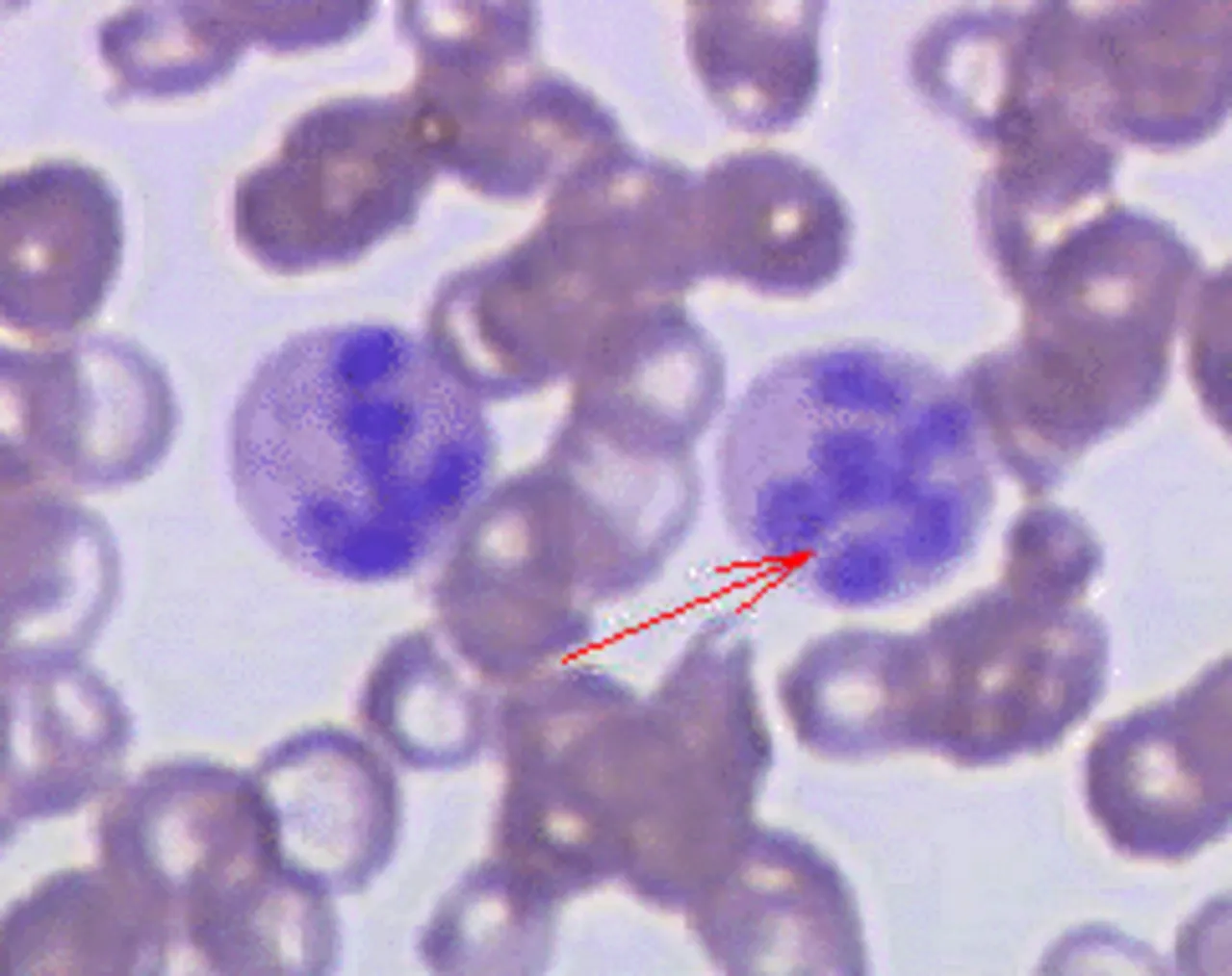
| Nutritional deficiency | Macrocytosis, hypersegmented neutrophils; or copper deficiency after bariatric surgery | B12, folate, copper levels |
| Primary marrow disease | Other cytopenias, blasts, dysplasia, older age | Blood film review, marrow aspirate and trephine with cytogenetics |
| Hypersplenism | Splenomegaly with portal hypertension, mild pancytopenia | Ultrasound, liver tests |
Exam pearls
Guideline
NICE CG151 Neutropenic sepsis (2012, current), ASCO/IDSA outpatient fever and neutropenia guideline update (2018), Duffy-null associated neutrophil count terminology (proposed 2023) and national clozapine monitoring requirements
References
- Newburger PE, Dale DC.. Evaluation and management of patients with isolated neutropenia. Semin Hematol 2013.
- Andersohn F, Konzen C, Garbe E.. Systematic review: agranulocytosis induced by nonchemotherapy drugs. Ann Intern Med 2007.
- Merz LE, Story CM, Osei MA, et al.. Absolute neutrophil count by Duffy status among healthy Black and African American adults. Blood Adv 2023.
- National Institute for Health and Care Excellence (NICE). Neutropenic sepsis: prevention and management in people with cancer (CG151). NICE clinical guideline 2012.
- Taplitz RA, Kennedy EB, Bow EJ, et al.. Outpatient management of fever and neutropenia in adults treated for malignancy: American Society of Clinical Oncology and Infectious Diseases Society of America clinical practice guideline update. J Clin Oncol 2018.
- US Food and Drug Administration. Information on clozapine and the clozapine Risk Evaluation and Mitigation Strategy (REMS). US Food and Drug Administration (regulatory update) 2025.
Related topics
By Dr Khalid Seidi (B.Sc., M.D.) · MedEd World Clinical Knowledge library. Original teaching content checked against current guidelines (November 2026); confirm the latest local guidance before clinical use. Not a substitute for clinical judgement.